A front tooth that sits slightly behind the others can make you hesitate before smiling in photos. A gap that has always bothered you may feel more noticeable with every video call. For many adults, the question is not whether they want a straighter smile, but what can Invisalign fix without the appearance or daily inconvenience of traditional braces.
Invisalign treatment uses a series of clear, custom-made aligners to apply gentle, controlled pressure to teeth. As you move through each set, your teeth gradually shift toward their planned positions. It can be a highly effective option for many common orthodontic concerns, but it is not the right answer for every smile. A careful evaluation is the best way to understand what is possible, what the process involves, and whether another treatment would provide a more predictable result.
What Can Invisalign Fix?
Clear aligners can treat many mild to complex tooth-alignment and bite concerns. The exact outcome depends on your tooth positions, jaw relationship, gum health, existing dental work, and willingness to wear the aligners as directed.
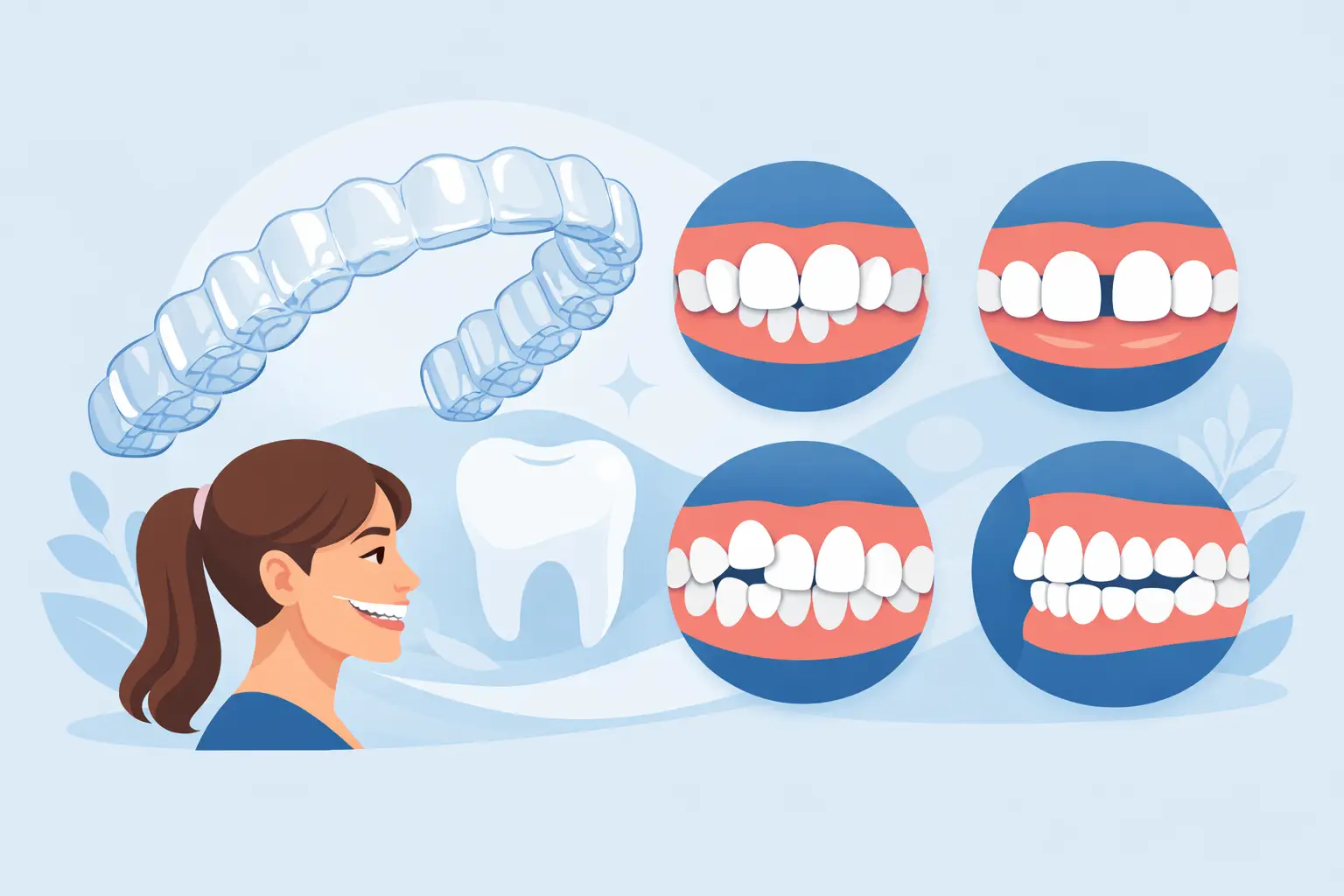
Crowded or overlapping teeth
Crowding occurs when there is not enough room for teeth to sit comfortably in the dental arch. Teeth may overlap, rotate, or appear pushed forward or backward. Beyond appearance, crowding can create tight spaces that are harder to brush and floss, allowing plaque to collect more easily.
Invisalign can often create the needed space by gradually widening the arch in appropriate cases, gently shifting teeth, or using a small amount of enamel contouring between selected teeth. This is a conservative reshaping technique that may be recommended when only a fraction of a millimeter of space is needed. Your dentist will explain whether it is appropriate before treatment begins.
Gaps and spaces between teeth
Spaces between teeth are one of the concerns clear aligners can address very well. A small gap between the front teeth, spaces that developed after orthodontic relapse, or uneven spacing throughout the smile may respond to carefully planned tooth movement.
Closing a gap is not always simply cosmetic. Food can become trapped in larger spaces, and shifting teeth may affect the way your bite feels. Before closing spaces, your dental team should also consider why they are there. Gum disease, a missing tooth, an unusually shaped tooth, or a tongue habit can contribute to spacing and may need attention as part of a long-term plan.
Crooked or rotated teeth
A tooth does not have to be severely crooked to affect your smile or your bite. Slight rotations are common, especially in the lower front teeth, and can become more noticeable over time. Clear aligners can often guide rotated teeth into better alignment using precisely designed trays and small tooth-colored attachments.
Attachments are temporary composite shapes placed on certain teeth to help the aligners hold and move them more effectively. They are noticeable up close but generally much less visible than brackets and wires. They are removed and polished away when treatment is complete.
Mild to moderate bite concerns
Invisalign may help correct several bite issues, including overbites, underbites, crossbites, open bites, and excessive horizontal overlap of the front teeth, often called an overjet. Bite correction matters because the way teeth meet affects chewing, comfort, wear patterns, and sometimes the risk of chipping.
Some bite issues are caused mainly by tooth position and can respond very well to aligner treatment. Others are driven by the size or position of the jaws. In those cases, aligners may improve tooth alignment but cannot change the underlying jaw structure in the same way jaw surgery can. Adults with more significant skeletal discrepancies may need a combined treatment plan or a different orthodontic approach.
Orthodontic relapse after braces
It is common for teeth to shift years after braces, particularly when retainers are no longer worn consistently. You may have had a straight smile as a teenager but now notice crowding, a returning gap, or changes in your front teeth. Invisalign is often an appealing option for this kind of relapse because treatment can be more limited than a full first-time orthodontic case.
Even when the movement seems minor, a new scan and examination are worthwhile. Your bite, gum health, restorations, and goals may have changed since your original treatment.
What Invisalign Cannot Always Fix on Its Own
Clear aligners are powerful tools, but they have limits. Being direct about those limits protects your time, comfort, and investment.
Severely impacted teeth, major jaw discrepancies, advanced gum disease, and certain complex tooth movements may require braces, surgery, periodontal treatment, or a combination of care. An aligner plan may also be less predictable when a tooth has an unusual root shape, when there is significant bone loss around teeth, or when a patient cannot consistently wear the trays.
Invisalign does not repair chipped, worn, discolored, or misshapen teeth. It can place teeth in a better position before cosmetic bonding, veneers , crowns, or implant restoration, which can make the final restorative result more conservative and balanced. For example, moving adjacent teeth before replacing a missing tooth may create the right amount of space for an implant-supported crown .
That coordinated approach is especially valuable for adults who have both alignment concerns and older dental work. Straightening teeth without considering a worn crown, a missing tooth, or gum health can lead to a result that looks incomplete or does not function as intended.
The Habits That Affect Your Invisalign Result
Unlike braces, clear aligners are removable. That freedom is a major advantage, but it also places part of the treatment responsibility in your hands. Most patients need to wear their aligners about 20 to 22 hours a day, removing them for meals and anything other than water.
Taking aligners out frequently, forgetting to put them back in after coffee, or moving to the next set too soon can slow progress. Teeth respond best to steady, gentle pressure. If an aligner does not fit fully, forcing the next tray is not the solution. Contact your dental team so they can determine whether you need more time in the current set or an adjustment to the plan.
Keeping your aligners clean and brushing before reinserting them also matters. Trapping food and sugars against your teeth can increase the risk of cavities and gum inflammation during treatment. Regular preventive appointments remain part of protecting your smile while it moves.
Why a Personalized Evaluation Matters
Online smile simulations can be interesting, but they cannot evaluate your bite, roots, bone levels, gum condition, jaw joints, or existing restorations. A complete Invisalign consultation should include photographs, digital scans or impressions, X-rays when needed, and a conversation about what you want to change.
At Seattle Oral Care, Invisalign planning can be considered alongside your full oral health needs. If you have a missing tooth , periodontal concerns, worn teeth, or restorative treatment ahead, coordinated planning helps ensure each step supports the next one. You should understand the expected treatment timeline, the likely need for attachments or enamel contouring, the possibility of refinements, and the role of retainers after treatment.
Refinements are additional aligners that may be used near the end of treatment to fine-tune the result. They are not necessarily a sign that something went wrong. Teeth are living structures, and small adjustments can be part of achieving the planned outcome.
A Straighter Smile Should Still Feel Like Your Smile
The best Invisalign result is not a one-size-fits-all version of straight teeth. It is a healthy, comfortable bite and a smile that suits your face, supports everyday function, and feels natural when you see it in the mirror. If a gap, crowding, or bite concern has been on your mind, a thoughtful consultation can replace guesswork with a clear, comfortable path forward.