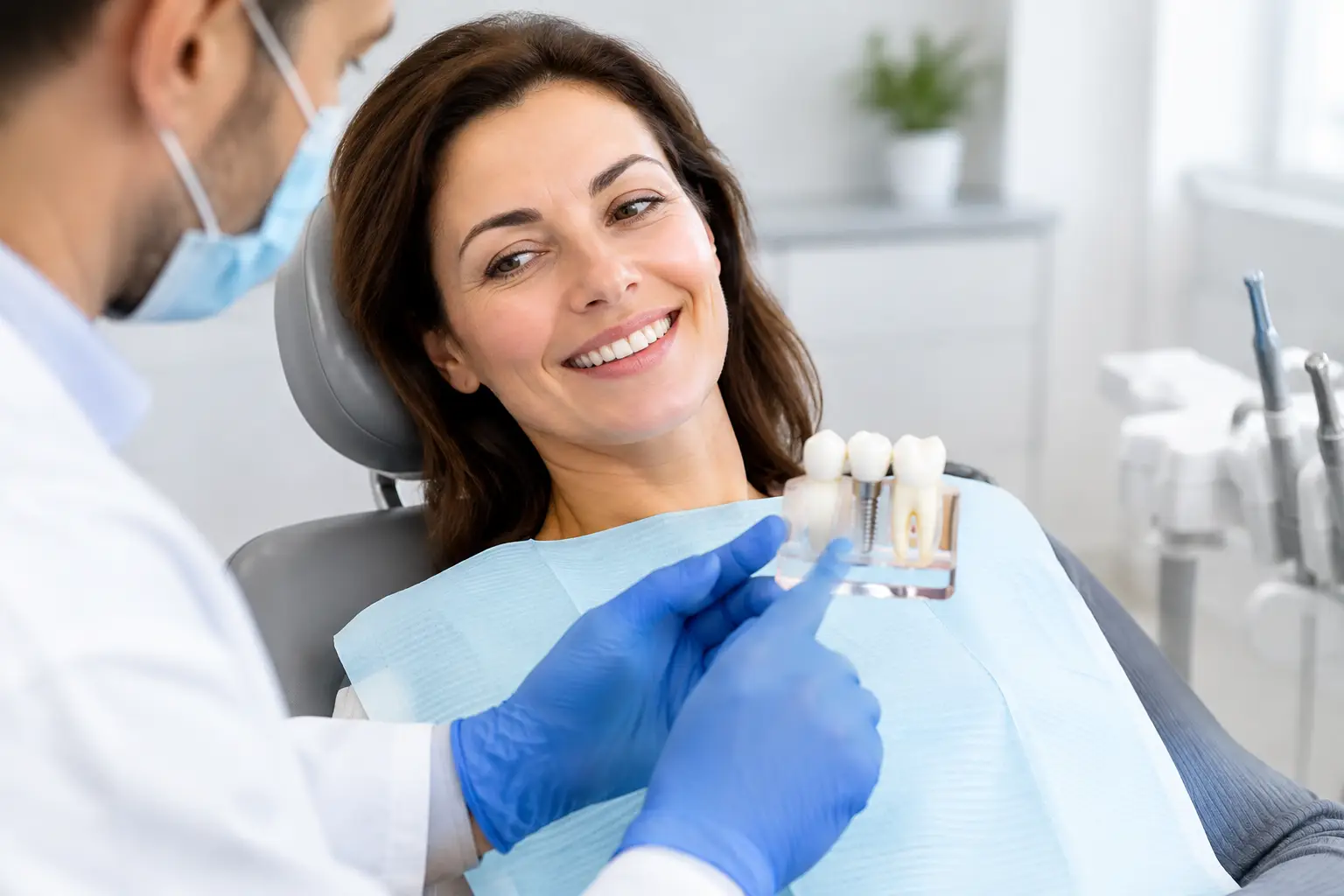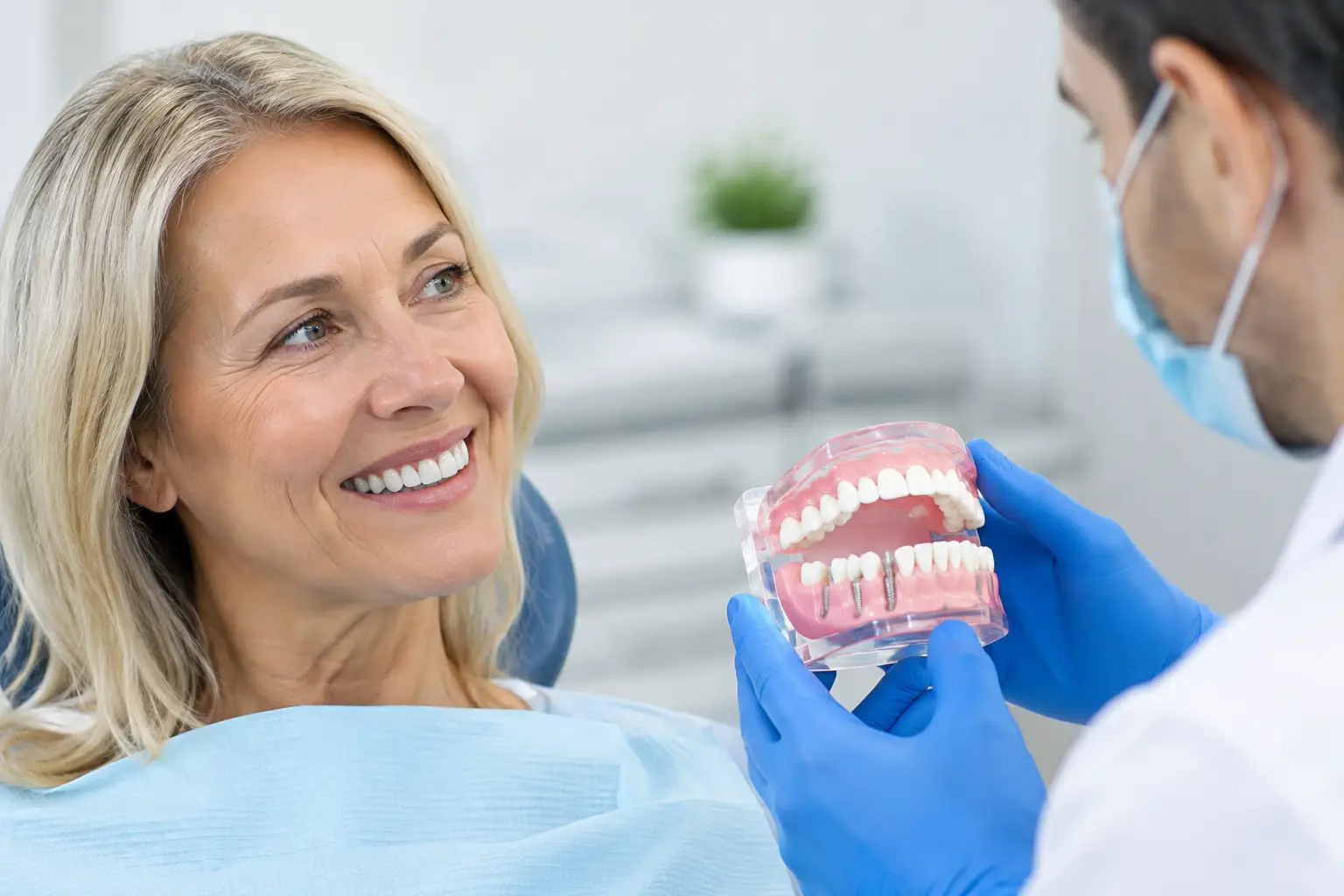
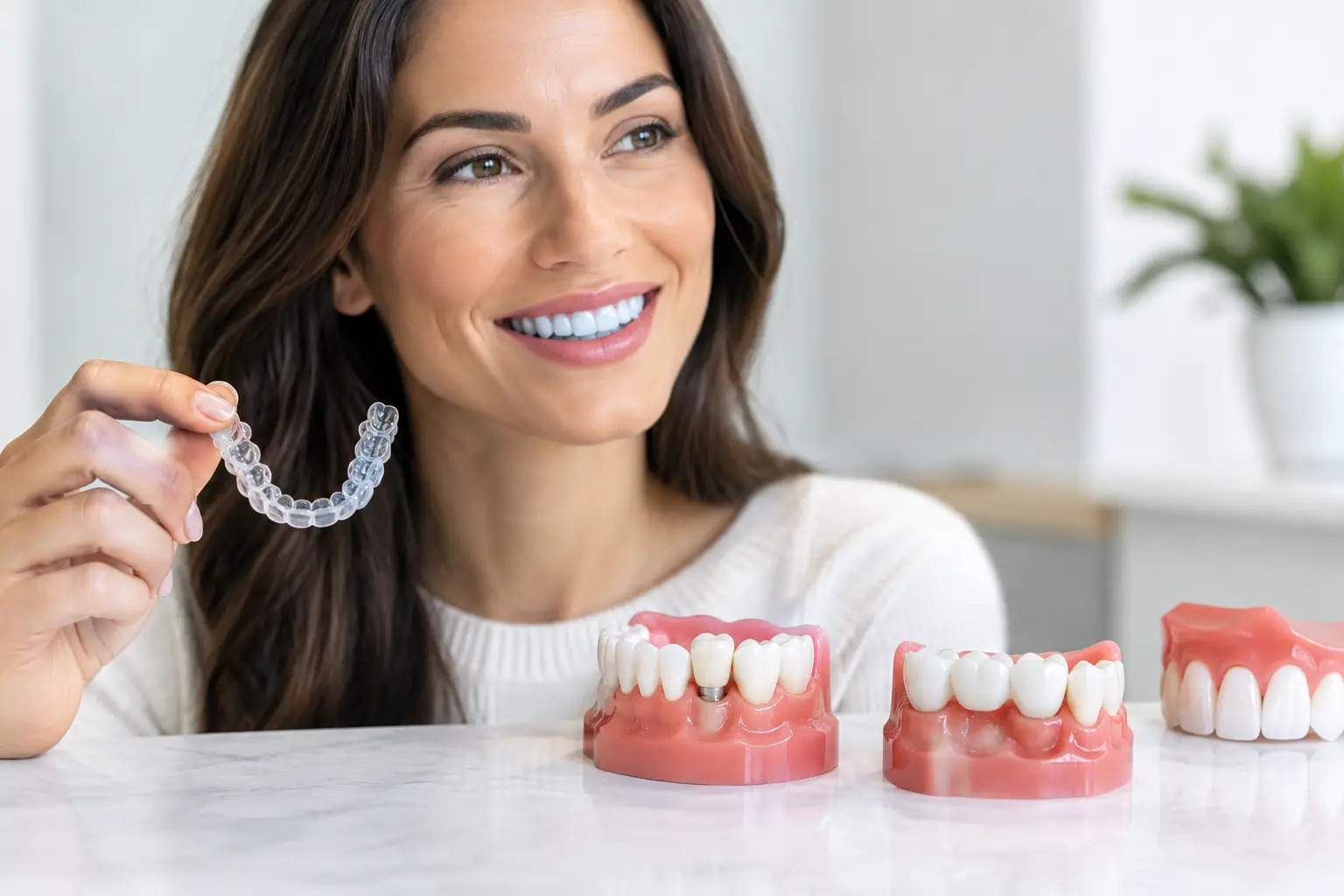
If you are an adult with existing dental work who wants straighter teeth, Invisalign with crowns, bridges, or veneers may still be an option. The key is not simply whether you have restorative work. It is whether your teeth, gums, bite, and existing restorations are healthy and stable enough to support orthodontic movement. A thoughtful evaluation can make the difference between a smile that only looks straighter and one that functions comfortably for years.
Many adults assume they missed their chance for orthodontic treatment because they have had a crown, bridge, or veneers placed. In reality, clear aligner treatment can often work well around existing dentistry. It just requires planning that respects the work already done and the reason it was needed in the first place.
Can You Get Invisalign With Crowns, Bridges, or Veneers?
Often, yes. Clear aligners move the roots of natural teeth through the bone. A crown or veneer covers part or all of a tooth, but the natural root beneath it can still move when it is healthy. A fixed bridge is different because it connects multiple teeth together, limiting how independently those teeth can move.
Before recommending Invisalign, your dental team should look beyond tooth alignment. They should assess gum health, bone support, decay around restoration margins, bite forces, jaw symptoms, and the condition of each crown, bridge, or veneer. A restoration that is loose, cracked, poorly fitting, or nearing the end of its useful life may need attention before orthodontic treatment begins.
For many patients, the goal is not to avoid replacing dentistry at all costs. It is to create the right sequence: straighten the teeth that can move, establish a healthy bite, then update a restoration when doing so will provide the best long-term result.
Invisalign With Crowns
A crown does not automatically prevent a tooth from moving. If the tooth and its supporting bone are healthy, Invisalign can usually move it along with the rest of your smile. The aligner is custom-made to fit over the crown, much like it fits over natural enamel.
There are a few practical considerations. Small attachments may be bonded to some teeth to give the aligners better control. Attachments can sometimes be placed on a crown, although the bonding process and removal require care to avoid damaging the crown surface. In some cases, your dentist may choose a treatment plan that reduces the need for an attachment on that particular tooth.
Crowns can also change how the teeth meet. If a crown was made before teeth shifted, it may no longer support an ideal bite once alignment improves. That does not mean the crown must be replaced, but it should be evaluated after treatment. Minor reshaping may be enough. In other situations, a new crown designed around your finished bite provides a more comfortable and durable outcome.
Invisalign With Bridges
Bridges require more careful planning because the teeth supporting the bridge are joined together. Unlike separate teeth, they cannot be moved independently in different directions. This can limit the types and amount of movement that are realistic.
A bridge does not always have to be removed for Invisalign. If it is healthy, well-fitting, and positioned in a way that works with the treatment goals, your provider may plan around it. Adjacent teeth may be moved, and the bridge area may remain relatively stable.
When a bridge sits in an area that needs significant movement, replacing it after orthodontic treatment may be the better choice. For example, if teeth have tipped into a space or shifted around an older bridge, moving them into more balanced positions can create a stronger foundation for a new restoration. This approach is especially valuable when the bridge is aging, difficult to clean, or contributing to bite imbalance.
If a bridge replaces a missing tooth, your dentist may also discuss whether an implant-supported crown could be appropriate after alignment. An implant does not move with orthodontics, so it is usually placed after tooth movement is complete. Whether that is advisable depends on bone health, the location of the missing tooth, overall treatment goals, and your preferences.
Invisalign With Veneers
Veneers are thin porcelain or composite coverings placed on the front surfaces of teeth. Because the natural tooth remains underneath, teeth with veneers can often move with Invisalign. The main concern is preserving the veneer and ensuring the aligners can deliver the planned movement safely.
As with crowns, attachments may be possible on veneers but need careful handling. There is a small risk that a veneer could chip, loosen, or need repair during treatment, particularly if it is older or already has weakened bonding. Your provider will examine each veneer closely and discuss that risk before beginning.
It also helps to consider why veneers were placed. Some people received veneers to disguise crowding, uneven spacing, or worn edges. Straightening the teeth may improve the overall alignment, but it can reveal differences in veneer shape, color, or length that were less noticeable before. Some patients are pleased with their existing veneers after Invisalign. Others choose to refresh one or more veneers after treatment to create a more uniform finish.
Why Bite Planning Matters as Much as Straight Teeth
Crowns, bridges, and veneers are designed around the bite that existed when they were placed. When teeth move, the contacts between upper and lower teeth change too. This can be beneficial when treatment corrects crowding, spacing, or uneven pressure. But it is also why adult orthodontic planning should not be based on photographs alone.
A careful examination helps identify concerns such as clenching, grinding, gum recession, loose restorations, or uneven wear. If heavy bite forces have damaged previous dental work, simply straightening the teeth without addressing those forces may not protect the new result.
For patients with more complex needs, coordinated care can be particularly helpful. A dentist experienced in Invisalign can work alongside restorative and surgical specialists to decide what should be preserved, what should be replaced, and when each step should happen. This allows the orthodontic plan and restorative plan to support one another rather than compete.
What Your Invisalign Consultation Should Include
A good consultation should feel unhurried and specific to your smile. Your provider should review your health history, examine your teeth and gums, take appropriate digital images or scans, and discuss what you would like to change. Be ready to share when your crowns, bridges, or veneers were placed and whether you have noticed sensitivity, chipping, looseness, or bite changes.
Your treatment plan may include periodontal care before aligners, Invisalign alone, restorative work after aligners, or a phased approach. No two mouths with existing dentistry are exactly alike. A person with one stable crown may be a straightforward candidate, while someone with several older bridges and signs of grinding may benefit from a more comprehensive plan.
Ask practical questions about whether attachments will be placed on restorations, whether any dental work may need replacement after treatment, how retainers will fit around your restorations, and how your bite will be checked at the end. Clear answers help you make a decision with confidence.
Protecting Your Investment After Treatment
Once your teeth are aligned, retainers are essential. Teeth naturally tend to drift over time, and that movement can affect both your smile and the way your restorations fit. Wearing retainers as directed helps protect the time and care invested in treatment.
Daily home care matters as well. Brush carefully along crown and veneer margins, clean beneath bridges as instructed, and maintain regular professional cleanings and exams. If you clench or grind, a custom night guard may be recommended after orthodontic treatment rather than relying on aligners or retainers to manage heavy bite forces.
You do not have to choose between keeping the dental work you already have and pursuing a straighter smile. With a detailed evaluation and a plan built around your health, Invisalign can be a practical next step toward a smile that feels as good as it looks.