
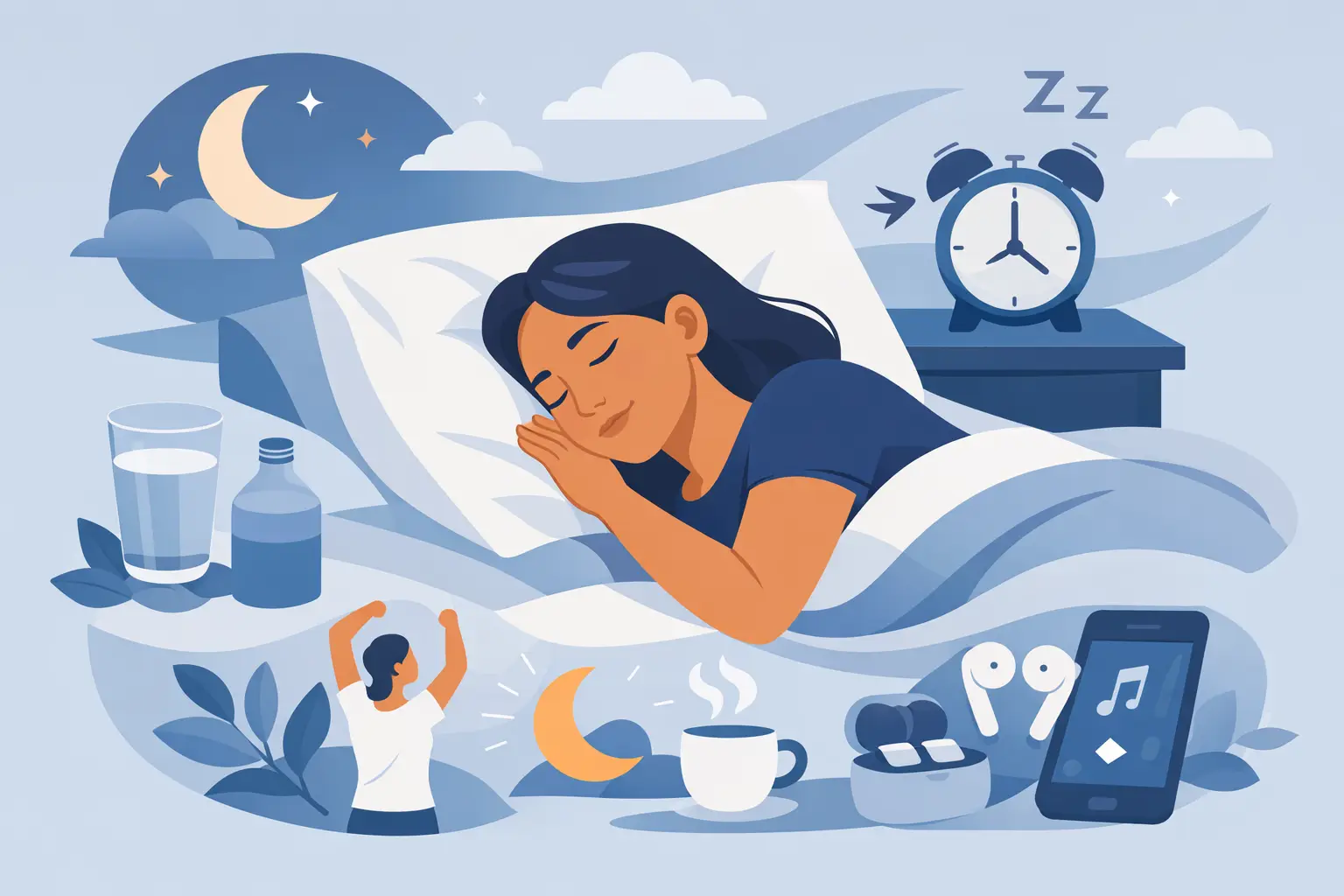
A full night in bed does not always mean a full night of restorative sleep. If you wake up groggy, rely on afternoon caffeine, or hear that you snore loudly, the answer may involve more than simply going to bed earlier. Good sleep hygiene creates the conditions your body needs to settle into consistent, refreshing rest.
Sleep habits cannot cure every sleep problem, but they are a meaningful starting point. They can also make it easier to recognize when disrupted sleep may be related to snoring, obstructive sleep apnea, medication, pain, or another health concern that deserves professional attention.
What Sleep Hygiene Really Means
Sleep hygiene is the set of daily routines and bedroom conditions that support healthy sleep. It is not about following a perfect checklist or eliminating every enjoyable evening habit. It is about building enough consistency that your brain begins to recognize when it is time to wind down and rest.
For many adults, the biggest obstacles are not a lack of effort. They are demanding work schedules, family responsibilities, stress, late-night screens, alcohol, and inconsistent sleep times. A practical routine should fit your life well enough to be repeated, including on busy weeks.
Start With a Consistent Sleep Schedule
Your body has an internal clock that responds strongly to regular wake times. Choose a wake-up time you can maintain most days, including weekends, then work backward to create enough time for sleep. Most adults need roughly seven to nine hours, though individual needs vary.
If your current schedule is far from where you want it to be, shift gradually. Moving bedtime by 15 to 30 minutes every few nights is usually more realistic than trying to make a dramatic change overnight. Morning light can also help reinforce your schedule. Open the blinds, take a brief walk outside, or spend a few minutes near natural light soon after waking.
Make the Bedroom Support Sleep
Your bedroom does not need to look like a luxury hotel. It should feel comfortable, quiet, dark, and slightly cool enough for you to relax. Small changes can make a noticeable difference, especially if you are sensitive to light or noise.
Keep the bed associated with sleep when possible. Working, scrolling, and watching television in bed can train the mind to stay alert there. If you cannot fall asleep after about 20 minutes, get up and do something quiet in low light, such as reading a few pages of a book. Return to bed when you feel sleepy rather than frustrated.
Rethink Caffeine, Alcohol, and Late Meals
Caffeine can remain active in the body longer than many people expect. A late-afternoon coffee, energy drink, or pre-workout supplement may make it harder to fall asleep even if you do not feel especially wired. Consider setting a personal caffeine cutoff six to eight hours before bedtime and notice whether your sleep improves.
Alcohol can make you feel drowsy at first, but it often disrupts sleep later in the night. It may also worsen snoring and breathing interruptions in some people. A heavy meal close to bedtime can contribute to heartburn or discomfort, so give yourself time to digest when you can. You do not need to eliminate every treat, but timing and moderation matter.
Build a Wind-Down Routine You Can Keep
A predictable pre-sleep routine signals that the day is ending. The best routine is simple enough to repeat, not elaborate enough to become another task. For the last 30 to 60 minutes before bed, lower the lights and choose calming activities that do not pull you back into work or stressful news.
A helpful routine might include a warm shower, gentle stretching, preparing clothes for the next day, reading, or writing down tomorrow's to-do list. If screens are part of your evening, reduce brightness and avoid content that leaves you alert, upset, or tempted to keep scrolling.
When Better Sleep Hygiene Is Not Enough
Healthy habits are valuable, but they are not a substitute for evaluation when sleep-disordered breathing may be involved. Snoring is common, yet frequent loud snoring, gasping or choking during sleep, morning headaches, dry mouth, nighttime awakenings, and persistent daytime sleepiness can be signs of obstructive sleep apnea.
Obstructive sleep apnea occurs when the airway repeatedly narrows or closes during sleep. Left untreated, it can affect energy, mood, concentration, cardiovascular health, and quality of life. Not everyone with sleep apnea fits the same profile, and not everyone who snores has sleep apnea. That is why an individualized assessment matters.
For patients diagnosed with obstructive sleep apnea who cannot tolerate CPAP or need another option, a custom oral appliance may help reposition the jaw or tongue to support a more open airway during sleep. These appliances are different from store-bought mouthguards. They are designed for your bite, monitored over time, and coordinated with your sleep physician when appropriate.
At Seattle Oral Care, sleep-focused treatment is guided by an AADSM-certified prosthodontist who understands both airway support and long-term oral health. If snoring or poor sleep is affecting your days, improving your routine is a strong first step. Persistent symptoms deserve a conversation that looks beyond the bedtime routine and toward the quality of your breathing at night.