Being told you need a bone graft before a dental implant can feel like an unexpected detour. Understanding the types of bone grafts for dental implants can make the conversation feel much more manageable - and help you ask the right questions about your treatment plan.
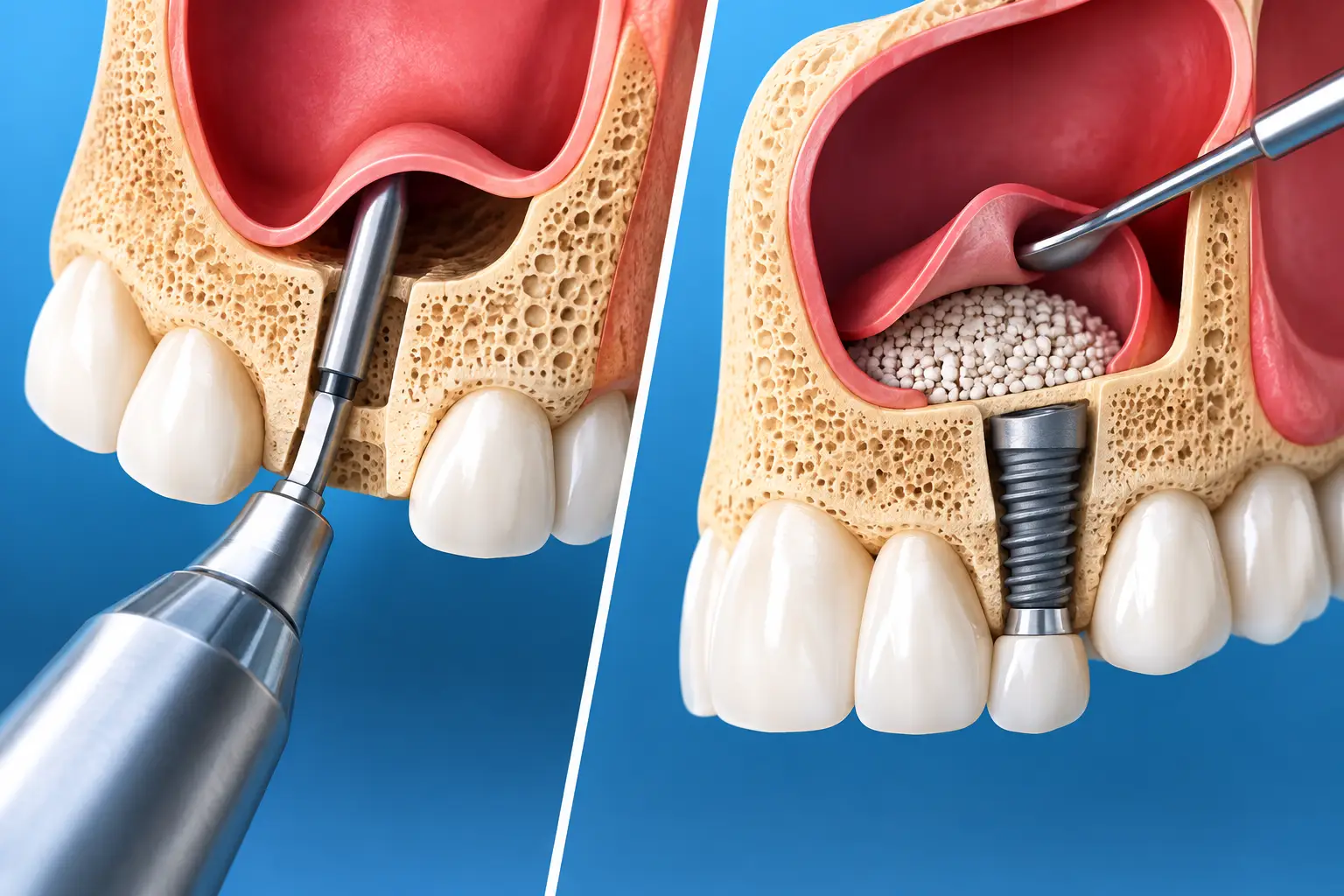
A graft is used when the jawbone does not have enough height, width, or density to support an implant securely. It provides a framework that helps your body rebuild bone in the area. The material selected is only one part of the decision. The location and size of the bone deficiency, the condition of your gums, your health history, and the timing of implant placement all matter.
Why bone graft material matters
Dental implants need a stable foundation. When a tooth has been missing for some time, the bone beneath it can gradually shrink. Bone can also be affected by infection, gum disease, injury, or a difficult extraction.
A graft may be placed at the time of extraction to preserve the socket, before implant placement to rebuild an area, or alongside an implant in select situations. Your dentist or specialist will evaluate imaging and your bite before recommending an approach. The goal is not simply to add material. It is to create the healthy, lasting support an implant needs.
Types of bone grafts for dental implants
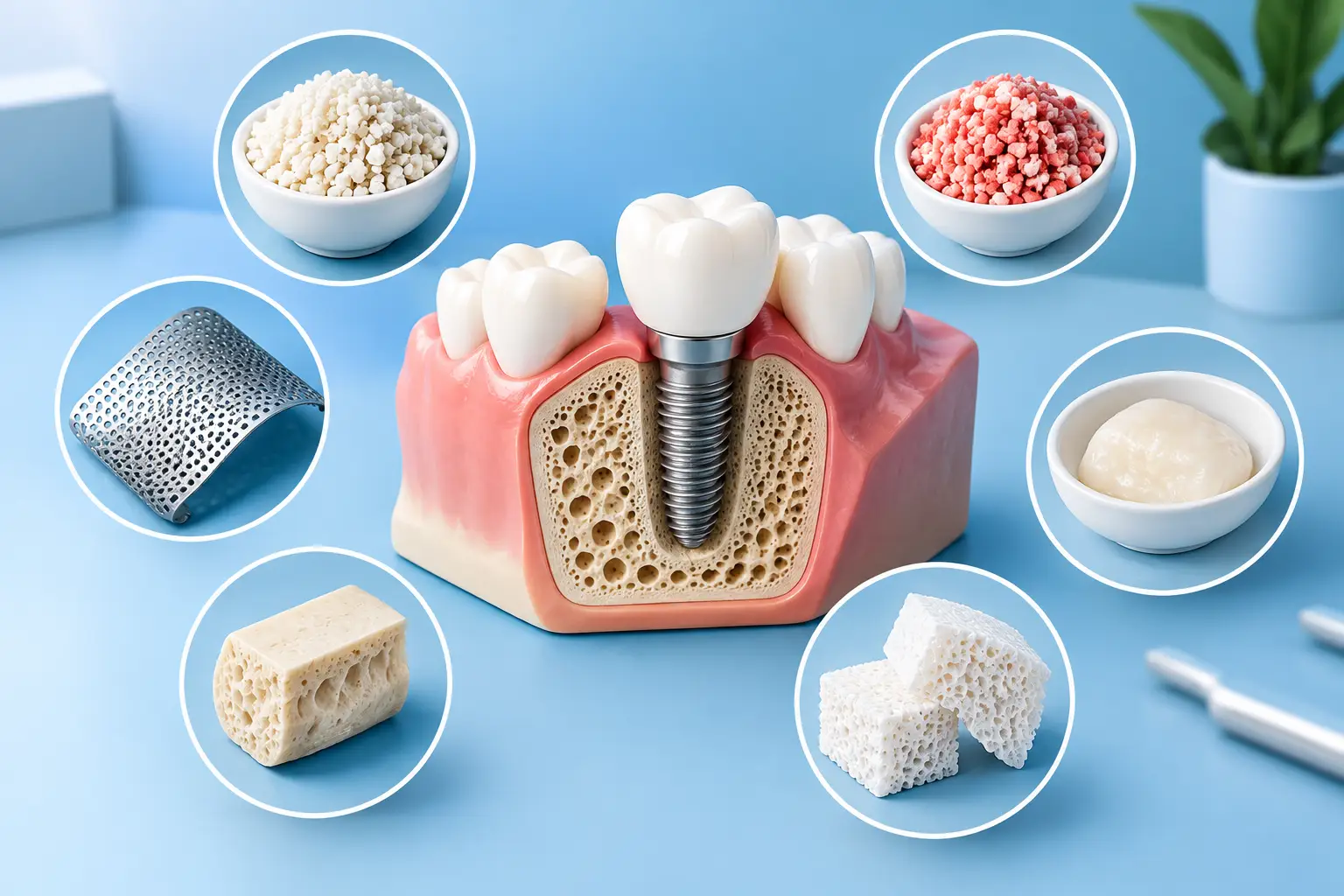
The main grafting materials are autograft, allograft, xenograft, and synthetic graft material. Each has a distinct role, and more than one material may be used in the same treatment.
Autograft: your own bone
An autograft uses bone taken from another area of your own body, often from the jaw during a dental procedure. Because it is your own tissue, it contains living components that can support bone formation.
Autograft vs. allograft dental implants is a common comparison. An autograft can be a strong choice when a larger or more complex reconstruction is needed. The trade-off is that collecting the bone may add another treatment area and can make the procedure more involved. For a smaller graft, your care team may determine that another material offers the right balance of support and comfort.
Allograft: donated human bone
An allograft is processed donor bone from a regulated tissue bank. It does not contain living cells by the time it is used. Instead, it acts as a scaffold that helps guide your own bone to grow into the site.
Allograft materials are widely used in dentistry, particularly for socket preservation and smaller areas of bone loss. They avoid the need to collect bone from another location in your mouth. The specific form - such as particles, a putty-like material, or a block - depends on the shape and extent of the area being rebuilt.
Xenograft: animal-derived mineral matrix
A xenograft dental implant graft is typically made from a highly purified mineral matrix derived from an animal source, most commonly bovine. The material is processed for medical use and serves as a structure that can help maintain space while your body builds bone around it.
Xenografts can be particularly useful where preserving contour matters, such as the visible front of the mouth or areas where the jawbone needs help holding its shape. They may remain in the grafted area longer than some other materials, which can be beneficial in the right clinical situation. Your provider can explain whether that characteristic suits your implant plan.
Synthetic bone graft materials
Synthetic bone graft dental implant materials are manufactured from biocompatible minerals, often calcium-based compounds. They are designed to provide a framework for bone growth without using human or animal tissue.
For patients who prefer a nonhuman graft option, a synthetic material may be worth discussing. Synthetic materials come in different forms and may be used alone or combined with other grafts. Their usefulness depends on the procedure and the need for structural support, not simply on personal preference.
Which bone graft material is best?
There is no single best material for every patient. The best choice is the one that fits the surgical site and supports a predictable, lasting restoration plan.
For example, a small extraction socket may call for a different material than a larger area requiring bone volume before an implant can be placed. If gum tissue is thin, the appearance of the final tooth may influence planning. If you are having a full-mouth restoration, your bite forces and the order of treatment also deserve careful attention.
A thoughtful recommendation should include a clear explanation of why a particular graft is being proposed, whether it will be used with a protective membrane, and what healing period is appropriate before the next step. You should also feel comfortable sharing any concerns about donor-derived, animal-derived, or synthetic materials.
Questions worth bringing to your consultation
Ask what problem the graft is intended to solve and whether the procedure is preserving bone, rebuilding bone, or both. It is also helpful to ask when your implant may be placed, what the healing process will involve, and how your care team will monitor the site.
At Seattle Oral Care, coordinated implant planning brings restorative, surgical, and periodontal perspectives together when needed. That means your graft recommendation can be considered alongside the final crown, bridge, or denture it is meant to support.
Needing a bone graft does not mean you are a poor candidate for implants. It often means your care team is taking the extra step needed to give your new tooth a stronger foundation.