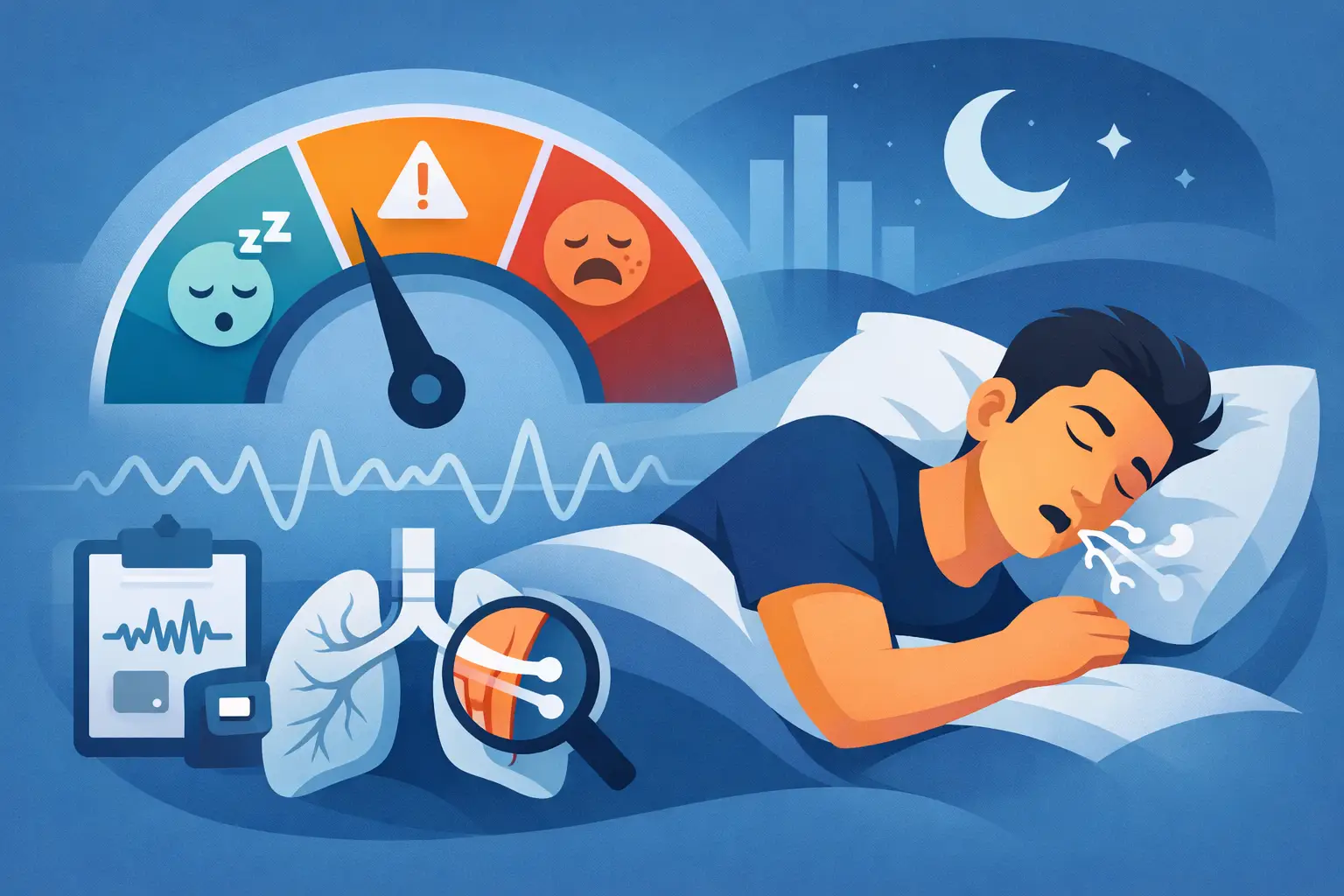
A sleep study report can feel full of unfamiliar numbers, but the AHI is one of the most useful places to start. For patients searching for “what is an AHI score, AHI score explained, sleep apnea severity score,” it is the number that estimates how often breathing is disrupted during sleep.
What Is an AHI Score?
AHI stands for apnea-hypopnea index. It measures the average number of apneas and hypopneas you experience per hour of sleep.
An apnea is a pause in breathing. A hypopnea is a partial blockage or reduction in breathing that is significant enough to lower airflow and often affect oxygen levels or disturb sleep. Your AHI combines both types of events into one average.
For example, an AHI of 18 means your breathing was interrupted an average of 18 times each hour during the recorded sleep period. That does not necessarily mean events occurred at perfectly even intervals. Some people have more events while sleeping on their back, during REM sleep, or after alcohol use.
AHI Score Explained: Adult Sleep Apnea Ranges
For adults, sleep specialists commonly use these ranges to classify obstructive sleep apnea severity:
- Less than 5 events per hour: Usually considered within the normal range
- 5 to 14.9 events per hour: Mild sleep apnea
- 15 to 29.9 events per hour: Moderate sleep apnea
- 30 or more events per hour: Severe sleep apnea
These categories help guide the conversation about treatment, but they are not the entire story. An AHI of 7 may be labeled mild, yet it can still leave someone exhausted, foggy, and struggling to stay alert while driving. On the other hand, a person with a higher score may report fewer symptoms but still need treatment because repeated breathing interruptions can affect long-term health.
Children are evaluated differently. A score that may seem low by adult standards can be clinically meaningful for a child, so pediatric results should always be interpreted by a qualified pediatric provider.
Why Your Sleep Apnea Severity Score Is Not the Whole Picture
AHI is valuable, but it does not show every effect sleep-disordered breathing has on your body or your daily life. Your sleep physician will also consider your oxygen levels, the length of breathing events, heart rate changes, sleep quality, snoring, daytime symptoms, and medical history.
A report may include your lowest oxygen saturation, sometimes called the oxygen nadir. It may also show the amount of time your oxygen level stayed below a certain threshold. Frequent drops in oxygen can add urgency to treatment, even when the AHI alone does not seem especially high.
Your results may also distinguish between obstructive and central events. Obstructive sleep apnea happens when the airway becomes narrowed or blocked during sleep. Central sleep apnea involves a different issue: the brain does not consistently send the signal to breathe. Oral appliance therapy is designed for appropriate cases of obstructive sleep apnea, not central sleep apnea, which is why an accurate diagnosis matters.
Home Sleep Test vs. In-Lab Sleep Study
The way your test was performed can affect how the score is calculated. An in-lab sleep study can measure actual sleep time and track sleep stages. Many home sleep tests use recording time as an estimate, because they generally cannot tell exactly when you were asleep.
As a result, a home test can sometimes underestimate the number of events per hour, particularly if you were awake for part of the recording. A negative or low-result home test does not always rule out sleep apnea when symptoms are strong. Your physician may recommend additional testing if you have loud snoring, witnessed pauses in breathing, morning headaches, daytime sleepiness, or high blood pressure despite an unclear initial result.
What Treatment May Look Like After an AHI Result
Treatment depends on the severity of your sleep apnea, your symptoms, your airway, and what you can use consistently. CPAP remains a highly effective option for many people, especially those with moderate to severe obstructive sleep apnea. For patients who cannot tolerate CPAP, or who prefer an alternative when clinically appropriate, a custom oral appliance may help hold the lower jaw forward to support a more open airway.
A professionally made appliance is different from an over-the-counter snoring guard. It should be fitted carefully, adjusted over time, and monitored to protect your bite, teeth, jaw joints, and treatment results. Follow-up sleep testing is often used to confirm that the appliance is reducing breathing events effectively.
At Seattle Oral Care, oral appliance therapy is provided as part of coordinated care for appropriate obstructive sleep apnea patients. If your report includes an AHI score, bring it to your consultation along with any questions about CPAP, snoring, comfort, and next steps. Understanding the number is helpful; choosing a treatment you can use comfortably and consistently is what supports better sleep.