
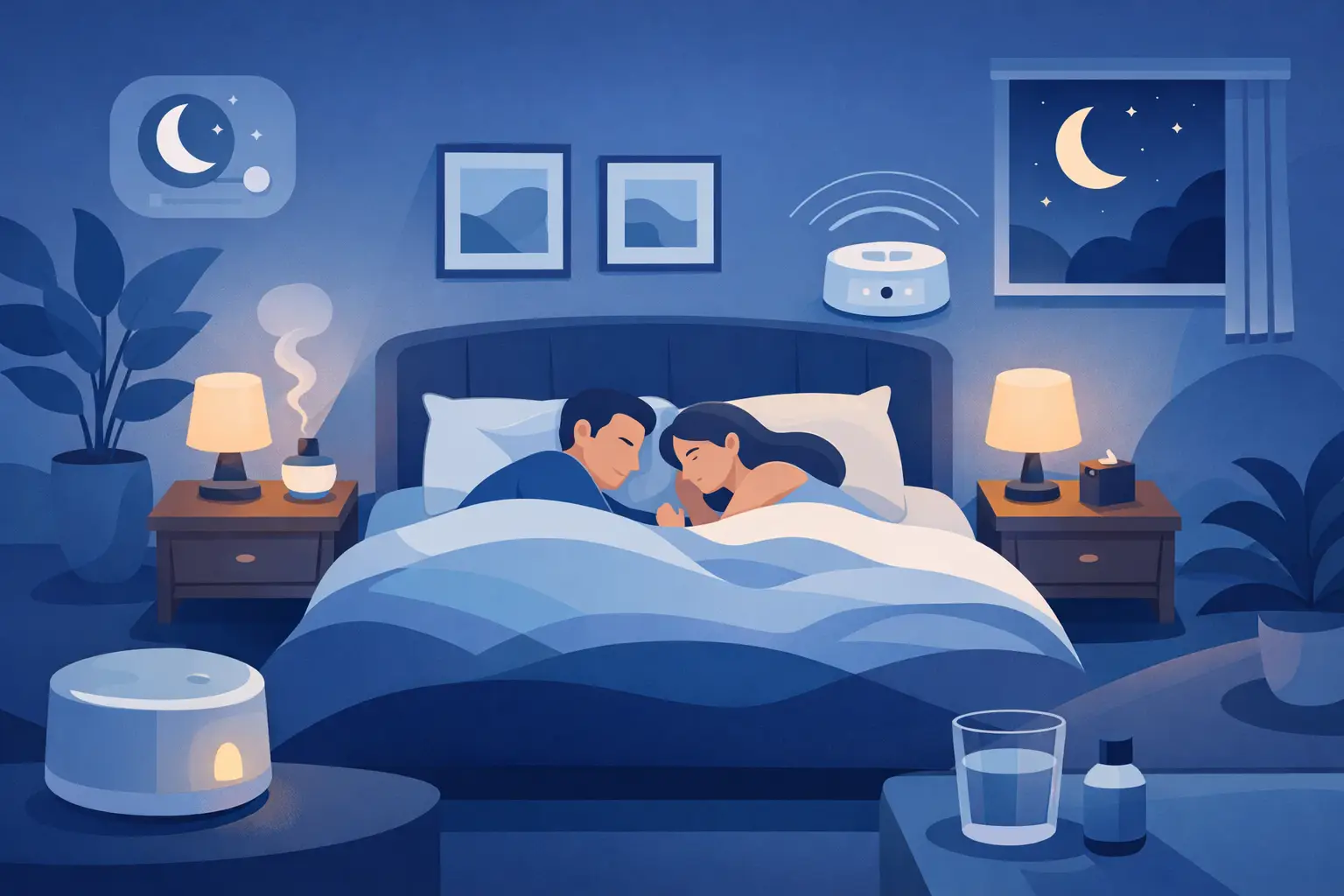
A poor night of sleep is not always caused by stress or a busy schedule. Sometimes, the room itself is working against you. Small adjustments to bedroom settings for better sleep can make it easier to fall asleep, stay asleep, and wake up feeling more restored.
For people who snore, wake with a dry mouth, or feel tired despite spending enough time in bed, the bedroom environment is a worthwhile place to start. It is also helpful to recognize when a sleep concern may need professional attention.
Start With a Cooler, More Consistent Temperature
Most people sleep best in a cool room. A bedroom that feels slightly chilly at bedtime helps support the natural drop in body temperature that occurs as you prepare for sleep. For many adults, a setting between 60 and 67 degrees Fahrenheit is a comfortable starting point, though personal preference matters.
Instead of overheating the entire room, try using breathable bedding and adding layers you can remove. Cotton, linen, and moisture-wicking materials may be more comfortable for people who run warm at night. If cold feet keep you awake, warm socks can help without making the rest of the room too hot.
Consistency matters, too. Large temperature swings throughout the night can interrupt sleep, particularly if you wake up sweaty or shivering. A fan can improve airflow and provide steady background sound at the same time.
Reduce Light Before and During Sleep
Your brain uses light as a signal to stay alert. Bright overhead lights, streetlights through the window, and a glowing phone screen can all make it harder to settle down.
Begin by making the room as dark as is practical. Blackout shades or curtains are useful for early summer mornings in Seattle, while a comfortable sleep mask can be a simpler option. Cover or turn away electronic displays when possible. Even a small source of light can be distracting for some light sleepers.
The hour before bed matters as much as the darkness in the room. Dimming lamps and setting aside screens gives your body a clearer cue that it is time to rest. If you need to get up during the night, use a low, warm-colored nightlight rather than switching on bright bathroom or hallway lights.
Make Noise More Predictable
Complete silence is not always necessary. What tends to disturb sleep is unpredictable noise: a passing car, a barking dog, a partner getting ready for work, or a sudden notification from a phone.
A fan, white-noise machine, or quiet ambient sound can soften those interruptions. Choose a sound that remains steady and low rather than music that changes in volume or tempo. If outside noise is a regular issue, consider earplugs designed for sleep, provided they are comfortable and do not cause ear irritation.
If your partner’s snoring is the main sound keeping you awake, it is worth treating that as more than a bedroom inconvenience. Frequent, loud snoring can be associated with obstructive sleep apnea , especially when it occurs alongside pauses in breathing, gasping, morning headaches, or significant daytime fatigue.
Choose Comfort That Supports Your Body
A supportive mattress and pillow will not solve every sleep problem, but discomfort can certainly create one. If you frequently wake with neck, shoulder, back, or jaw soreness, take a close look at your sleep setup.
Your pillow should keep your head and neck in a neutral position. Side sleepers often need more loft than back sleepers, while stomach sleeping can strain the neck for some people. A pillow that feels good for the first few minutes may still be the wrong fit if you are waking up stiff each morning.
Bed linens should feel comfortable against your skin and be easy to keep clean. For people with allergies, regular washing and a protective mattress or pillow cover may reduce exposure to dust mites and other irritants.
Keep the Bedroom Focused on Sleep
When possible, reserve the bed for sleep and intimacy rather than work, scrolling, or paying bills. This helps your mind associate getting into bed with winding down instead of problem-solving.
A simple routine can reinforce that connection: lower the lights, put devices away, adjust the thermostat, and do a calm activity such as reading a few pages of a book. The goal is not a perfect routine. It is a repeatable signal that your day is ending.
When Bedroom Changes Are Not Enough
Healthy bedroom settings can improve comfort, but they do not treat sleep apnea or other sleep disorders. Talk with a qualified healthcare professional if you snore regularly, stop breathing during sleep, wake up gasping, grind your teeth, or remain exhausted after a full night in bed.
For patients with diagnosed obstructive sleep apnea who cannot tolerate CPAP or need another treatment option, a custom oral appliance may help keep the airway open during sleep. At Seattle Oral Care, an AADSM-certified prosthodontist can evaluate whether oral appliance therapy may fit into your care plan.
Start with one or two changes you can maintain this week. A cooler, darker, quieter room may not fix every sleep issue, but it can give your body a more reliable place to rest - and make it easier to notice when additional care is needed.