A snoring problem often becomes impossible to ignore when it affects more than one person. A partner may be sleeping in another room, or you may wake with a dry mouth, morning headache, and the feeling that a full night in bed did not provide real rest. The best type of mouth appliance for snoring is usually a custom, adjustable mandibular advancement device, but the right answer depends on why you snore and whether obstructive sleep apnea is involved.
A mouth appliance can be a comfortable, effective option for many adults. It is not, however, a one-size-fits-all retail product. A proper evaluation helps protect your teeth, jaw joints, and long-term health while identifying the treatment most likely to improve your breathing.
Why snoring needs more than a quick fix
Snoring happens when air moves through a narrowed upper airway and causes soft tissues to vibrate. Nasal congestion, alcohol close to bedtime, sleeping on your back, excess weight, and normal changes in muscle tone during sleep can all make it louder. For some people, simple snoring is primarily a social and sleep-quality concern.
For others, snoring is a sign of obstructive sleep apnea. With sleep apnea, the airway partially or fully closes repeatedly during sleep. Breathing pauses may be followed by gasping, snorting, or brief awakenings that you may not remember in the morning. Untreated sleep apnea can contribute to daytime fatigue, reduced concentration, high blood pressure, and other health concerns.
That distinction matters. An appliance that reduces noise is not necessarily treating an airway problem safely or completely. If you snore loudly, have witnessed pauses in breathing, wake choking or gasping, struggle with daytime sleepiness, or have high blood pressure, a sleep evaluation should come before selecting an appliance.
The best type of mouth appliance for snoring: a custom MAD
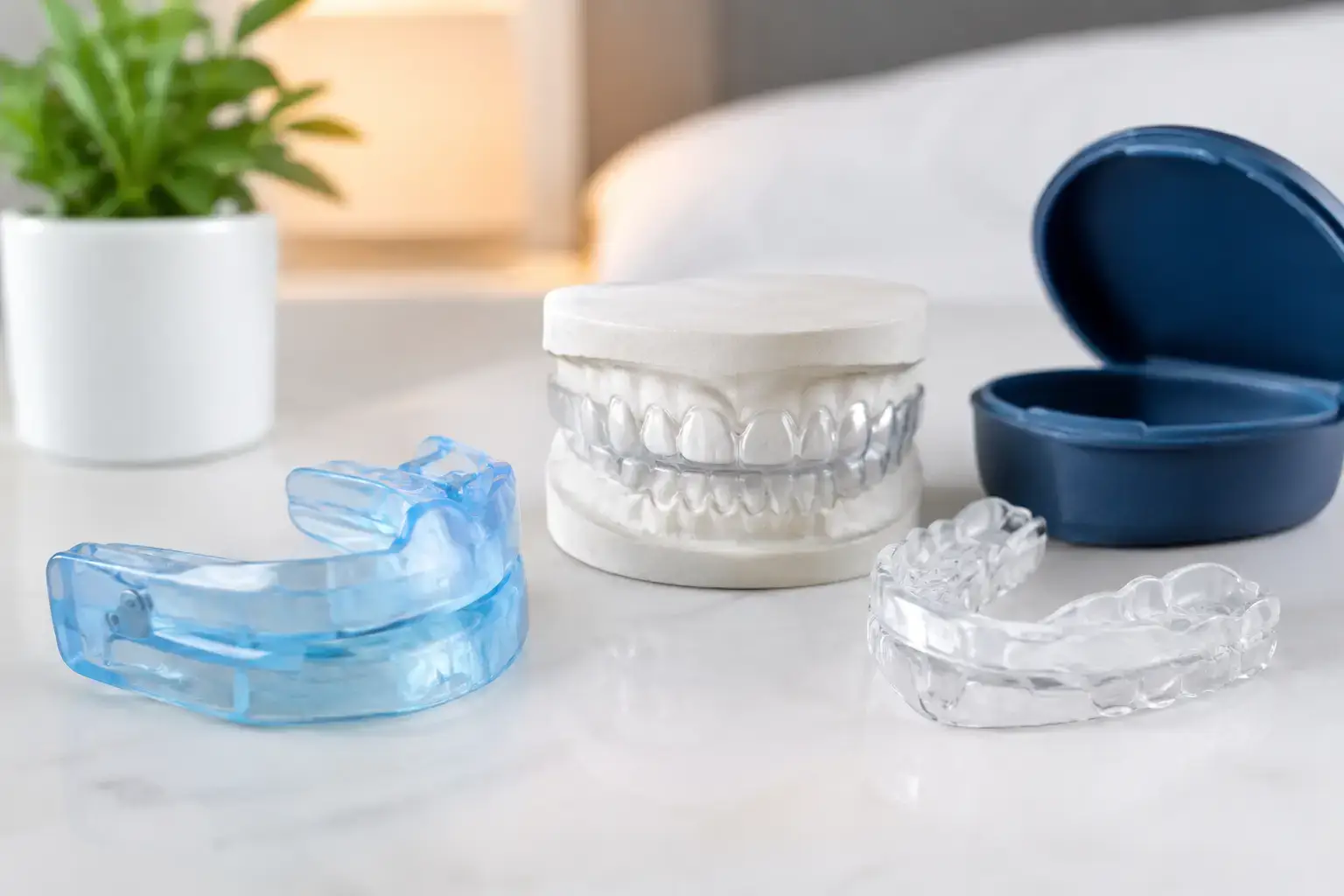
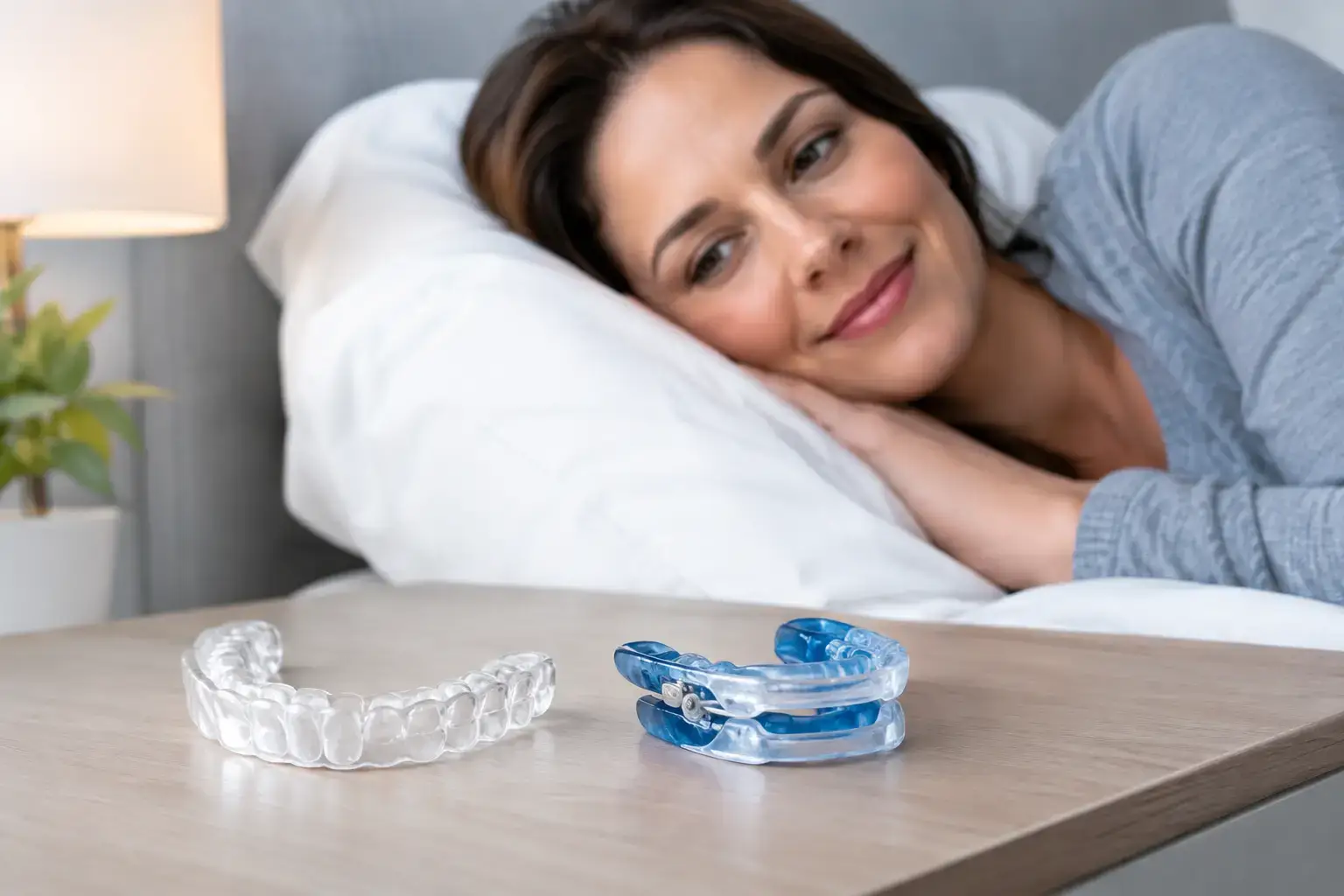
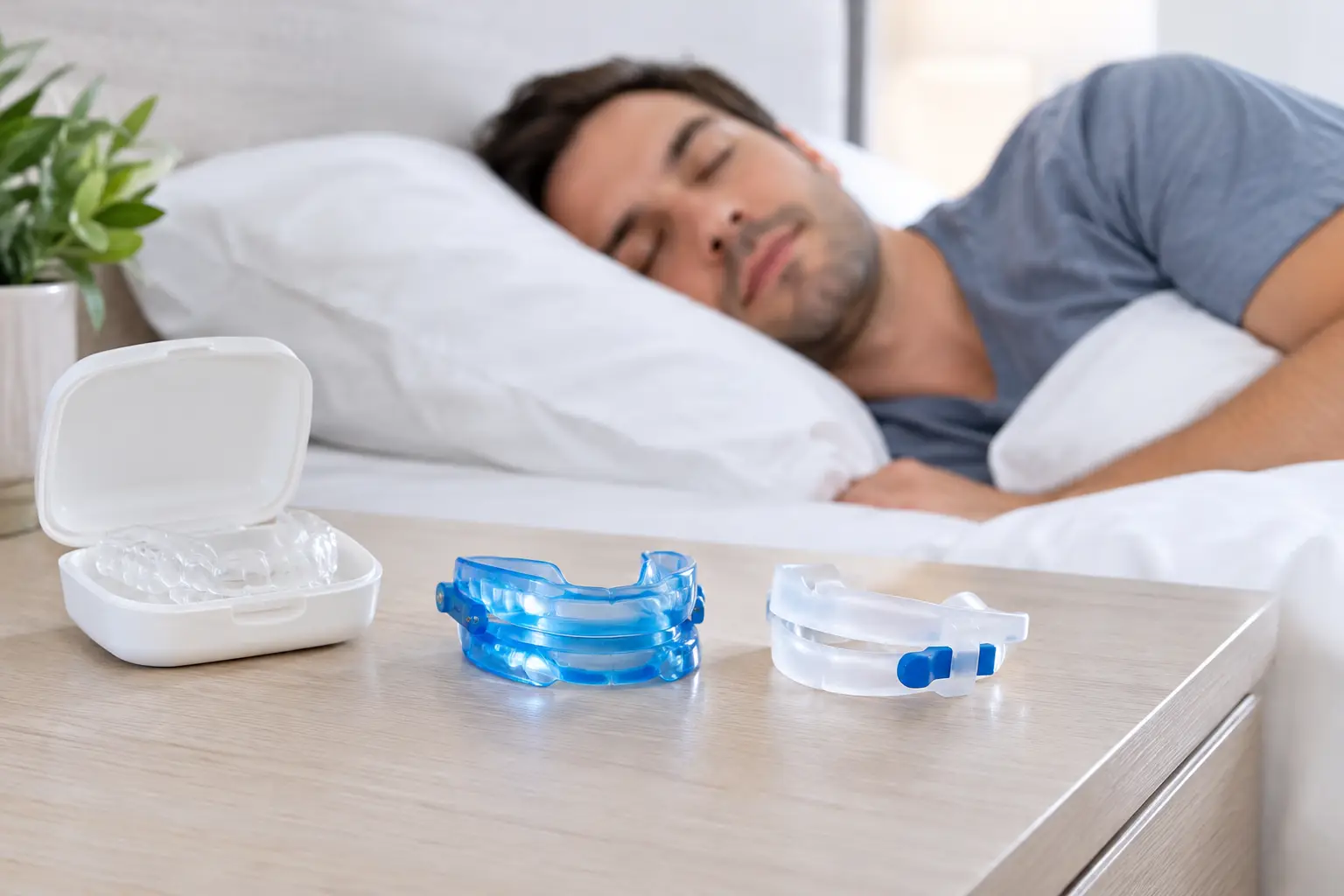
For many patients, the most effective oral option is a custom mandibular advancement device , often called a MAD. This device fits over the upper and lower teeth, similar to two connected retainers. It gently holds the lower jaw slightly forward while you sleep.
Moving the jaw forward helps keep the tongue and surrounding soft tissue from falling back into the airway. More room behind the tongue can reduce snoring and improve breathing in people with primary snoring or mild to moderate obstructive sleep apnea. For some patients with more severe apnea who cannot tolerate CPAP, an oral appliance may also be considered with guidance from a sleep physician.
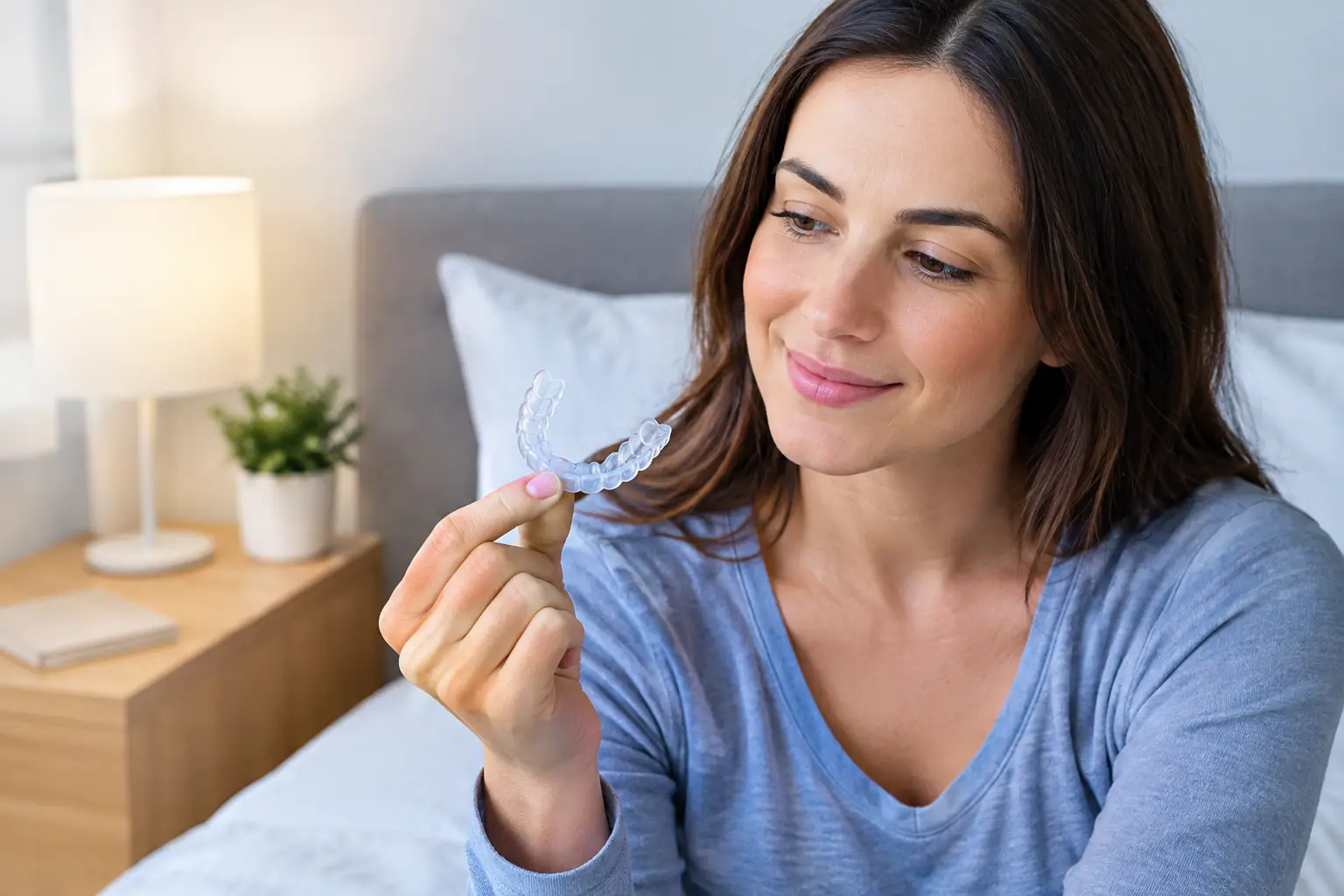
The word custom is key. A professionally made appliance is designed from detailed impressions or digital scans of your teeth. It is adjusted in small increments over time, allowing your dentist to find the position that supports breathing without moving the jaw farther than necessary. That adjustability is a major advantage over generic devices.
Why custom and adjustable devices tend to work better
A well-made device should stay in place comfortably, allow you to breathe through your mouth if needed, and distribute pressure carefully across your teeth. It also needs to be durable enough for nightly wear. Because every bite, jaw shape, and airway is different, a tailored fit can make the difference between an appliance you wear consistently and one that ends up in a drawer.
Follow-up is part of the treatment, not an extra. Your dentist may adjust the appliance gradually, ask about changes in snoring and daytime energy, and monitor your bite and jaw comfort. If sleep apnea is part of the diagnosis, repeat sleep testing may be used to confirm that the appliance is adequately improving breathing.
When a tongue-retaining device may be the better choice
A tongue-retaining device is another type of oral appliance. Rather than advancing the jaw, it uses gentle suction to hold the tongue forward. This can help prevent the tongue from narrowing the airway during sleep.
These appliances can be useful when a person has dentures , missing teeth, limited jaw movement, or dental conditions that make a mandibular advancement device less suitable. They may also be considered for people who cannot comfortably advance their lower jaw.
The trade-off is that many people find tongue-retaining devices harder to get used to. They can cause tongue tenderness, excess saliva, or a feeling of pulling. They also may not offer the same degree of adjustability as a custom MAD. Still, in the right situation, they can be a valuable alternative rather than a second-rate choice.
What about over-the-counter snoring mouthguards?
Boil-and-bite and other store-bought devices are widely available, and their lower upfront cost can be appealing. Some are designed to push the lower jaw forward, while others attempt to stabilize the tongue. A few people notice a temporary improvement, particularly if their snoring is mild and position-related.
The concern is fit and control. A poorly fitted appliance can feel bulky, slip out during sleep, irritate gums, strain the jaw joint, or create uneven pressure on teeth. Most over-the-counter devices also cannot be adjusted as precisely as a custom appliance. If you have crowns, bridges, implants, periodontal concerns, loose teeth, or a history of jaw pain, using an unsupervised device deserves particular caution.
A custom appliance costs more than a retail mouthguard, but it includes an evaluation, accurate fit, adjustment, and ongoing dental monitoring. For a treatment you may wear every night for years, those details matter.
CPAP versus an oral appliance
CPAP uses gentle air pressure to keep the airway open and remains the standard treatment for many people with moderate to severe obstructive sleep apnea. It is highly effective when worn consistently. An oral appliance is smaller, quiet, portable, and often easier to travel with, which can make it a welcome option for patients who struggle with CPAP.
Neither treatment is automatically right for everyone. The best choice depends on the severity and pattern of apnea, your anatomy, medical history, dental health, and ability to use the treatment consistently. Some people use CPAP at home and an oral appliance while traveling. Others may benefit from an appliance after a sleep physician confirms it is appropriate.
What to expect from oral appliance therapy
The process starts with a conversation about your sleep, health history, medications, dental health, and symptoms. A sleep study may be recommended or reviewed to determine whether sleep apnea is present and how severe it is. Your dentist also evaluates your teeth, gums, bite, jaw movement, and any existing restorations.
If an appliance is appropriate, digital scans or impressions are taken to create a device specifically for you. After delivery, you will receive instructions for wearing, cleaning, and gradually adjusting it. Early side effects can include temporary jaw stiffness, tooth tenderness, more saliva, dry mouth, or a short-lived change in how your teeth meet in the morning. These concerns often improve with proper adjustment, but they should never be ignored.
Long-term monitoring is especially important because nightly jaw positioning can gradually affect the bite in some patients. Regular reviews help identify small changes early and keep treatment comfortable.
Who should be cautious about a mandibular advancement device?
A MAD may not be the best starting point if you have untreated gum disease, unstable teeth, significant jaw-joint pain, very limited jaw movement, or insufficient healthy teeth to support the device. Extensive restorative work does not automatically rule out treatment, but it makes careful planning essential.
This is where coordinated dental care can be especially helpful. At Seattle Oral Care, an AADSM-certified prosthodontist can evaluate oral appliance options alongside your existing crowns, implants, dentures , or restorative needs. The goal is not simply to make a device fit. It is to create a plan that supports better sleep without compromising the dental work you rely on every day.
If snoring is disrupting your home, your energy, or your health, you do not have to guess your way through mouthguards. A focused sleep and dental evaluation can give you a clearer path toward quieter nights and mornings that feel more restorative.