An underbite can make it harder to feel comfortable in photos, bite into certain foods, or even close your teeth naturally. For many adults, the question is whether Invisalign for underbite can make a meaningful difference without the appearance or inconvenience of traditional braces. The answer depends less on age and more on what is causing the underbite in the first place.
Clear aligners can be an excellent option for selected cases, particularly when the issue is primarily dental. When the upper and lower jaws themselves are significantly out of balance, aligners alone may not deliver the healthy, stable bite you deserve. A thoughtful exam is the best place to begin.
What Is an Underbite?
An underbite occurs when the lower front teeth sit in front of the upper front teeth when you close your mouth. In an ideal bite, the upper teeth overlap the lower teeth slightly. An underbite can range from subtle to pronounced, and its effects can extend beyond appearance.
Some people experience uneven tooth wear, chipping, gum recession, jaw discomfort, chewing challenges, or speech concerns. Others have no symptoms but want to address a bite that has bothered them for years. The right treatment plan should consider your comfort, function, facial balance, and long-term oral health - not simply how straight the front teeth look.
Dental versus skeletal underbites
This distinction guides almost every treatment decision. A dental underbite happens when tooth positions are the main issue. For example, lower front teeth may tip too far forward, upper front teeth may tilt inward, or both. Because aligners are designed to move teeth precisely, they can often improve this type of bite.
A skeletal underbite is driven by the size or position of the jaws, such as a lower jaw that projects farther forward than the upper jaw. Invisalign can still straighten teeth and make limited bite improvements in some skeletal cases, but it cannot reposition adult jawbones. That is where orthodontic treatment, restorative planning, and sometimes jaw surgery must be considered together.
Does Invisalign Fix Underbite Problems?
Does Invisalign fix underbite concerns? For a mild or moderate dental underbite, it often can. A series of custom clear aligners may move upper teeth forward, guide lower teeth back, create room for more balanced tooth positions, and correct crowding that contributes to the bite problem.
Attachments - small, tooth-colored shapes placed on selected teeth - may give the aligners additional grip for more controlled movement. Your provider may also recommend small amounts of enamel contouring between teeth or elastics that connect the upper and lower trays. These techniques can expand what aligners can accomplish, but they must be planned carefully to protect the health of your teeth and gums.
For a mild underbite, Invisalign can be especially appealing because treatment is discreet and removable. You can take the aligners out to eat, brush, and floss. Consistent wear matters, though. Most patients need to wear their trays about 20 to 22 hours daily. Leaving them out frequently can slow treatment and reduce the predictability of the result.
Clear aligners are not a shortcut around a complex bite. If moving teeth would place them outside healthy bone support, create unstable contact between the back teeth, or camouflage a substantial jaw discrepancy without addressing function, another approach may be safer.
Mild Underbite Invisalign Treatment: What It Can Change
A mild underbite Invisalign case may involve only a few millimeters of tooth-position difference. Even so, planning is more detailed than many people expect. Your dentist needs to assess your bite from multiple angles, examine gum and bone support, review tooth wear, and evaluate how your jaw functions.
The goal is not simply to bring the front teeth into a more attractive position. Your bite needs stable contacts so you can chew comfortably and avoid concentrating force on a small number of teeth. This is particularly important for adults with crowns, implants, bridges, worn teeth, or a history of clenching.
Patients with existing dental work are not automatically excluded from Invisalign. However, restorations should be evaluated before treatment begins. A crown may move with its tooth, while an implant does not move orthodontically. Coordinating orthodontics with future restorative care can prevent avoidable compromises and help preserve your final result.
Invisalign Underbite Before and After: What Results Look Like
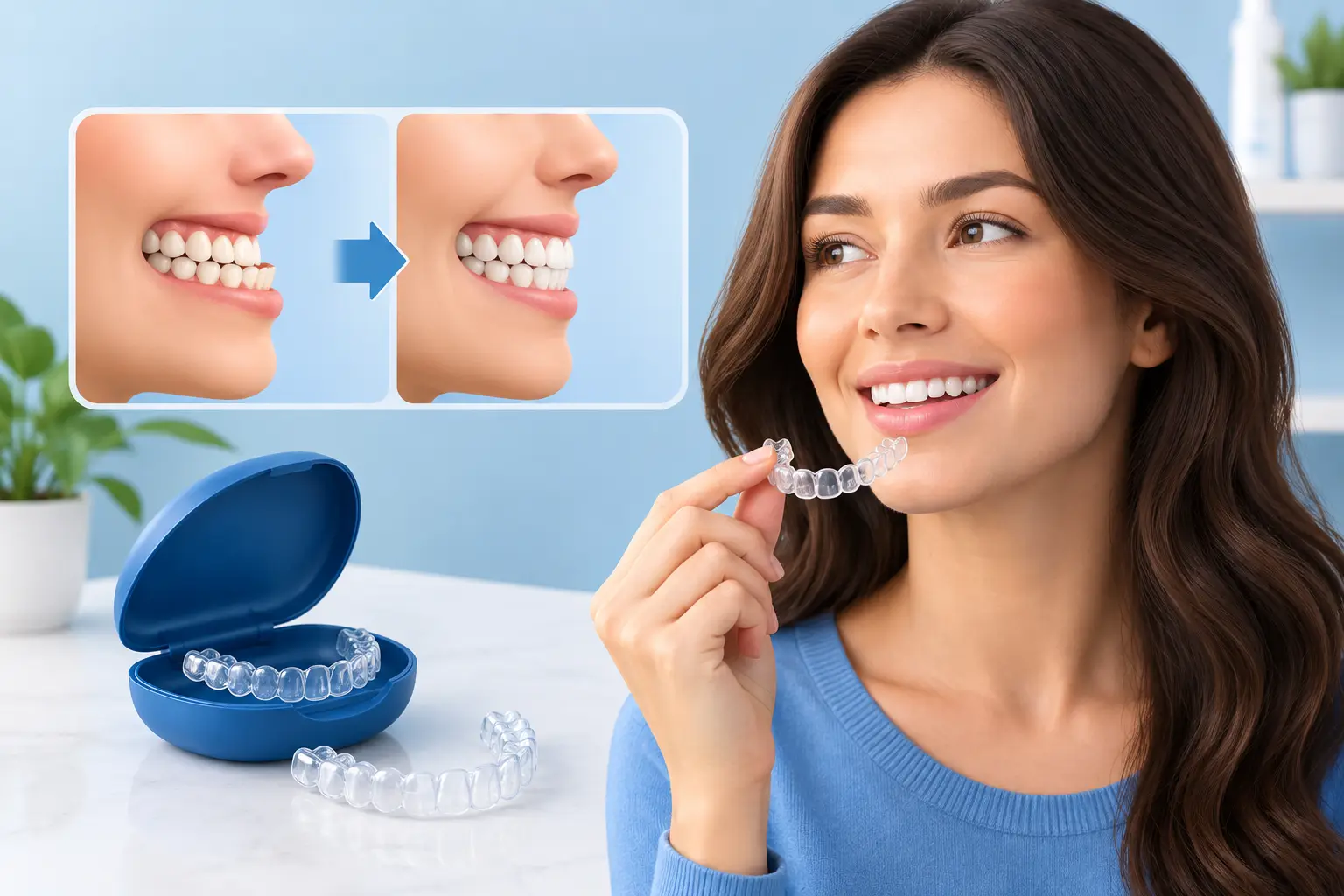
When people search for Invisalign underbite before and after photos, they are usually hoping for a simple answer: Will my lower teeth move behind my upper teeth? In an appropriate case, that change can be visible and significant. Crowded teeth may line up, the front bite may reverse into a healthier overlap, and the smile may appear more balanced.
But before-and-after images do not show the whole story. Two underbites that look similar in a photograph may have very different causes, gum support, jaw relationships, and treatment needs. The most successful outcome is one that looks natural while also improving how the teeth meet and function.
Treatment time varies. Limited correction may take several months, while more involved aligner treatment often takes 12 to 24 months. Many patients also need refinement aligners after the initial series to fine-tune tooth positions. Retainers are essential after treatment because teeth naturally tend to shift over time.
A responsible consultation should include digital scans, photographs, bite analysis, and a clear conversation about what treatment can realistically accomplish. You should understand where the plan is designed to fully correct the bite and where it may be designed to improve or camouflage it.
Invisalign vs Surgery for Underbite: When Is Surgery Considered?
The Invisalign vs surgery underbite decision is not an either-or choice for every patient. In more significant skeletal cases, orthodontic treatment and orthognathic surgery may work together. Aligners or braces position the teeth before surgery, surgery adjusts the jaw relationship, and orthodontic treatment finishes the bite afterward.
Jaw surgery is generally considered when jaw position is the central problem and the discrepancy affects function, facial balance, airway considerations, or long-term bite stability. It is a larger commitment than aligner treatment, involving careful planning, a surgical procedure, recovery time, and coordination between dental and surgical specialists.
For some adults, surgery offers the most comprehensive correction. For others, they may prefer a non-surgical orthodontic approach that improves the bite within reasonable limits. Neither choice should be framed as a failure. The best choice is the one that respects your health goals, comfort level, timeline, and the biology of your individual case.
Questions worth asking at your consultation
Ask whether your underbite is dental, skeletal, or a combination of both. Ask what changes are realistic with aligners alone, how treatment could affect your back-tooth bite, and whether restorations or gum treatment should come first. If surgery is mentioned, ask why it is being recommended and what a non-surgical alternative would and would not correct.
You should also feel comfortable discussing practical concerns, including aligner wear, expected treatment length, fees, retainers, and follow-up care. Good orthodontic planning is collaborative. You deserve to know what is happening at each stage and why.
Start With a Personalized Bite Evaluation
An underbite deserves more than a one-size-fits-all answer. At Seattle Oral Care, a comprehensive evaluation can bring together orthodontic, restorative, periodontal, and surgical perspectives when needed, especially for patients with complex dental histories.
Whether you are considering Invisalign for a mild underbite or exploring whether surgery is appropriate, the next step is a calm, detailed conversation about your options. A well-planned treatment can help you move toward a bite that feels as good as your smile looks.