A crossbite can be easy to miss in photos, yet you may feel it every time you chew. One or more upper teeth sit behind the lower teeth when they should overlap them, which can place uneven pressure on teeth and jaw joints. If you are researching Invisalign for crossbite, wondering, “does Invisalign fix crossbite?” or comparing Invisalign crossbite before and after results, the answer begins with identifying the type and cause of your bite.
What a crossbite can mean for your smile and comfort
Crossbites are not only a cosmetic concern. When teeth meet in an unbalanced way, certain teeth may absorb more force than they were designed to handle. Over time, this can contribute to enamel wear, chipped teeth, gum recession around a crowded tooth, or discomfort during chewing. Some people also notice that they shift their jaw to one side to make their teeth fit together.
Not every crossbite causes symptoms, and symptoms do not always mean treatment is urgent. Still, an orthodontic evaluation can clarify whether the bite is stable, whether it is causing damage, and whether clear aligners are an appropriate option. Adults often appreciate having this conversation before a small bite concern becomes a larger restorative one.
Anterior vs. posterior crossbite with Invisalign
The difference between an anterior and posterior crossbite matters because the treatment approach, complexity, and predictability can be quite different.
Anterior crossbite
An anterior crossbite affects the front teeth. One or more upper front teeth bite behind the lower front teeth. This can happen when an upper tooth is tilted inward, lower teeth are crowded forward, or the upper and lower jaws have a skeletal difference.
When the issue is primarily the position of individual teeth, Invisalign can often be a good solution. Aligners may move upper front teeth forward, create needed space, and adjust lower teeth so the bite closes more naturally. Attachments - small, tooth-colored shapes placed on selected teeth - can help aligners create the controlled movements needed for a more complex bite correction.
A true underbite is different. If the lower jaw is significantly forward relative to the upper jaw, the concern may be skeletal rather than dental. Invisalign may improve tooth positions and bite function in selected cases, but it cannot change adult jawbone structure in the same way surgery can. A careful evaluation helps set realistic expectations.
Posterior crossbite
A posterior crossbite involves the back teeth. The upper teeth may bite inside the lower teeth on one side or both sides. It can be related to tooth tipping, crowding, a narrow upper arch, missing teeth, or differences in jaw width.
For a dental posterior crossbite, Invisalign may gradually broaden the arch by moving teeth into healthier positions. Treatment may include attachments, carefully planned tooth movements, and sometimes elastics that connect the upper and lower arches to improve how the bite fits.
If the upper jaw itself is too narrow, however, aligners may have limits. In adults, meaningful skeletal expansion may require a different approach, such as a specialized expander or coordinated orthodontic and surgical care. Moving teeth too far outside their supporting bone can compromise long-term gum and bone health, so the goal is never simply to make an arch look wider.
Does Invisalign fix crossbite?
Invisalign can fix many crossbites when the issue is caused mainly by tooth position and there is enough healthy bone and gum support for the planned movements. It can be especially effective for mild to moderate dental crossbites, localized front-tooth crossbites, and some back-tooth crossbites caused by crowding or tipped teeth.
The more accurate answer is that Invisalign treats the right crossbite for the right patient. Clear aligners work best when treatment is designed around the whole bite, not just the teeth that look out of place. Digital planning allows the dentist to map tooth movement in stages, but it does not replace an in-person assessment of your teeth, gums, jaw relationship, tooth wear, and chewing patterns.
Some cases need treatment beyond aligners. Significant jaw discrepancies, severe skeletal narrowing, active gum disease, untreated decay, missing teeth that affect bite support, or extensive tooth wear may call for periodontal care, restorative treatment, orthodontic appliances, or referral for surgical evaluation. This is not a setback. It is how a long-term plan protects both your smile and function.
What Invisalign treatment for crossbite may involve
After a detailed exam and imaging, your care team creates a plan based on what is moving and why. You will receive a series of custom clear aligners, typically changing to a new set as directed. For predictable results, aligners need to be worn about 20 to 22 hours each day, removed only for meals, beverages other than water, and brushing and flossing.
Crossbite treatment often requires more than aligners alone. Attachments can give the aligners a better grip on teeth. Elastics may guide the upper and lower teeth into a more balanced relationship. Some patients need small amounts of enamel reshaping between teeth to relieve crowding, while others benefit from refinements - additional aligners used near the end of treatment to fine-tune the bite.
Treatment time varies. A limited anterior crossbite may take months, while a more involved posterior crossbite or bite correction can take a year or longer. Consistent wear, follow-up visits, and good oral hygiene all affect the final result.
Invisalign crossbite before and after: what changes to expect
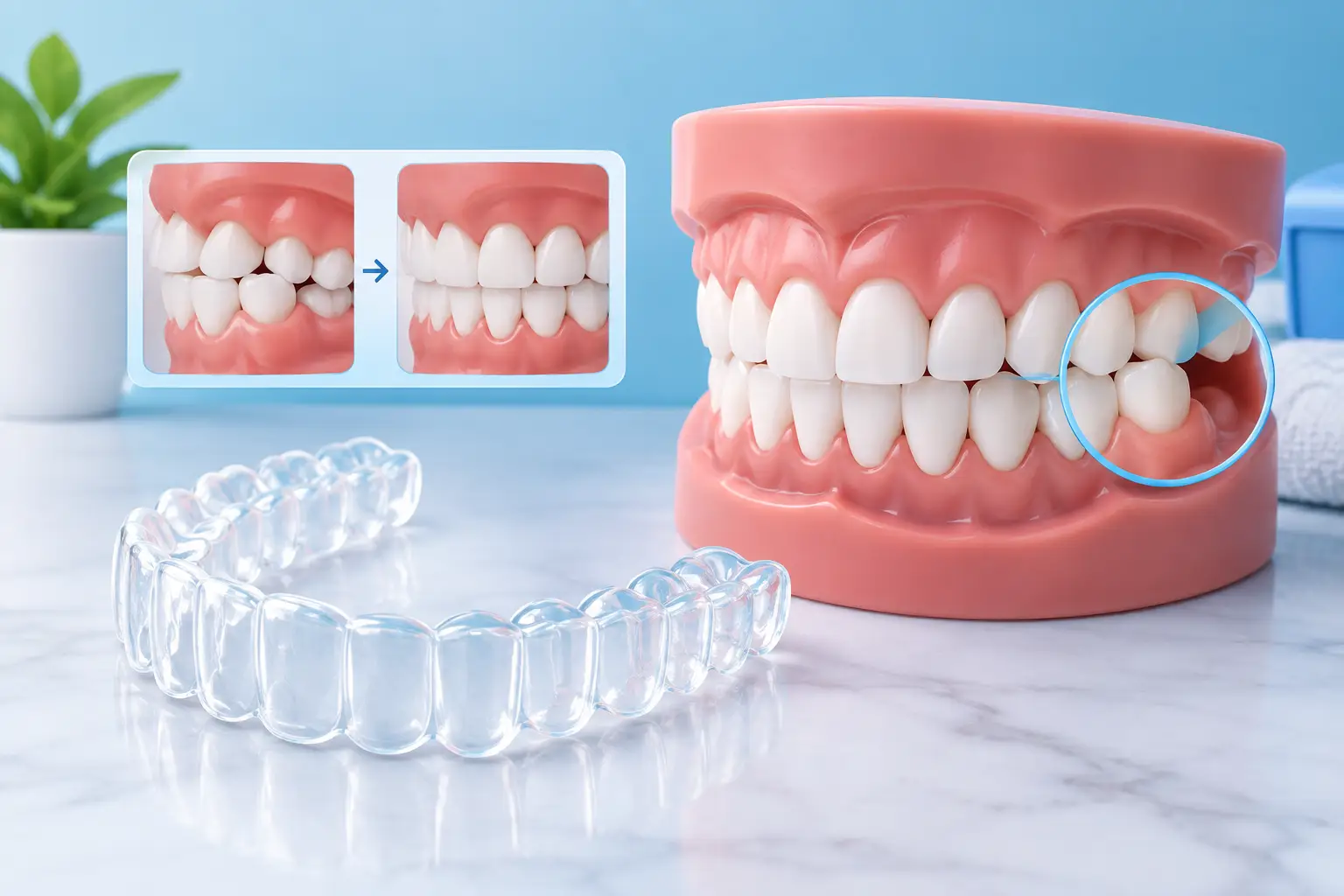
Before treatment, photographs and scans may show a tooth or group of teeth biting in the wrong relationship. You may see uneven wear, crowding, a narrow-looking upper arch, or a smile that appears slightly off-center because you habitually shift your jaw.
After successful treatment, the visible change is often a more even overlap between the upper and lower teeth. The less visible goal is equally meaningful: a bite that distributes chewing forces more comfortably and predictably. Depending on your starting point, your teeth may look straighter, your smile may appear broader, and cleaning between teeth may become easier.
Before-and-after images can be helpful, but they should not be treated as a promise. Two people can have similar-looking crossbites with very different jaw structures, gum support, restorative needs, and treatment options. Your own records and treatment simulation are more useful than comparing your smile to a photograph online.
Protecting your result after aligner treatment
Teeth naturally have a tendency to drift, particularly after they have been moved. Retainers are part of treatment, not an optional extra. Your dentist will recommend a retention plan based on your bite and may suggest a clear removable retainer, a bonded retainer behind certain front teeth, or both.
Regular dental visits also matter after Invisalign. They allow your dental team to monitor retainers, enamel wear, gum health, and any restorative work that supports your bite. If you clench or grind your teeth, a protective night appliance may be considered once orthodontic treatment is complete.
A crossbite deserves more than a quick answer from a photo or an online simulation. At Seattle Oral Care, a thoughtful consultation can help you understand whether clear aligners fit your needs, what alternatives may be worth considering, and what a healthy, lasting result could look like for your smile.