A dental implant should feel like a stable part of your smile, not a source of ongoing worry. While dental implant complications are uncommon with thoughtful planning and skilled placement, knowing the difference between normal healing and a problem that needs attention can protect both your comfort and your long-term result.
Some tenderness, swelling, and minor bruising are expected after implant surgery. These symptoms usually improve steadily over several days. Pain that intensifies, swelling that returns after getting better, or an implant that feels loose deserves a call to your dental team. Early evaluation is often the simplest way to address a concern before it affects the bone or surrounding tissues.
What Is Normal After Implant Surgery?
Healing is not identical for every patient. The number of implants placed, whether a tooth was removed at the same visit, and whether bone grafting was needed can all affect recovery. Mild bleeding during the first day, gum tenderness, and temporary sensitivity in nearby teeth can occur.
Most people notice gradual improvement each day. Your clinician may recommend soft foods, careful brushing around the area, a prescribed rinse, and avoiding smoking while the site heals. It is also normal for an implant to be covered by gum tissue during an early healing stage. That does not mean anything is wrong - it may simply be part of the treatment plan before the final crown, bridge, or denture is attached.
The key is the direction of your symptoms. Healing discomfort should trend downward. A new or worsening symptom is worth discussing, even if you are not sure it is serious.
Dental Implant Complications to Watch For
Implants have an excellent track record, but they are not maintenance-free. Complications can involve the surgical site, the gum and bone around the implant, or the restoration attached to it. Not every concern means the implant has failed. Many issues can be managed successfully when addressed promptly.
Infection and inflammation around the implant
The gums around an implant can become inflamed when bacterial plaque accumulates. Early inflammation, often called peri-implant mucositis, may cause redness, tenderness, bleeding during brushing, or a bad taste. At this stage, the condition can often be improved with professional cleaning and better plaque control at home.
If inflammation progresses and begins to affect supporting bone, it is known as peri-implantitis. This is more serious because bone loss can threaten implant stability. Smoking, a history of gum disease, inconsistent maintenance visits, and difficulty cleaning around a bridge or denture can increase the risk. Treatment depends on the extent of the infection and bone loss, so an exam and imaging are needed to determine the right approach.
Failure to integrate with the bone
For an implant to work, the jawbone must heal tightly around it in a process called osseointegration. On occasion, an implant does not fully integrate. It may become mobile, remain painful beyond the expected healing period, or show changes on an X-ray.
This does not automatically mean implants are not right for you. Factors such as bone quality, certain medical conditions, smoking, bite pressure, infection, and healing capacity can play a role. In some cases, the implant can be removed, the site allowed to heal or rebuilt with grafting, and a new implant placed later. A personalized plan matters more than rushing to replace the tooth.
A loose crown, bridge, or attachment
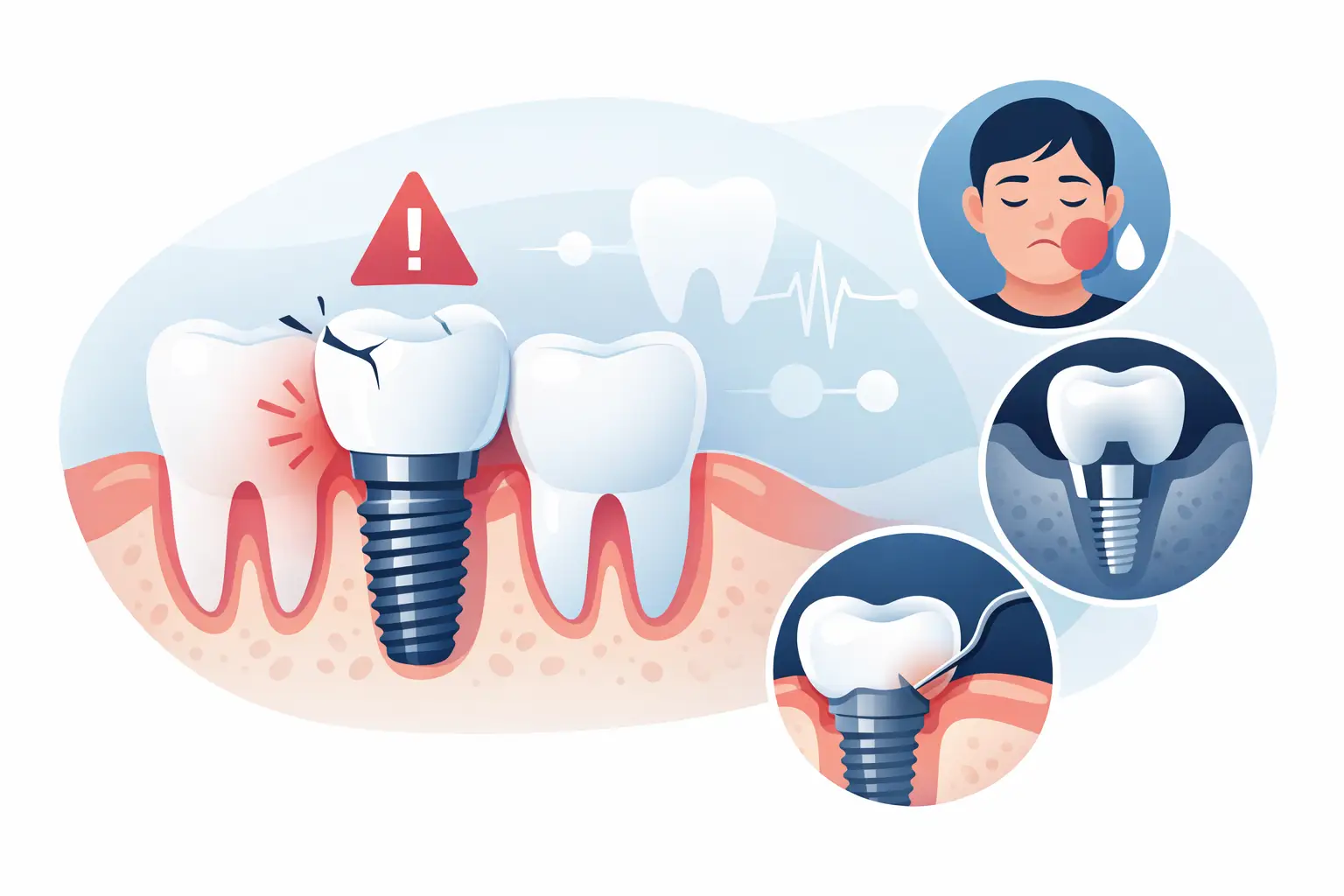
Sometimes the implant itself is stable, but the crown, bridge, or denture attached to it develops a problem. A retaining screw can loosen, porcelain can chip, or a restoration can wear over time. You may notice a clicking sensation, a change in your bite, food catching in a new spot, or movement in the visible tooth.
These mechanical concerns are often repairable, especially when treated early. Do not try to tighten or glue anything at home. Saving a loose restoration promptly can help prevent damage to the implant connection or nearby teeth.
Bite pressure and grinding
Implants do not have the same shock-absorbing ligament as natural teeth. That makes bite design especially important for people who clench or grind. Excess pressure may contribute to loosened components, fractured porcelain, or strain on the bone supporting the implant.
Your dentist may recommend a nightguard, adjustments to the biting surface, or a different restoration design. This is one reason comprehensive planning considers more than the missing tooth itself. Your bite, remaining teeth, jaw function, and habits all influence how an implant restoration should be built.
Nerve or sinus concerns
Rare surgical complications can involve nearby anatomy. In the lower jaw, irritation of a nerve may cause persistent numbness, tingling, or altered sensation in the lip, chin, or tongue. In the upper back jaw, an implant site may be close to the sinus.
Careful imaging and treatment planning significantly reduce these risks. Still, contact your dental team promptly if numbness does not fade as expected, if you have unusual sinus pressure, or if fluid seems to pass between your mouth and nose. These symptoms need professional assessment rather than watchful waiting.
When to Call Your Dentist Right Away
Trust your instincts if something feels off. Contact your dental office promptly if you notice any of the following:
- Pain, swelling, or bleeding that worsens instead of improving
- Pus, a persistent bad taste, fever, or drainage near the implant
- An implant, crown, bridge, or denture that feels loose or moves
- New numbness, tingling, difficulty swallowing, or trouble breathing
- A bite that suddenly feels uneven or a restoration that has fractured
Trouble breathing, significant facial swelling, or difficulty swallowing can require urgent medical attention. For other concerns, a timely dental visit allows your clinician to examine the tissues, assess your bite, and take imaging if needed. Waiting for a routine cleaning when you have active symptoms can make treatment more involved than necessary.
How Careful Planning Lowers Risk
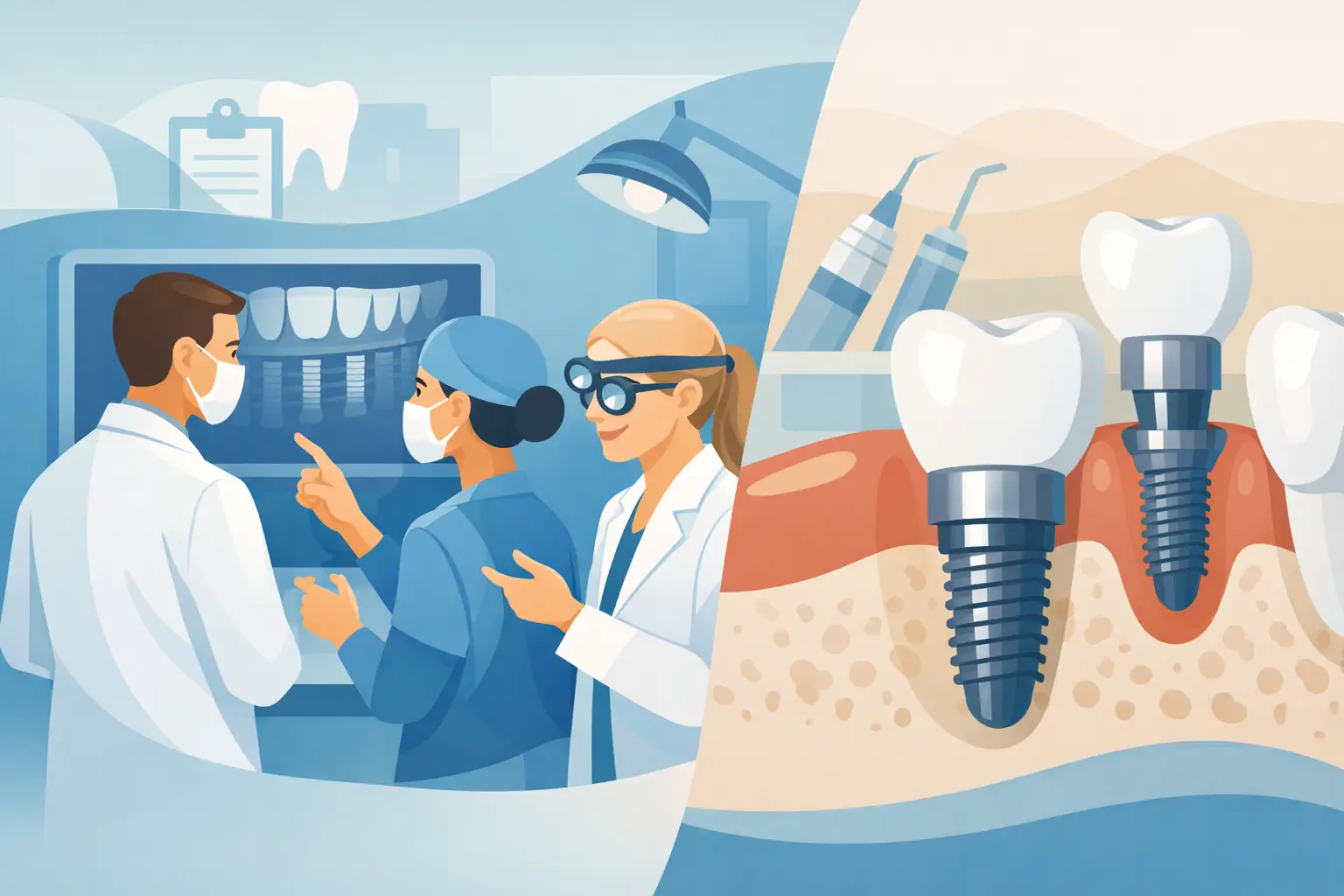
Long-term implant success begins before surgery. A complete evaluation should include a review of your health history, medications, gum condition, bite, bone volume, and the goals you have for your smile. Three-dimensional imaging can help the surgical team evaluate bone and plan around nerves and sinus spaces.
Some patients benefit from treatment before an implant is placed, such as gum therapy, bone grafting, treatment for tooth decay, or management of clenching. These steps can add time to treatment, but they are often an investment in a more predictable outcome. Immediate placement and same-day teeth can be appropriate in select situations, while a staged approach may be safer in others. The right choice depends on the health of the extraction site, available bone, infection risk, and the stability that can be achieved on the day of surgery.
Coordinated care is particularly valuable for complex cases. At Seattle Oral Care, restorative, periodontal, and surgical considerations can be evaluated together, so the final tooth is planned alongside the implant placement rather than treated as an afterthought.
Maintenance Is Part of Implant Care
An implant cannot get a cavity, but the gums and bone around it can still develop disease. Daily brushing, cleaning between teeth or under a bridge as instructed, and regular professional maintenance are essential. The tools may differ depending on your restoration. A single implant crown, an implant bridge, and an implant-supported denture each have different areas where plaque can collect.
Let your hygienist know if cleaning around an implant causes bleeding or discomfort. Routine visits also give your dental team a chance to check the implant, restoration, gum health, and bite before a small issue becomes a major repair. If you smoke or have diabetes, gum disease, dry mouth, or a history of grinding, you may need a more tailored maintenance schedule.
A well-placed implant can provide years of dependable function, but it deserves the same attention you would give any important part of your health. If you are concerned about a symptom or want clarity about an existing implant, a calm, thorough evaluation can replace uncertainty with a clear next step.