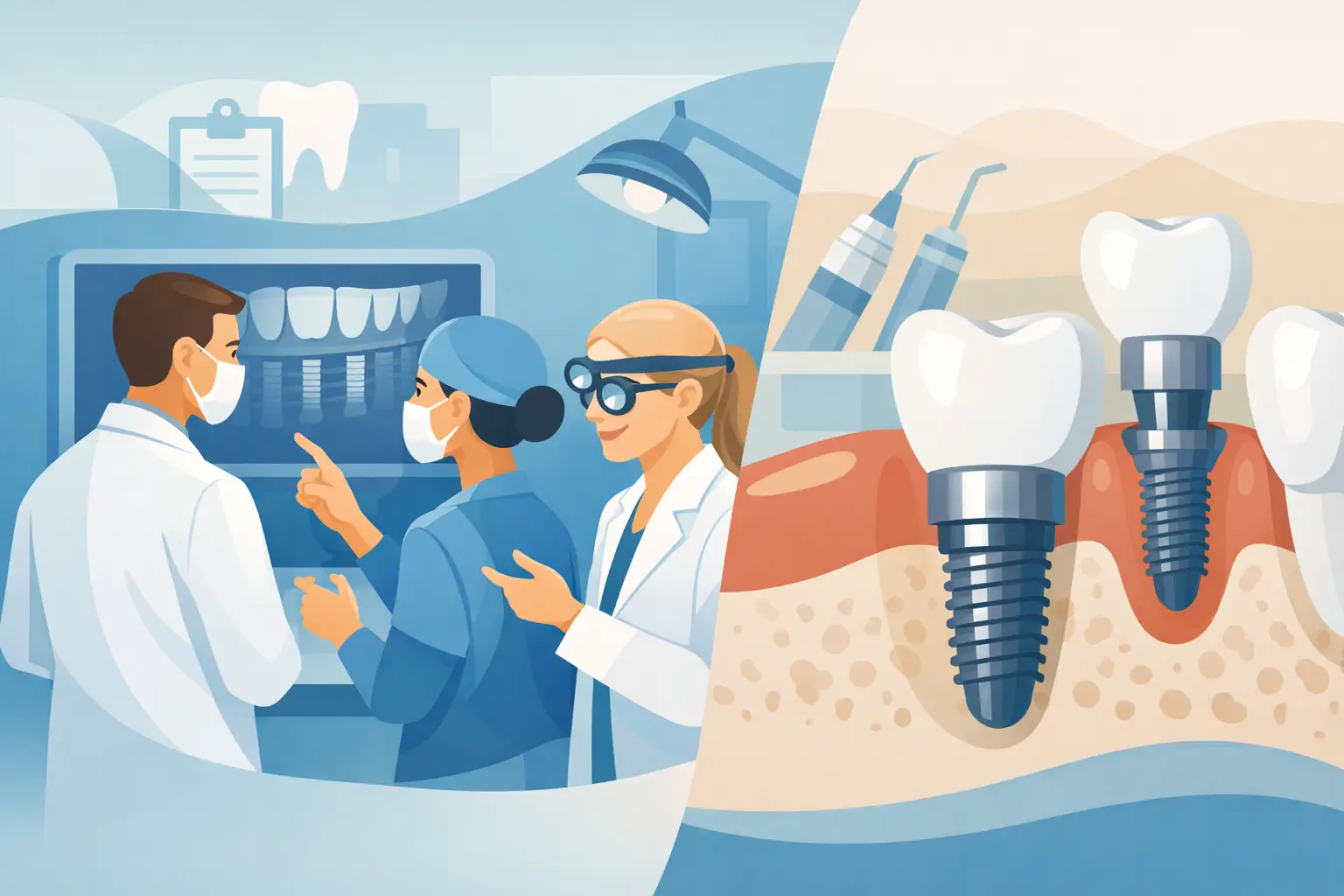
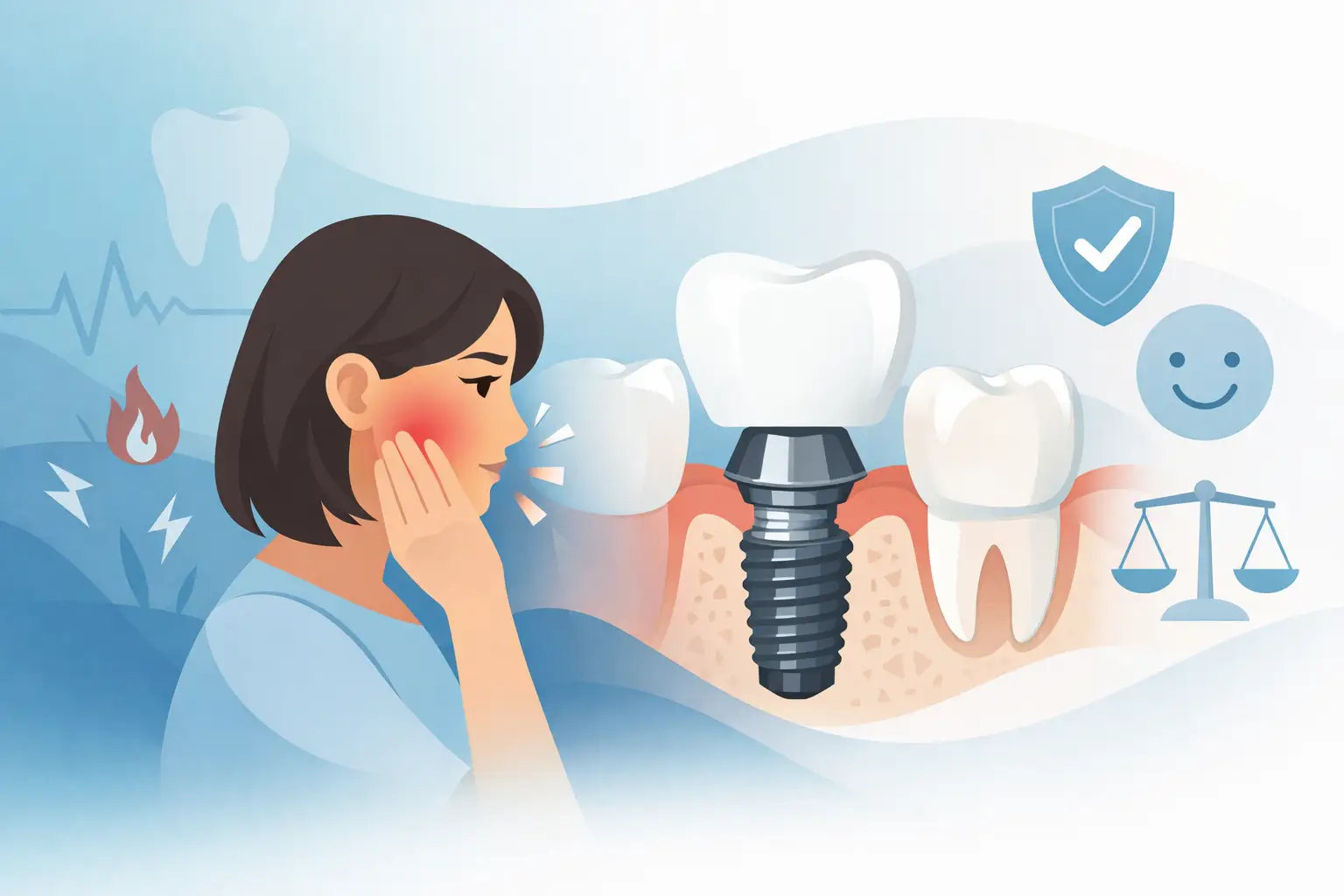
Most people are surprised by this: dental implant treatment is often more comfortable than having a tooth removed. If you are worried about the dental implant pain level, it helps to separate the procedure itself from the healing that follows. With effective numbing and a carefully planned procedure, you should not feel sharp pain during implant placement. You may feel pressure, gentle movement, or vibration, but your care team will check in with you throughout the appointment.
What does the dental implant pain level feel like?
During treatment, local anesthesia thoroughly numbs the surgical area. Some patients also benefit from sedation, especially if dental anxiety has made appointments difficult in the past. The goal is simple: you should feel calm, informed, and comfortable while your implant is placed.
After the numbness fades, it is normal to have tenderness in the gum tissue and jaw. Many patients describe it as similar to soreness after a dental extraction or a bruise in the jaw, rather than severe pain. Discomfort is usually most noticeable during the first 24 to 72 hours, then steadily improves.
The implant itself does not have nerves, so the source of discomfort is the healing gum and bone around it. Once the area has healed, a properly placed implant should feel secure and natural, not painful.
What can affect your dental implant pain level?
Every mouth and treatment plan is different. Replacing one missing tooth with a straightforward implant generally involves less recovery discomfort than a more extensive procedure, such as full-mouth restoration . Your expected comfort level can also depend on whether you need a tooth extraction, bone grafting, sinus augmentation, or treatment for gum disease before implant placement.
Your general health matters, too. Smoking, uncontrolled diabetes, certain medications, and poor oral hygiene can slow healing and increase the risk of complications. This is why a thorough consultation matters. Good implant care begins with detailed imaging, an evaluation of your gums and bone, and a treatment plan built around your specific needs.
The skill and coordination of your dental team can also make a meaningful difference. Careful surgical technique helps limit trauma to surrounding tissue, while clear aftercare instructions help you avoid preventable irritation during recovery.
Managing discomfort after implant surgery
Your dentist will give you instructions tailored to your procedure, but most patients manage recovery with a combination of rest, soft foods, cold compresses, and recommended pain medication. Depending on your health history, over-the-counter anti-inflammatory medication may be appropriate. Some patients need prescription medication for a short period, particularly after more involved treatment.
For the first day, avoid vigorous rinsing, drinking through straws, smoking, and strenuous exercise. Choose foods that do not require heavy chewing, such as yogurt, eggs, soup that has cooled to a safe temperature, or smoothies eaten with a spoon. Keep the surgical site clean exactly as instructed, but do not brush or disturb it aggressively.
Swelling may peak around day two or three before improving. A cold pack applied on and off to the outside of the face during the first day can help reduce swelling and soreness. Many people are ready to return to routine activities within a day or two, although it is wise to give yourself more time after complex surgery.
When pain is not part of normal healing
Some tenderness is expected. Pain that becomes stronger after initially improving deserves attention. Contact your dental team promptly if you notice severe or worsening pain, swelling that continues to increase after several days, fever, persistent bleeding, pus, a foul taste, or numbness that does not resolve as expected.
These symptoms do not automatically mean an implant has failed, but they should be evaluated quickly. Early care can protect your comfort and support proper healing.
A calmer implant experience starts with a clear plan
Fear of pain should not force you to live with a missing tooth, loose denture, or the daily limitations of damaged teeth. At Seattle Oral Care, implant treatment is planned with input from experienced restorative and surgical professionals, so patients understand what will happen, what they may feel, and how their recovery will be supported.
The best next step is a consultation where you can discuss your health history, anxiety concerns, and goals openly. When you know what to expect and have a team that listens, dental implant treatment can feel far more manageable than you imagined.