A painful, badly damaged tooth can make every decision feel urgent. When comparing a dental implant vs root canal , the central question is not which treatment is “better” in general. It is whether your natural tooth can be predictably saved and serve you well for years to come.
For many people, saving a healthy, restorable natural tooth is the preferred outcome. In other cases, removing a tooth with a poor long-term outlook and replacing it with an implant can prevent repeated treatment, discomfort, and uncertainty. A careful examination, digital imaging, and an honest discussion of your goals are what make the difference.
Dental Implant vs Root Canal: The Key Difference
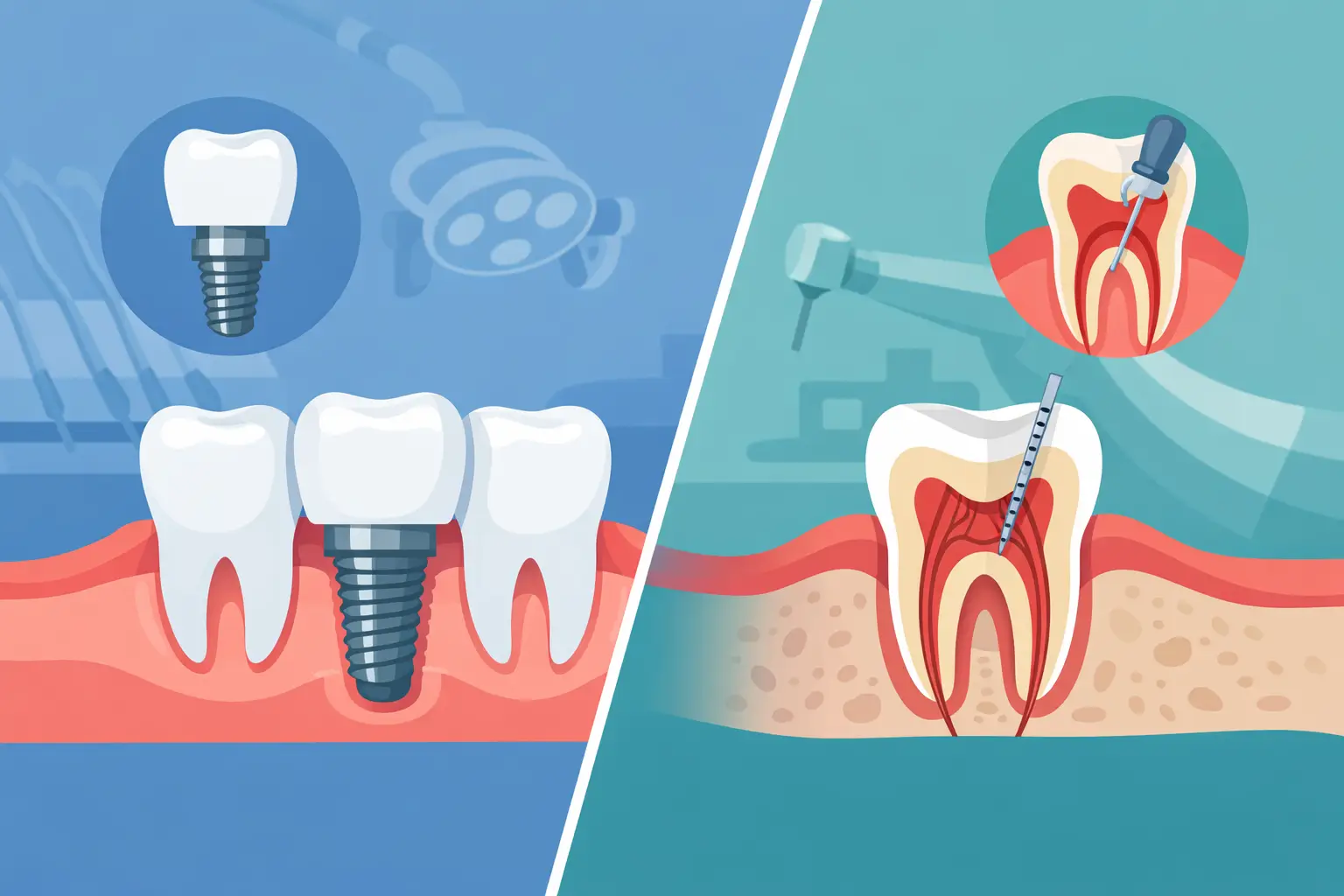
A root canal is a treatment used to save a tooth whose inner pulp has become inflamed, infected, or injured. During treatment, the dentist or endodontist removes the damaged pulp, cleans and disinfects the inside of the tooth, and seals it. Because a root canal-treated tooth can become more brittle over time, a crown is often recommended afterward, especially for back teeth that handle heavy chewing forces.
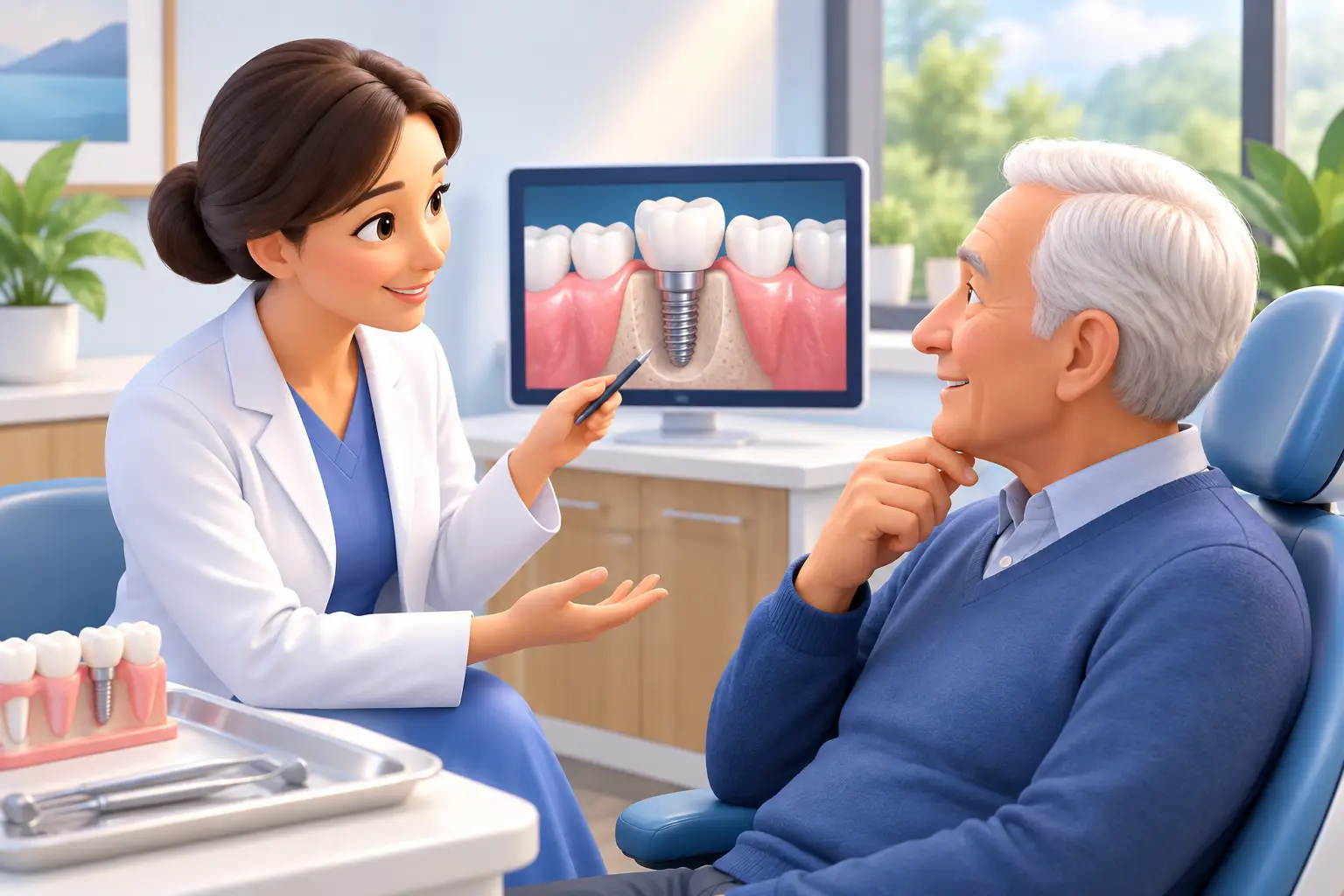
A dental implant replaces a tooth that is missing or needs to be removed. The implant itself is a small titanium post placed in the jawbone to act like a tooth root. After the area heals and the implant bonds with the bone, it is restored with a custom crown, bridge, or denture depending on how many teeth are missing.
Put simply, a root canal keeps your existing tooth. An implant replaces a tooth that cannot be saved. Both can be excellent long-term treatments when they are recommended for the right clinical situation.
When a Root Canal May Be the Better Choice
If the tooth has enough healthy structure, stable bone support, and a treatable infection, a root canal may be the most conservative path. Keeping your natural tooth preserves its root and avoids the need for extraction and implant surgery.
A root canal is commonly considered when deep decay reaches the pulp, a tooth cracks into the inner nerve tissue without extending too far below the gumline, or an old restoration has allowed bacteria to enter the tooth. Lingering sensitivity to heat or cold, pain when biting, swelling near the tooth, or a pimple-like bump on the gums can all be signs that prompt evaluation is needed.
The long-term prognosis depends on more than whether the infection can be cleaned out. Your dentist will consider how much healthy tooth remains above the gums, whether the tooth is cracked, the condition of the surrounding gums and bone, and whether a crown can protect the tooth effectively. A root canal that is followed by a well-fitting restoration can last many years.
Root canal treatment can also be less involved than extraction and implant replacement in some cases. However, it is not always the least expensive option once the root canal, buildup, and final crown are included. Cost should be discussed clearly, but the tooth’s prognosis should lead the decision.
When a Dental Implant May Be the Better Choice
An implant is often a stronger long-term option when a tooth is too damaged to restore reliably. This may occur when decay extends deeply below the gumline, a fracture reaches the root, the tooth has severe bone loss, or previous root canal treatment has failed and retreatment is unlikely to succeed.
Sometimes a tooth can technically be treated but has a guarded prognosis. For example, a severely cracked molar may be painful now and continue to split later, even after a root canal and crown. In that situation, investing in treatment that may not last can be frustrating and costly. Removing the tooth and planning for an implant can offer a more predictable foundation.
Implants also help preserve the jawbone in an area where a tooth has been lost. When a tooth is missing, the bone that once supported its root can gradually shrink. Replacing the root with an implant helps stimulate that bone, although adequate bone and healthy gums are needed before placement. Some patients need bone grafting first , particularly if the tooth has been missing for a long time or infection has caused bone damage.
For patients who are anxious about oral surgery, it helps to know that implant care is planned carefully and completed with comfort in mind. The timeline is usually longer than root canal treatment because healing is essential, but the process is broken into manageable visits. A temporary tooth may be possible while the site heals, depending on the location and your bite.
What Determines Whether a Tooth Is Savable?
A decision between a root canal and implant should never be based on an X-ray alone or a quick glance at a painful tooth. The most useful treatment planning looks at the whole picture.
First, your care team evaluates the tooth itself. Is there enough solid tooth structure to support a crown? Is there a crack, and if so, how far does it extend? A crack limited to the crown portion of the tooth may be manageable. A vertical root fracture usually means the tooth cannot be predictably saved.
Next comes the foundation around the tooth. Healthy gums and adequate bone support matter for both a natural tooth and an implant. Untreated gum disease can compromise either option, so periodontal care may be part of the plan before final restorative work begins.
Your bite matters, too. Teeth exposed to clenching, grinding, or uneven bite forces need added protection. A night guard may help protect a root canal-treated tooth and can also help protect an implant crown. An implant does not decay, but its crown, supporting bone, and surrounding gums still need consistent home care and professional maintenance.
Finally, your overall health, timeline, budget, and goals deserve a place in the conversation. Smoking, uncontrolled diabetes, certain medications, and healing concerns can affect implant planning. None of these automatically rule out implants, but they may change the timing or steps involved.
Comparing Treatment Time, Comfort, and Long-Term Care
A root canal is often completed in one or two appointments, followed by a permanent restoration once the tooth is ready. If there is significant infection, symptoms may take time to settle, but many patients feel relief soon after treatment begins.
Implant treatment typically takes several months from extraction to final crown, although the schedule varies. Healing time allows the implant to integrate with the jawbone. In some situations, an implant can be placed at the same visit as an extraction. In others, the site needs time to heal or requires grafting before implant placement.
Neither option is maintenance-free. A root canal-treated tooth needs regular exams, cleanings, and a crown that fits properly at the margins. An implant needs the same daily brushing and flossing, along with professional monitoring to check the gum tissue, bite, and restoration. The goal is not simply to finish treatment. It is to protect the result.
Why a Coordinated Opinion Can Help
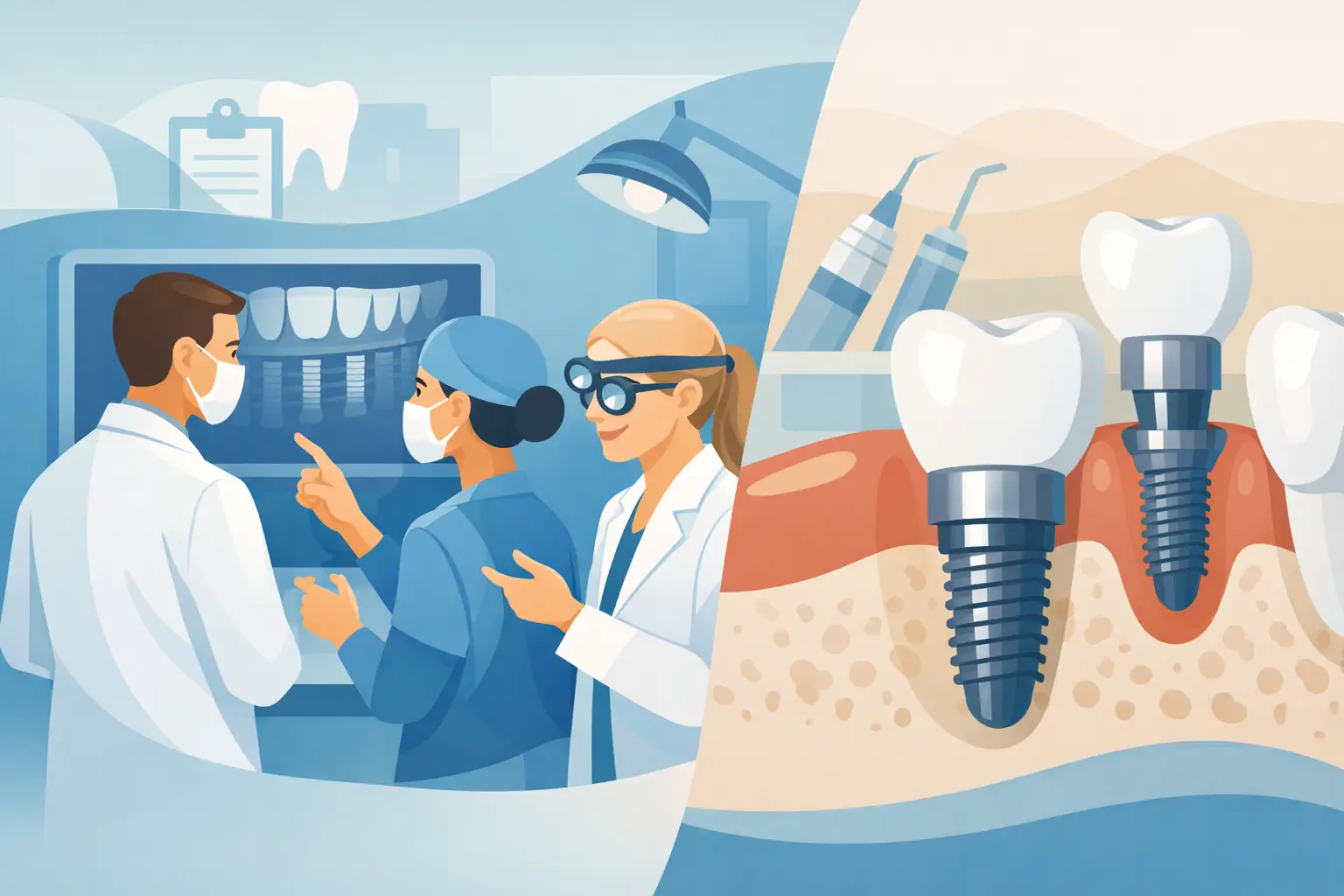
Complex cases do not always fit neatly into one category. A tooth may need an opinion from a general dentist, endodontist, periodontist, oral surgeon, or prosthodontist before the best path is clear. That is especially true when infection, gum disease, multiple failing teeth, or a history of extensive dental work is involved.
At Seattle Oral Care, coordinated planning allows the restorative and surgical sides of treatment to be considered together. Rather than focusing only on removing pain today, the care team can evaluate how a treatment choice will affect your bite, appearance, comfort, and long-term oral health.
Questions Worth Asking at Your Consultation
You deserve a recommendation you can understand. Ask whether the tooth has a good, fair, or poor prognosis after root canal treatment and restoration. Ask what could cause that treatment to fail, whether there are cracks or bone loss, and what the expected sequence would be if you choose an implant instead.
It is also reasonable to ask about the full cost of each path, including crowns, grafting, temporary teeth, and future maintenance. The lowest initial cost is not always the best value if a tooth is unlikely to last, but replacing a tooth that has a strong chance of being saved is not automatically the better choice either.
The right decision should leave you feeling informed rather than pressured. If you have persistent tooth pain, swelling, or a damaged tooth, scheduling an evaluation promptly can protect more options and help you move forward with confidence.