Losing most or all of your teeth changes more than your smile. It can affect what you eat, how clearly you speak, how comfortable you feel in photos, and whether you avoid social situations altogether. Full mouth dental implants can provide a stable, natural-looking way to replace an entire upper arch, lower arch, or both - but the right plan depends on your health, bone support, goals, and comfort level.
For many people, the first question is simple: “Can I really have fixed teeth again?” In many cases, the answer is yes. The next step is understanding what full-mouth treatment involves and how a coordinated dental team can make a complex process feel more manageable.
What Are Full Mouth Dental Implants?
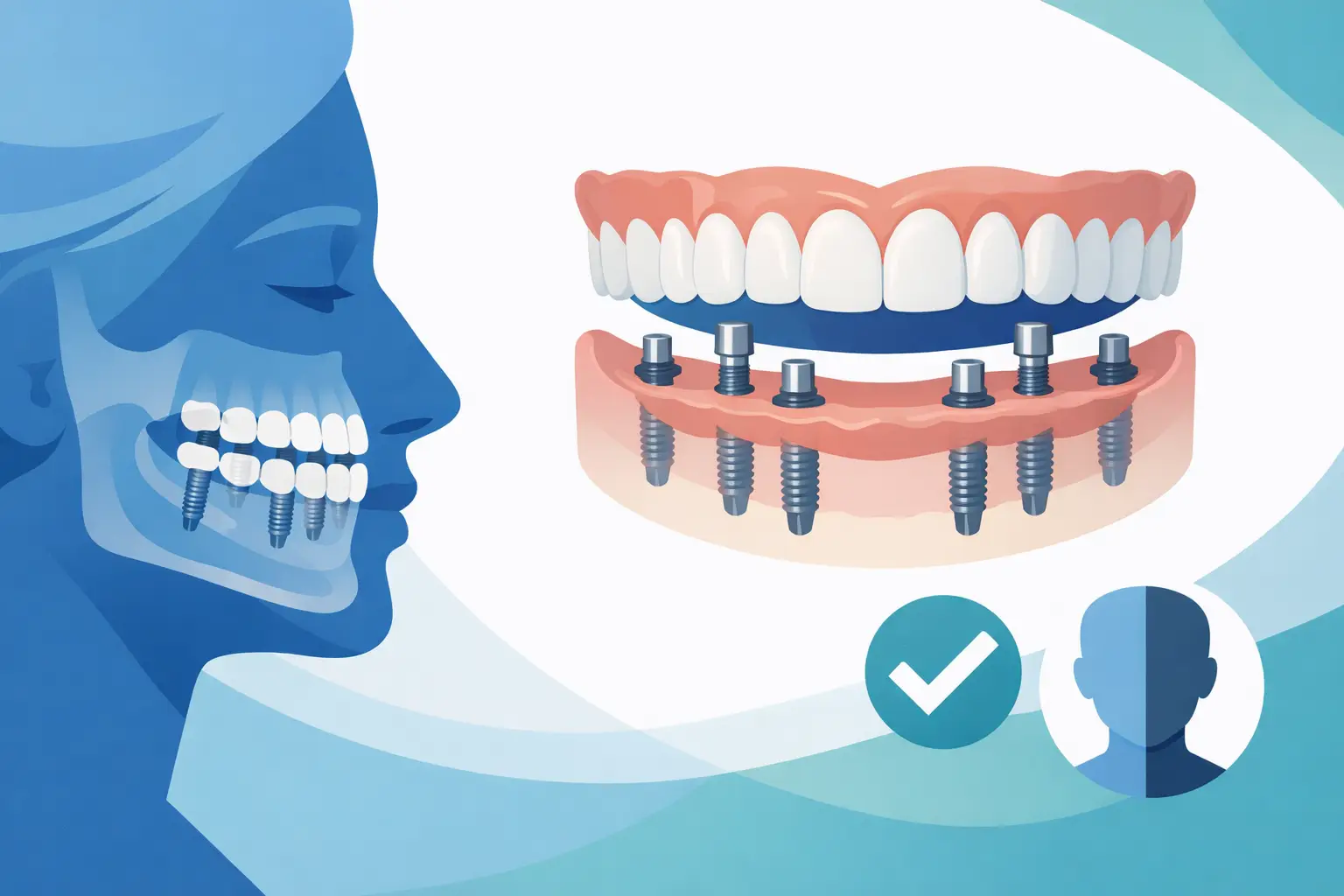
Full dental implants, sometimes called whole mouth dental implants, replace all of the missing or failing teeth in one or both arches. Rather than resting on the gums like a traditional denture, the replacement teeth are supported by implants placed in the jawbone.
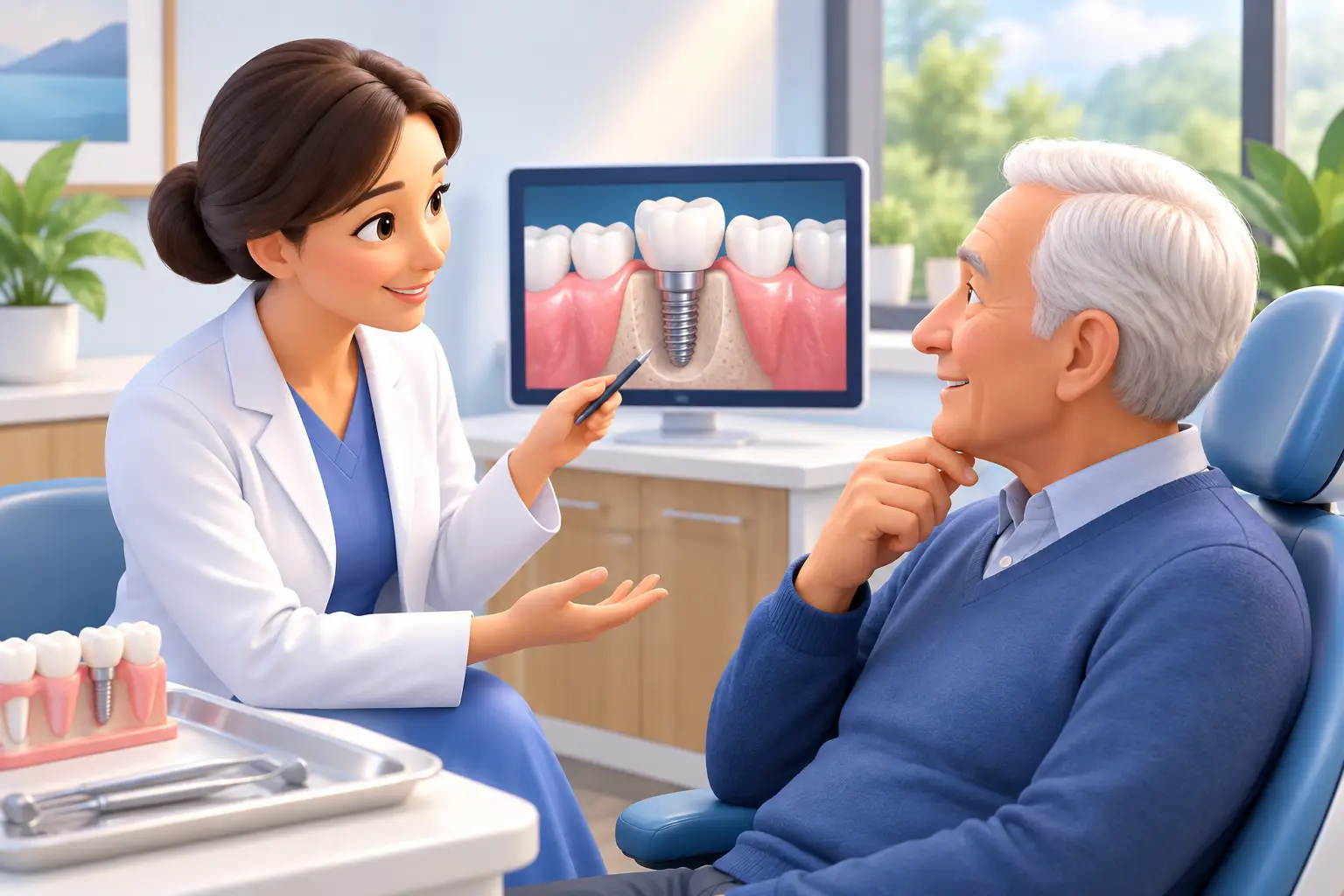
An implant is a small titanium post that functions like a tooth root. After it integrates with the bone, it can support a custom bridge of teeth. The result is designed to feel secure during everyday activities like talking, smiling, and eating.
A full arch does not usually require one implant for every missing tooth. Depending on the jawbone, bite, and restorative design, a carefully planned number of implants can support a complete upper or lower bridge. This is why you may also hear the term full arch dental implants .
The final teeth are planned around more than appearance. A well-designed restoration should support your facial profile, help you speak comfortably, distribute chewing forces appropriately, and fit your bite in a way that protects the implants and surrounding structures.
When Full Mouth Treatment May Be Worth Considering
People explore full mouth dental implants for different reasons. Some have worn dentures for years and are tired of movement, sore spots, adhesives, or limiting their food choices. Others still have natural teeth, but those teeth are loose, severely decayed, fractured, or affected by advanced gum disease.
This treatment may be worth discussing if you are dealing with extensive tooth loss, repeated failure of crowns or bridges, painful or unstable dentures, or teeth that no longer have a predictable long-term outlook. It can also be a practical option when rebuilding each tooth individually would involve ongoing treatment without a durable overall solution.
That does not mean implants are automatically the best answer for every person. Saving healthy, treatable natural teeth is often a priority. A thoughtful consultation should compare all reasonable options, explain the long-term maintenance involved, and help you understand why one path may be more appropriate than another.
The Planning Stage Is Where Long-Term Results Begin
Full-mouth rehabilitation is not a one-size-fits-all procedure. The most successful treatment begins with careful diagnostics and honest conversations about your health, expectations, timeline, and budget.
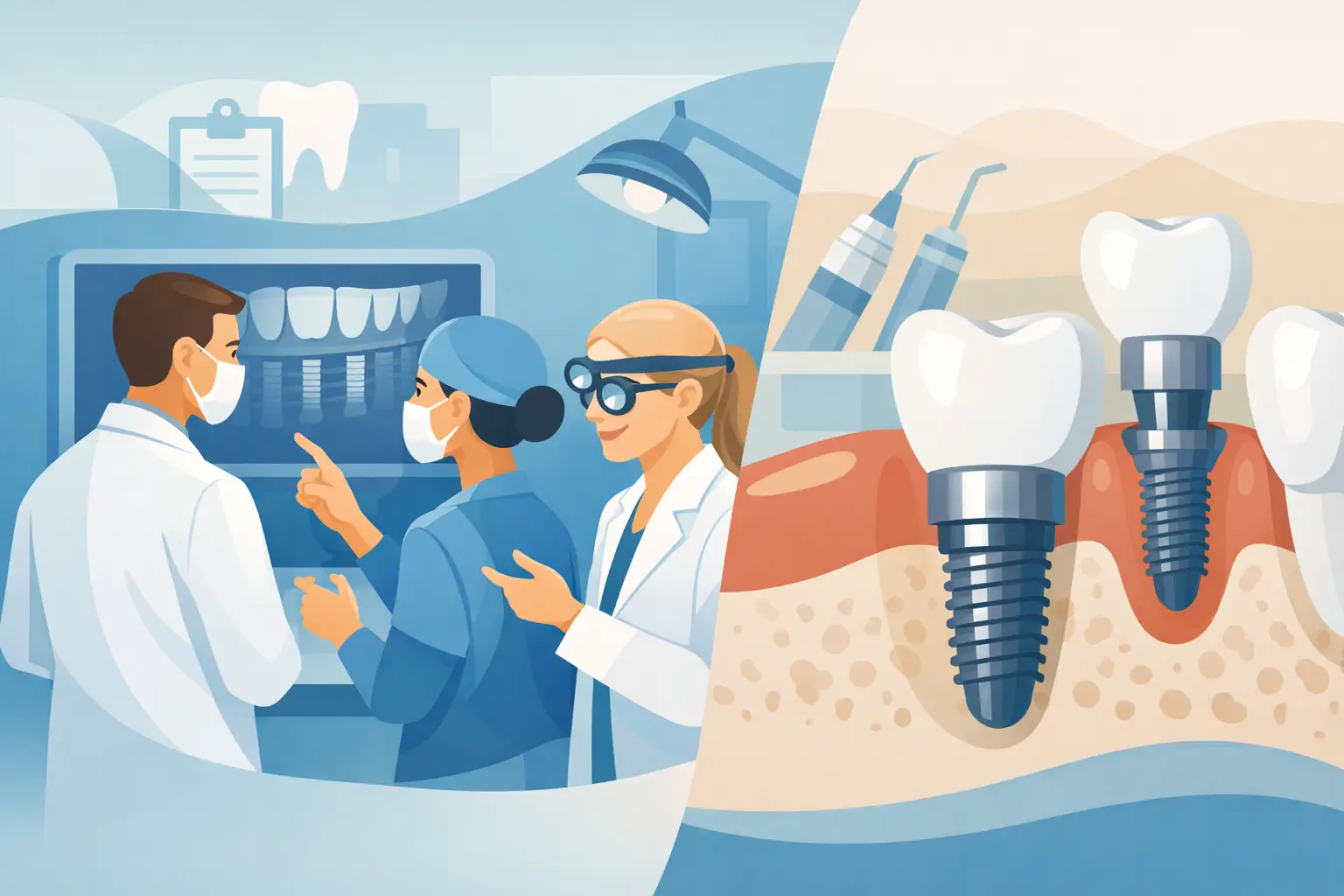
Your care team may evaluate the condition of your teeth and gums, jawbone volume, bite alignment, jaw-joint health, medical history, and habits such as smoking or teeth grinding. Three-dimensional imaging may be used to plan implant positions with precision and assess whether bone grafting or other preparatory treatment is needed.
Your temporary and final teeth also need to be designed intentionally. The shape, color, tooth display, speech patterns, and bite should suit your face and your daily life. This planning helps prevent a common mistake: treating implants as only a surgical procedure rather than a complete restorative process.
At Seattle Oral Care, coordinated planning can bring prosthodontic, surgical, periodontal, and general dental expertise into one treatment relationship. That matters when several clinical decisions need to work together, from removing failing teeth to designing a bridge that will be comfortable and maintainable for years.
What the Treatment Process Can Look Like
Every plan is different, but full mouth dental implants often follow a sequence. Some patients can receive temporary fixed teeth on the day implants are placed. Others need healing, bone grafting, gum treatment, or a staged approach before receiving their final bridge.
The typical process includes four broad phases:
- A comprehensive consultation , imaging, and treatment plan.
- Preparation of the mouth, which may include treating gum disease, removing failing teeth, or rebuilding bone.
- Implant placement and, when appropriate, a temporary bridge or denture during healing.
- Delivery of the final custom restoration, followed by regular professional maintenance.
Healing time varies. Implants need time to integrate with the jawbone, and the gums and bone can change after teeth are removed. Temporary teeth are not merely a cosmetic placeholder. They help you function during treatment while the team monitors healing and refines the final design.
The phrase “teeth in a day” can be appealing, but it deserves context. Same-day temporary teeth may be possible for some patients, yet they are not the same as receiving a finished, permanent full-arch bridge in one day. A careful provider will explain what you can expect on surgery day, what foods are safe during healing, and when your final teeth can be completed.
Who Is a Candidate for Whole Mouth Dental Implants?
Many adults with missing or failing teeth can be candidates, including people who have been told they have bone loss. Bone loss does not necessarily rule out implants. It may mean the plan requires grafting, a different implant approach, or additional healing time.
Overall health is an important part of the conversation. Conditions such as diabetes, osteoporosis, autoimmune disease, and heart disease do not automatically prevent treatment, but they may affect timing and healing. Some medications also require special planning. Smoking can increase the risk of complications and implant failure, so reducing or stopping tobacco use may be strongly recommended.
A successful outcome also depends on your willingness to care for the final restoration. Implant-supported teeth cannot develop cavities, but the gums and bone around implants can still become inflamed or infected. Home cleaning and regular maintenance visits are essential.
Choosing Between Fixed Teeth and Implant-Supported Dentures
Not every full-mouth solution is permanently fixed. Implant-supported overdentures attach to implants but can be removed at home for cleaning. A fixed full-arch bridge is secured by the dental team and remains in place between maintenance visits.
Fixed teeth often feel closer to natural teeth and can offer excellent stability. They may also involve more implants, more complex restorative work, and a higher financial investment. Implant-supported dentures can be a more accessible option for some patients and still provide far more security than conventional dentures.
The best choice comes down to your anatomy, lifestyle, dexterity, esthetic preferences, and long-term priorities. The goal is not to sell the most extensive option. It is to provide a solution you can care for comfortably and rely on with confidence.
What Do Full Dental Implants Cost?
The cost of full mouth dental implants varies because the treatment is highly individualized. A quote may include diagnostic imaging, extractions, sedation, bone grafting, implants, temporary teeth, final bridges, and follow-up care. Two patients can both receive “full mouth implants” while having very different clinical needs and total costs.
Ask for a clear, written treatment plan that explains what is included, what may be optional, and what could change if additional needs are found during treatment. It is also reasonable to ask about financing options and the expected maintenance costs after the final teeth are delivered.
The lowest initial price is not always the lowest long-term cost. A restoration that is poorly planned, difficult to clean, or unsupported by ongoing care can lead to costly complications. Durable results depend on sound surgical placement, thoughtful prosthetic design, quality materials, and routine follow-up.
Searching for Full Mouth Dental Implants Near Me? Ask Better Questions
When you search for full mouth dental implants near me , proximity is only one part of the decision. This is a long-term relationship, not a single appointment. You should feel comfortable returning for maintenance, adjustments, and questions after treatment is complete.
During a consultation, ask who plans the final teeth, who places the implants, how the team handles complications, and what support is available throughout healing. Ask to see how they evaluate bone, bite, and gum health before surgery. Most importantly, pay attention to whether you feel heard. You should never feel rushed into removing teeth or choosing a treatment you do not fully understand.
Full mouth dental implants can be life-changing, but they work best when the plan is built around you: your health, your smile, your daily routine, and your long-term comfort. A thorough consultation can turn a difficult dental situation into a clear path toward stable, lasting teeth.