A crown has a demanding job. It must protect a weakened tooth every time you chew, look natural when you smile, and feel comfortable enough that you forget it is there. This guide to dental crown materials explains the options your dentist may recommend and why the best choice is rarely the same for every tooth or every patient.
The material matters, but it is only one part of a successful crown. Your bite, the condition of the tooth underneath, whether you grind your teeth, and the crown’s location all affect the recommendation. A carefully planned crown made from the right material can restore comfort, confidence, and function for many years.
What a Dental Crown Is Designed to Do
A dental crown is a custom restoration that covers the visible part of a tooth above the gumline. It may be recommended when a tooth has a large filling, a crack, significant decay, wear from grinding, or has been treated with a root canal. Crowns are also used to complete dental implants and support certain bridges.
A good crown should fit precisely at the gumline, handle normal chewing pressure, and work in harmony with the teeth around it. That is why choosing a crown is not simply a matter of selecting the whitest or strongest material. The right balance depends on your individual needs.
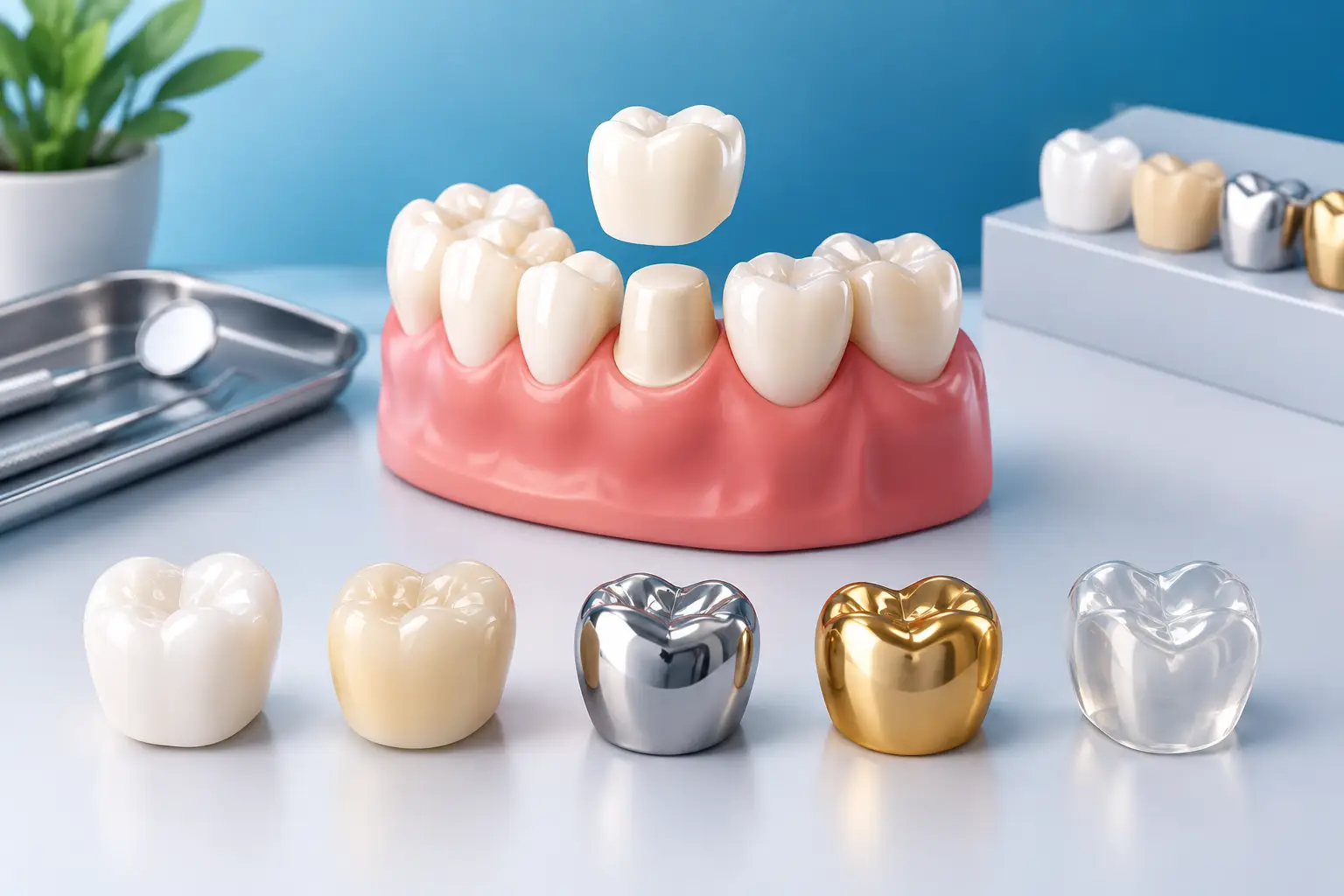
Guide to Dental Crown Materials: The Main Options
Modern crown materials offer far more natural-looking and durable choices than patients had in the past. Each has a place in restorative dentistry.
Zirconia: strength for high-pressure areas
Zirconia is a highly durable ceramic material. It is commonly used for molars, where chewing forces are greatest, and for patients who clench or grind their teeth. Modern zirconia crowns can be made with improved translucency, giving them a more natural appearance than earlier versions.
For a back tooth, zirconia is often an excellent choice because it resists chipping and fracture. It can also work well for implant crowns, especially where strength is a priority. The trade-off is that highly strong zirconia may not always mimic the subtle translucency of a natural front tooth as closely as some other ceramics. Careful polishing and bite adjustment are also essential to protect the opposing tooth.
Porcelain and ceramic: natural-looking smile restoration
All-ceramic and porcelain crowns are valued for their lifelike color, light reflection, and ability to blend with nearby teeth. They are often considered for front teeth, where appearance is especially noticeable in conversation and photos.
These materials can be a beautiful option when the tooth has enough support and your bite is favorable. Some ceramics are designed primarily for esthetics, while others offer a stronger balance of beauty and durability. If you have a deep bite, bite heavily on your front teeth, or grind at night, your dentist may recommend a stronger ceramic or a protective nightguard to reduce the risk of damage.
Porcelain crowns may also be fused to a metal substructure. Porcelain-fused-to-metal crowns have a long history of reliable use, particularly in areas that need added support. However, the metal beneath can sometimes create a darker edge near the gumline over time, which may be more noticeable on front teeth or if gums recede.
Lithium disilicate: a balance of beauty and strength
Lithium disilicate is a type of glass ceramic frequently chosen when a crown needs both realistic esthetics and dependable strength. It is often used for visible teeth, premolars, and selected molars, depending on the thickness available and the forces in your bite.
Its translucent appearance can make it an appealing option for a tooth near the front of the mouth. Like other ceramic choices, it is not automatically the best answer for every heavy grinder or severely damaged molar. The amount of remaining tooth structure and the way your teeth meet will guide the decision.
Gold and other metal alloys: proven durability
Gold alloy crowns and other full-metal crowns remain among the most durable restorations available. They are gentle on opposing teeth, resist fracture, and often require less removal of healthy tooth structure than certain ceramic crowns.
Their limitation is appearance. Because the metal color is visible, these crowns are typically chosen for back teeth where they are less noticeable. For some patients, especially those with a strong bite or a history of broken restorations, a gold crown remains a practical, long-lasting option.
Which Crown Material Is Best for Front Teeth?
For front teeth, the goal is usually to create a restoration that disappears into your smile. All-ceramic crowns and lithium disilicate crowns are common choices because they can be shaded and shaped to resemble natural enamel.
Your dentist will look beyond the tooth’s color. The surrounding teeth may have variations in brightness, translucency, and texture that need to be reflected in the crown. Gum health also matters. A crown can look very natural on day one, but healthy gums and regular care help preserve that result over time.
When a front tooth is heavily damaged or you have a strong bite, a more durable material may be preferable. Esthetics and strength do not have to be competing goals, but they do need to be planned together.
What Works Best for Back Teeth?
Molars absorb most of the pressure from chewing, so durability is usually the leading consideration. Zirconia, metal alloys, and certain high-strength ceramics are common choices. A crown on a back tooth does not need to be visibly metallic or opaque to be strong, but it does need enough material thickness and a stable foundation.
If the tooth has a large old filling, a crack, or limited healthy structure remaining, your dentist may recommend additional support before placing the crown. In some cases, a buildup or post is needed to help retain the restoration. The crown material alone cannot compensate for a tooth that has not been adequately prepared and supported.
Crowns on Dental Implants Have Different Considerations
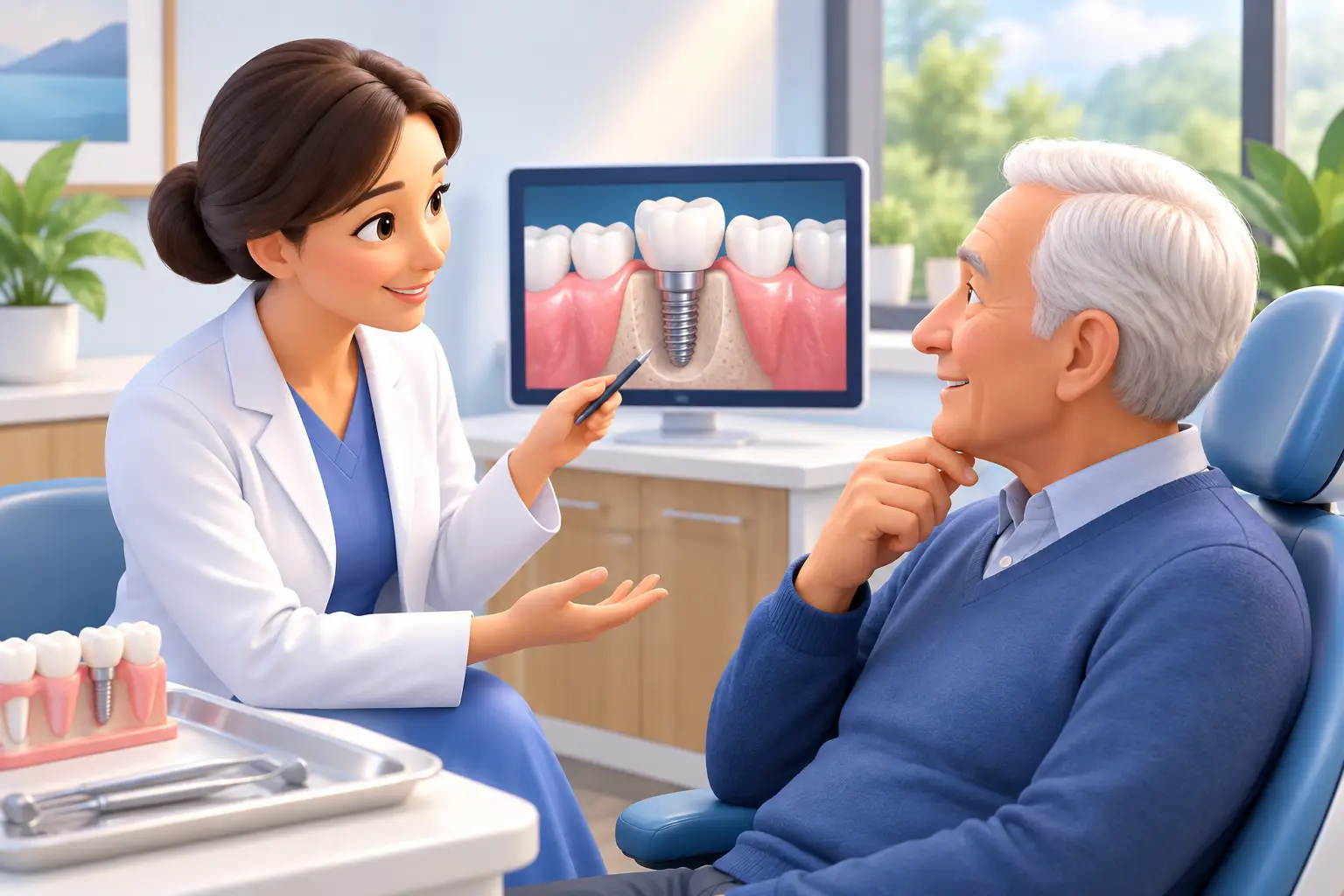
An implant-supported crown replaces the visible portion of a missing tooth after the implant has integrated with the jawbone. The material choice still affects appearance and strength, but the planning is different because an implant does not have the same cushioning ligament as a natural tooth.
The crown must be designed with a balanced bite to avoid unnecessary force on the implant and surrounding bone. Zirconia is often considered for implant crowns because of its strength, while layered ceramic options may be selected when exceptional esthetics are needed in the smile zone. The connection between crown and implant, access for cleaning, and the position of the implant all matter as much as the visible material.
Questions That Help Determine the Right Choice
During a crown consultation, it helps to discuss what you want from the restoration and what your dentist sees clinically. Are you concerned most about a natural appearance, maximum durability, or preserving as much natural tooth as possible? Do you clench or grind? Is this a front tooth, a molar, or an implant crown?
Your dentist should also evaluate the condition of neighboring teeth, your gumline, and the space available for the crown. If there is not enough room for a material to be thick enough, a different material or treatment approach may offer a safer long-term result.
For patients who feel nervous about dental treatment, knowing the reasoning behind a recommendation can make the process feel more manageable. You deserve clear answers about why one material is being recommended over another, what it will look like, and how to care for it afterward.
Helping Your Crown Last
Even the strongest crown needs thoughtful maintenance. Brush twice daily, clean between your teeth every day, and attend regular exams and cleanings so the crown margins and the tooth underneath can be monitored. A crown cannot decay, but the natural tooth at its edge still can.
If you grind or clench , a custom nightguard may protect both your crown and your natural teeth. Avoid using any tooth, crowned or otherwise, to open packages or bite hard nonfood objects. If a crown feels high when you bite, feels loose, or causes persistent sensitivity, contact your dental office rather than waiting for it to worsen.
At Seattle Oral Care, crown recommendations are made around your tooth, your bite, and the result you want to live with. A thoughtful consultation can turn an uncertain decision into a clear plan for a stronger, more comfortable smile.