You may have been told that your snoring, daytime fatigue, morning headaches, or witnessed pauses in breathing warrant a sleep study. The questions behind “home sleep study vs in-lab sleep study,” “which sleep study is right for me,” and “polysomnography vs home test” are common for a person told to get a sleep study who is weighing the two types. Both tests can be valuable. The right choice depends on what your care team needs to learn and how straightforward or complex your symptoms may be.
Sleep testing is not about passing or failing a night of sleep. It is a way to understand whether disrupted breathing, movement, or another sleep concern could be affecting your health, energy, mood, and quality of life. A clear diagnosis helps your physician recommend treatment that fits your needs.
Home Sleep Study vs In-Lab Sleep Study
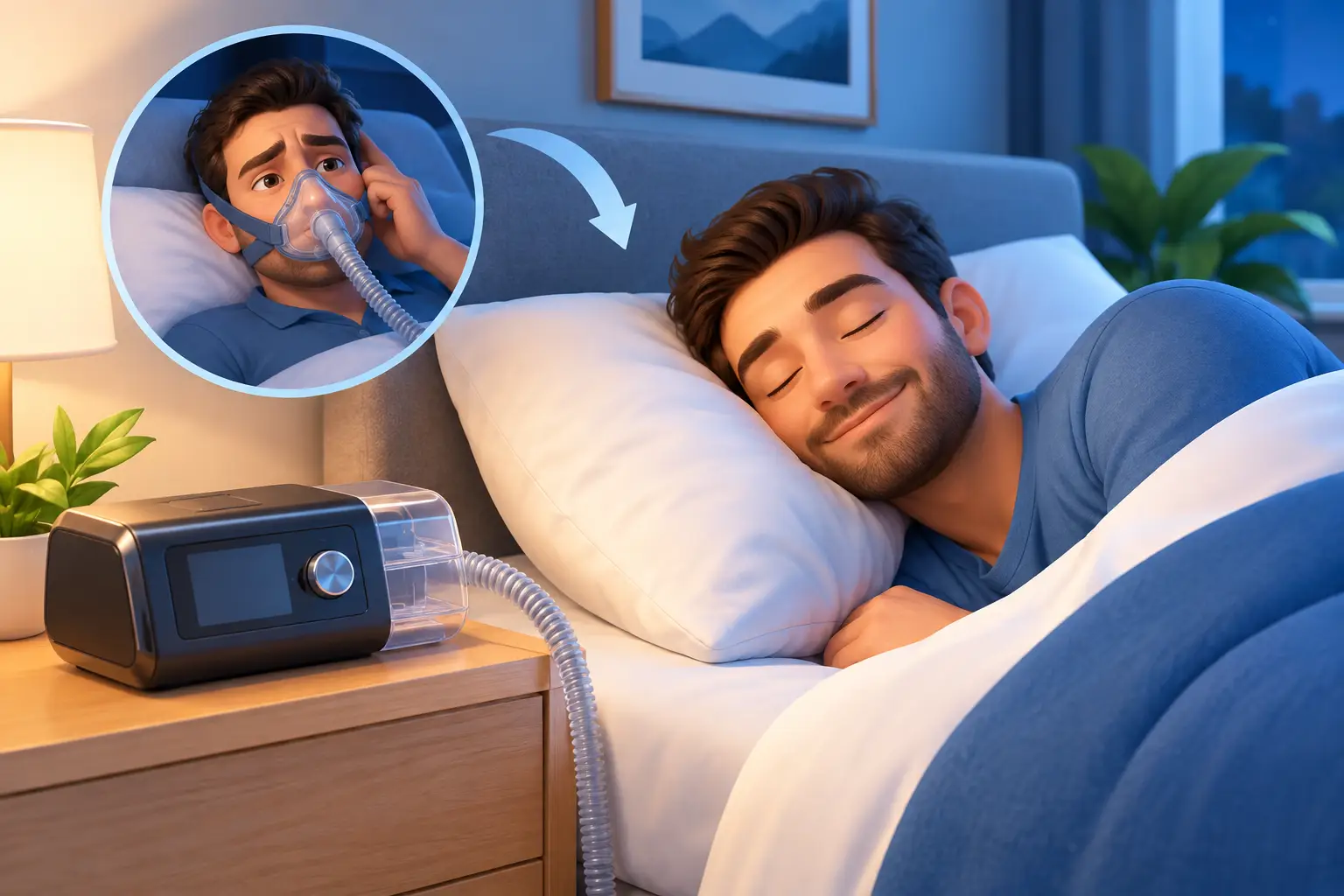
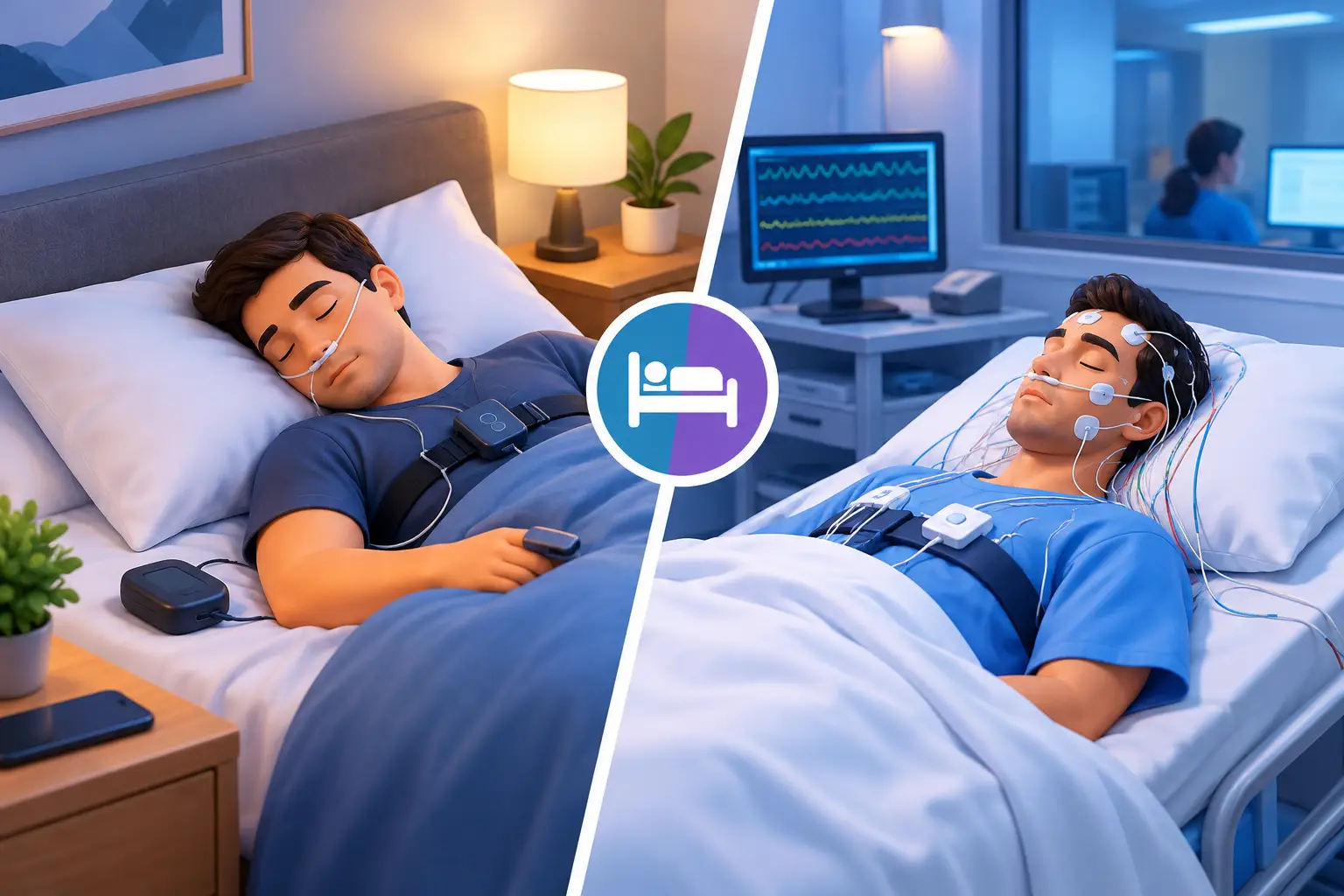
A home sleep apnea test is completed in your own bed, usually with a small device that monitors breathing effort, airflow, oxygen levels, and pulse. An in-lab sleep study, also called polysomnography, takes place overnight at a sleep center. It uses more sensors and captures a broader picture of what happens while you sleep.
Neither option is automatically better. A home study offers convenience and can be highly useful for many adults with a strong likelihood of uncomplicated obstructive sleep apnea. An in-lab study provides more detailed information and is often the better fit when symptoms, health history, or prior test results leave unanswered questions.
What a home sleep study can tell you
Home testing is designed primarily to look for obstructive sleep apnea, a condition in which the airway repeatedly narrows or closes during sleep. The device records signs of breathing interruptions and oxygen changes that may point to sleep apnea.
For the right patient, a home test can be a comfortable first step. You sleep in familiar surroundings, do not need to travel to a sleep center, and may find it easier to follow through with testing when your schedule is already full. This is often appealing for working adults and people who feel anxious about sleeping somewhere new.
However, a home test has limits. It generally does not directly measure brain activity or reliably show exactly when you are asleep versus awake. It also cannot evaluate every possible sleep disorder. If the equipment comes loose, you sleep poorly, or the result is negative despite strong symptoms, your physician may recommend an in-lab study next.
What an in-lab sleep study can tell you
Polysomnography is the most comprehensive type of overnight sleep test. While you sleep in a private, monitored room, sensors can measure breathing, oxygen levels, heart rhythm, body position, leg movements, eye movements, brain waves, and sleep stages.
That additional information matters when the concern may be more than straightforward obstructive sleep apnea. A lab study can help identify central sleep apnea, periodic limb movements, unusual nighttime behaviors, seizure-related concerns, or sleep-related oxygen problems. It can also show how often breathing events occur during different stages of sleep and positions.
Many people worry they will not be able to sleep with sensors attached or in an unfamiliar setting. Sleep professionals understand that concern. You do not need a perfect night of sleep for the study to be useful, and the staff can help you get comfortable with the equipment before bedtime.
Which Sleep Study Is Right for Me?
Your referring physician or sleep specialist should guide this decision, but it helps to understand the factors they consider. A home sleep apnea test may be appropriate if you are an adult with loud habitual snoring, witnessed breathing pauses, gasping during sleep, daytime sleepiness, and no major medical concerns that could complicate the picture.
An in-lab polysomnogram may be recommended if you have significant heart or lung disease, neurologic conditions, chronic opioid use, possible central sleep apnea, or symptoms that suggest another sleep disorder. It may also be the better starting point if you have severe insomnia, because a home device may record a long night in bed without knowing how much of that time you were truly asleep.
A lab study is often appropriate when you experience symptoms such as frequent leg jerks, dream-enactment behaviors, unexplained nighttime events, or persistent fatigue after a negative home test. It can also be useful if a home study result is technically incomplete or does not match the symptoms you and your bed partner are seeing.
The choice is not a reflection of how serious your symptoms are. It is simply about selecting the test most likely to provide a reliable answer the first time.
Polysomnography vs Home Test: The Practical Differences
The most noticeable difference is where you sleep. Home testing happens in your own environment and usually involves fewer sensors. In-lab polysomnography requires an overnight visit but offers real-time monitoring by trained sleep technologists and more complete data.
The tests also differ in scope. A home test is focused on breathing-related sleep apnea. Polysomnography evaluates breathing and oxygen levels while also tracking sleep stages, arousals, movement, and other patterns that may be disrupting rest.
Cost and insurance coverage can differ as well. Many insurance plans use home testing as a first step for patients who appear to have uncomplicated obstructive sleep apnea. Coverage rules vary, so ask your insurance provider and referring office what is required before scheduling. If your clinician recommends an in-lab study because of your symptoms or medical history, that recommendation may support coverage for the more comprehensive test.
Convenience matters, but accuracy matters more. If your symptoms are simple and strongly suggest obstructive sleep apnea, home testing may save time while providing the information needed to move forward. If your situation is less clear, starting with an in-lab study may prevent delays caused by an inconclusive home result.
What Happens After the Results?
A sleep physician reviews the findings and determines whether you have sleep apnea or another condition requiring care. If obstructive sleep apnea is diagnosed, treatment depends on its severity, your anatomy, medical history, and your ability to use different options consistently.
CPAP therapy is a common treatment and may be especially helpful for moderate to severe sleep apnea. For many adults with mild to moderate obstructive sleep apnea, or for those who cannot tolerate CPAP, a custom oral appliance may be another effective option. The appliance is worn during sleep and is designed to gently support the lower jaw in a forward position, helping keep the airway open.
A custom appliance is not the same as an over-the-counter snoring guard. Effective oral appliance therapy begins with a confirmed diagnosis and coordinated care with your physician. It also requires precise fitting, gradual adjustment, and follow-up to confirm that treatment is improving breathing without creating jaw discomfort or bite changes.
At Seattle Oral Care, oral appliance therapy is provided by an AADSM-certified prosthodontist who works with patients and their medical teams to help make sleep apnea care more comfortable and sustainable. For patients who already use CPAP, an appliance may also be considered for travel or in situations where CPAP use is difficult, when medically appropriate.
A Negative Home Test Does Not Always End the Conversation
If a home study comes back negative but you still snore loudly, wake up gasping, feel unrefreshed after a full night, or struggle with daytime sleepiness, speak up. Home studies can miss sleep apnea in some circumstances, particularly when sleep time is limited or symptoms do not follow a typical pattern.
Your physician may recommend in-lab polysomnography to look more closely. This is not bad news or a failure of the first test. It is a sensible next step when your symptoms and test result do not line up.
Choose the Test That Gives You a Clear Path Forward
The best sleep study is the one that matches your symptoms and gives your care team enough information to recommend the right treatment. If you have a straightforward risk profile for obstructive sleep apnea, a home test may be a convenient place to start. If your health history is more complex or your symptoms raise broader questions, an in-lab study can provide the fuller picture you deserve.
You do not have to sort through the decision alone. Bring your concerns, sleep habits, medical history, and treatment preferences to the conversation. A thoughtful evaluation can turn an uncertain night of testing into a clearer path toward better rest and better days.