A bone graft is a meaningful step toward a strong, lasting implant, but it can feel frustrating when you are ready to replace a missing tooth now. If you are wondering how long after a bone graft can you get implants , the answer is usually measured in months, not days. Most grafts need about 3 to 6 months to heal before implant placement, although a smaller graft may be ready sooner and a more extensive graft may need longer.
The wait is not a delay for delay’s sake. Your implant needs healthy, stable bone around it to function like a natural tooth root. Giving the graft time to become part of your own jawbone helps support a result that feels comfortable, looks natural, and is built to last.
Why bone graft healing before implant placement matters
A dental implant is placed into the jawbone, where it gradually bonds with the surrounding bone. This process, called osseointegration, is what gives an implant its stability. When there is not enough bone in the right location, an implant may lack the support it needs.
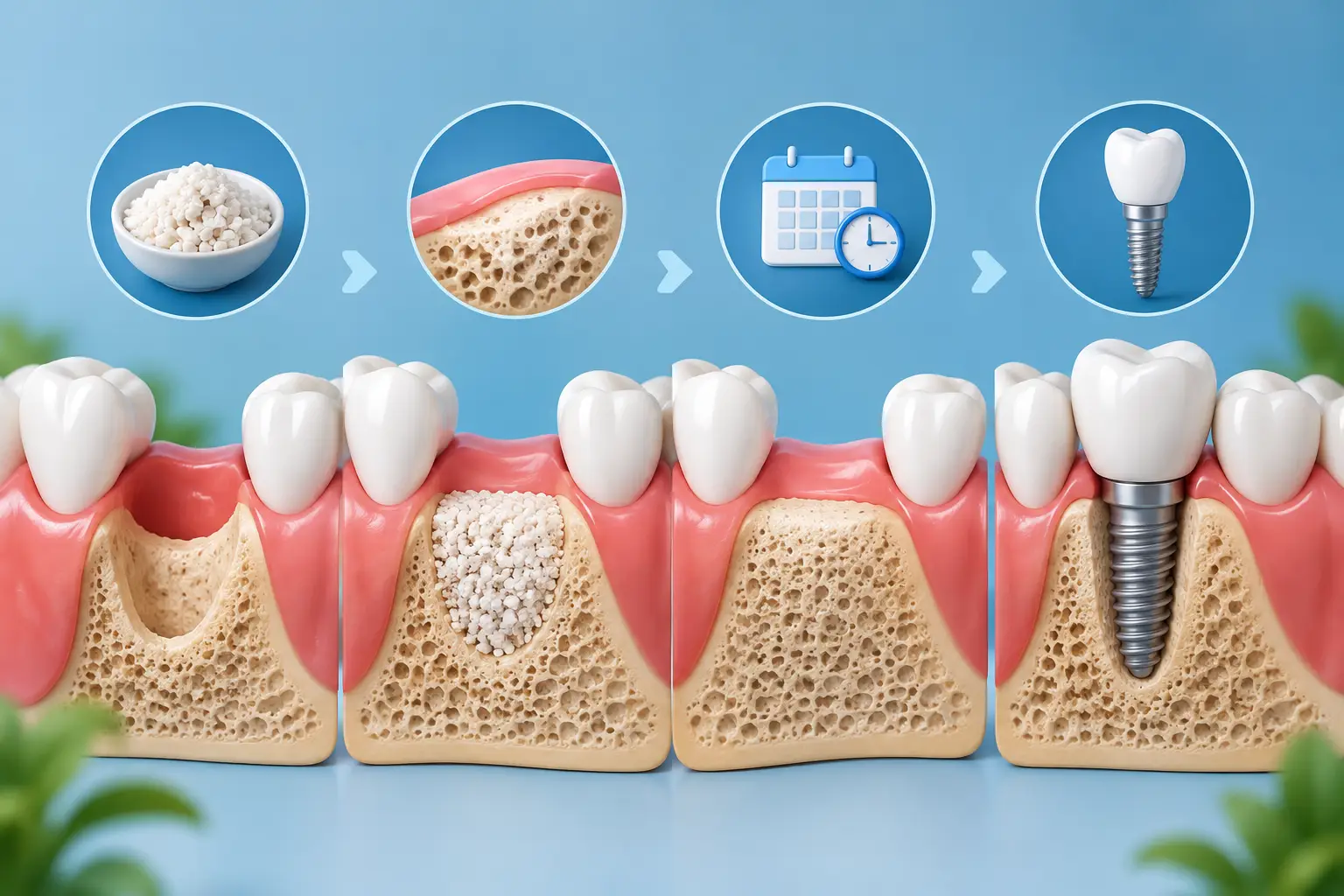
A bone graft adds or rebuilds bone in an area affected by tooth loss, gum disease, trauma, or a previous extraction. Over time, your body develops new bone around and through the graft material. The goal is not simply to fill space. It is to create a healthy foundation with enough height, width, and density for the implant planned for your smile.
Placing an implant before that foundation is ready can compromise the outcome. Waiting until the site is ready may feel like the slower option, but it can reduce the risk of poor implant stability, gum recession, or the need for additional treatment later.
How long after a bone graft can you get implants?
For many patients, implant placement happens about 4 to 6 months after a bone graft. That is a common window, not a fixed rule. Your dentist or specialist will evaluate the grafted area with an exam and imaging before recommending the next step.
A small socket graft, placed at the time a tooth is removed, may heal sufficiently in approximately 3 to 4 months. A larger ridge augmentation, used when the jaw has lost more volume, often needs 4 to 6 months. In some cases, especially when rebuilding a significant defect or preparing the upper jaw near the sinus, healing can take 6 to 9 months or longer.
Some grafts and implants can be placed at the same appointment. This may be possible when enough healthy bone remains to stabilize the implant immediately. It is not appropriate for every situation, and it is not automatically the best choice. A staged approach is often safer when bone loss is more substantial or when the site has inflammation or infection.
The type and size of your graft
A minor graft after an extraction generally heals faster than a larger graft designed to rebuild the contour of the jaw. The material used and the way it is protected also matter. Your body needs time to replace or integrate the graft with living bone that can hold an implant securely.
Your overall health and healing habits
Healing is influenced by factors beyond the procedure itself. Smoking or vaping nicotine can reduce blood flow and increase the risk of graft or implant complications. Poorly controlled diabetes, active gum disease, certain medications, and conditions that affect bone metabolism may also change the recommended timeline.
This does not necessarily mean implants are out of reach. It means your care team may recommend additional healing time, medical coordination, or steps to improve the health of your mouth before moving forward.
The location of the graft
The upper back jaw can present special challenges because the bone may be softer and the sinus is nearby. A sinus lift or extensive upper-jaw graft may require a longer healing period than a small graft in the front of the mouth. The lower jaw has different anatomical considerations, including the location of nerves.
Your implant plan should account for the exact tooth being replaced, your bite, the condition of nearby teeth, and the appearance of the gumline. These details are why a personalized timeline is more useful than a one-size-fits-all estimate.
What a staged implant timeline often looks like
A staged implant timeline begins with careful planning. Your dentist may take digital X-rays or 3D imaging to assess your bone, gums, bite, and the space available for the final crown, bridge, or denture.
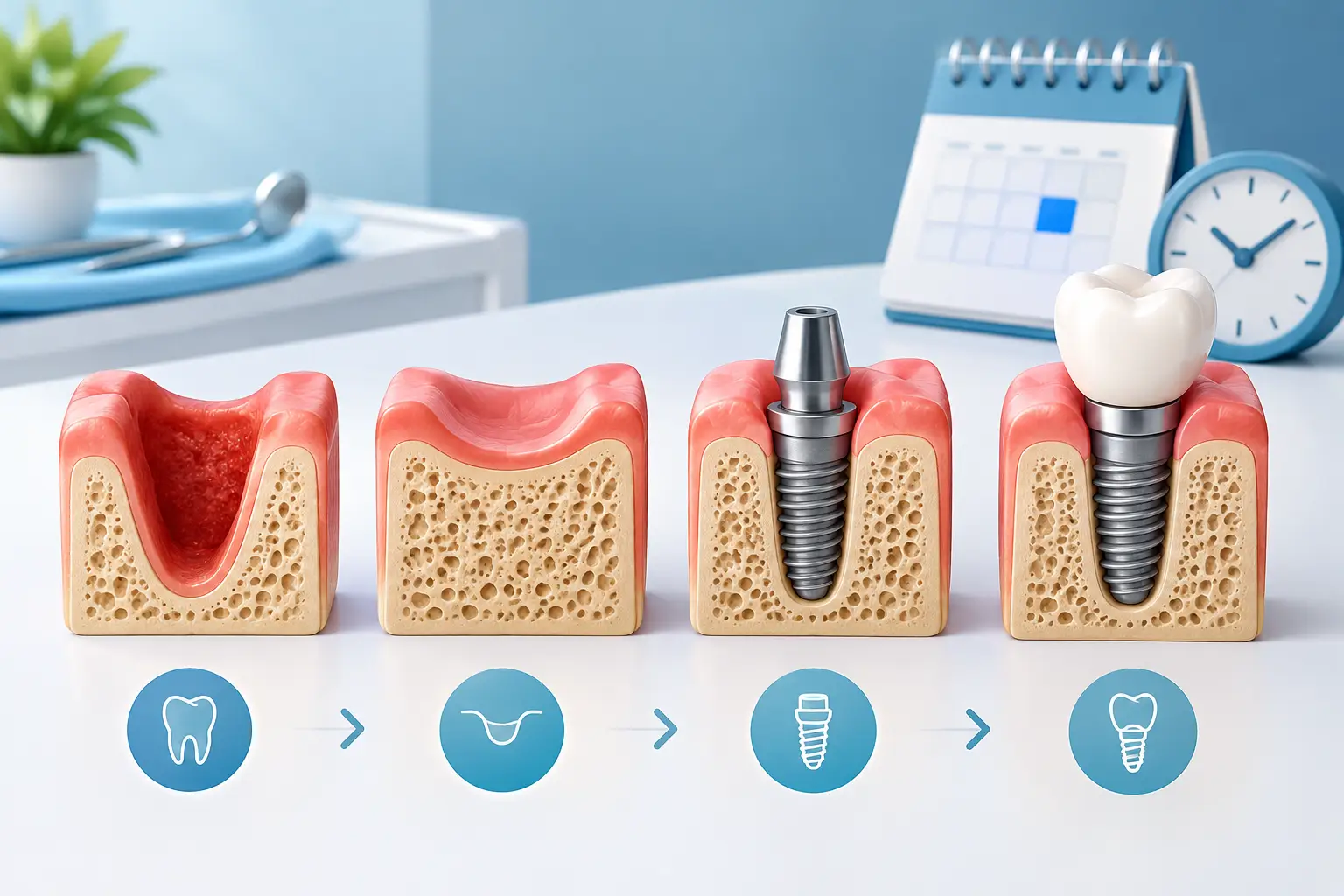
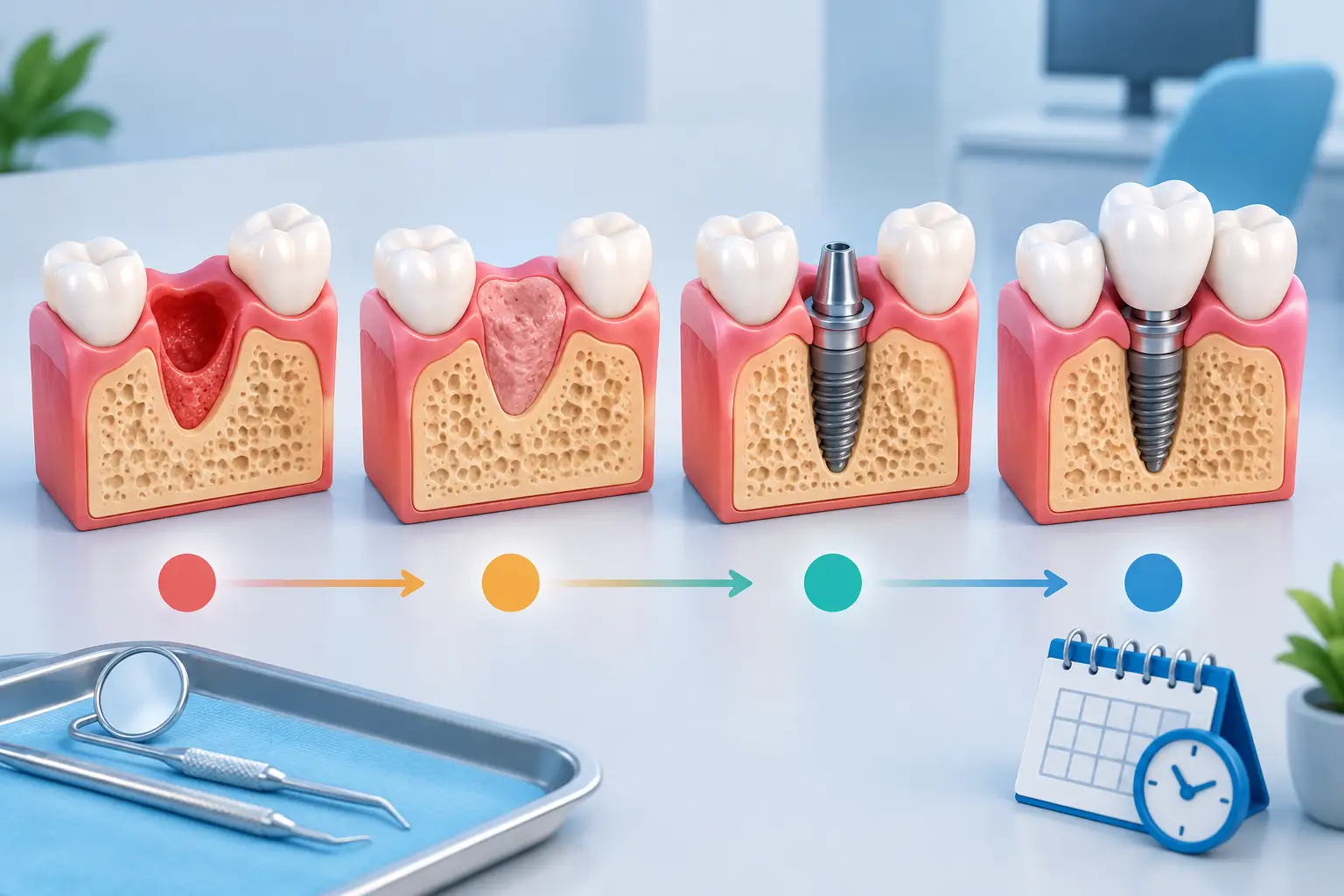
If a tooth needs to be removed, the extraction and graft may happen during the same visit. After initial healing, you will return for follow-up appointments so the site can be checked. You may not feel the graft doing its work, but the bone is changing beneath the gums over several months.
Once the graft has matured, the implant is placed into the jawbone. This procedure is often more comfortable than patients expect, particularly with appropriate anesthesia and a gentle treatment approach. The implant then usually needs another 3 to 6 months to integrate with the bone before the final restoration is attached.
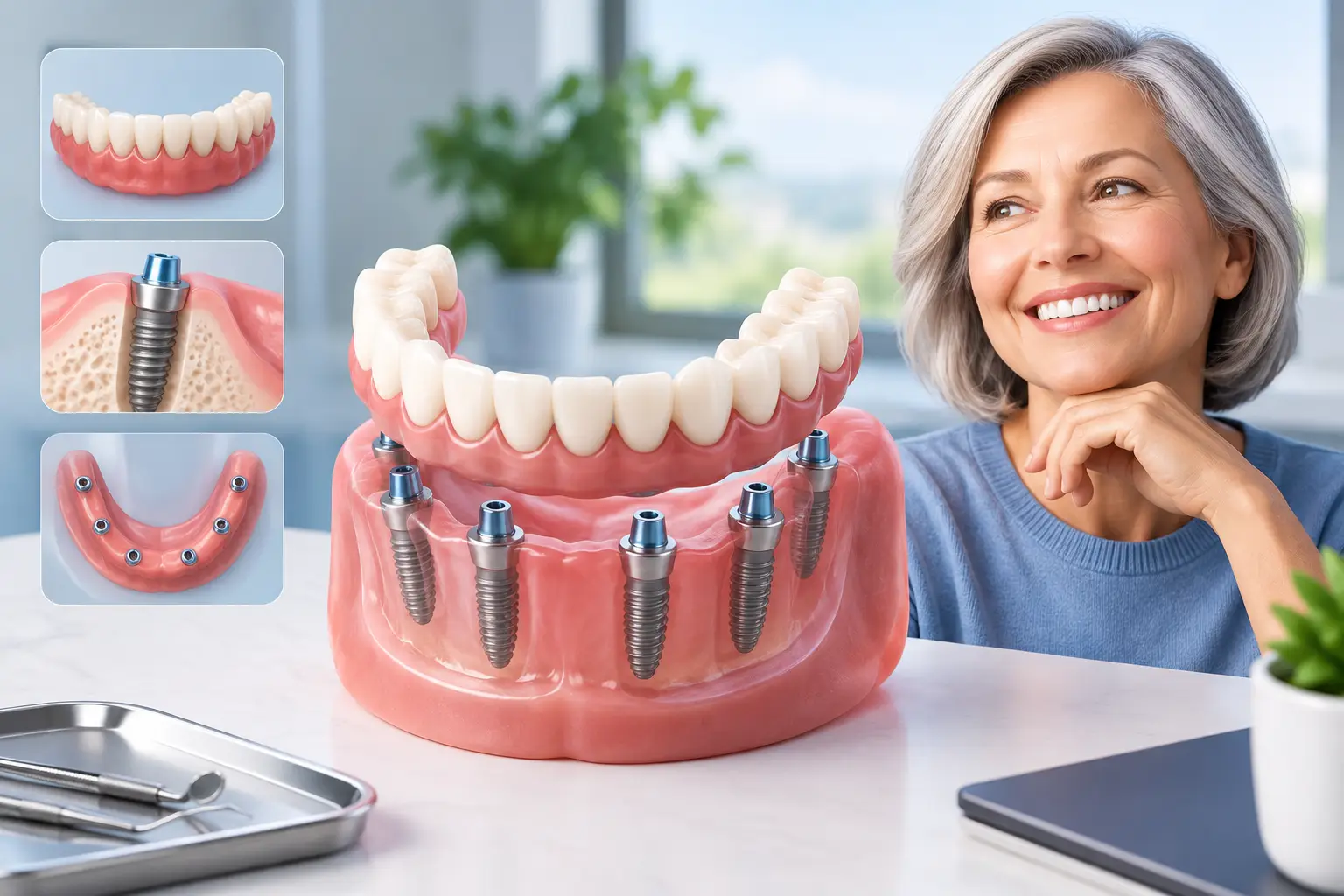
After integration, an abutment is placed on the implant and the final crown, bridge, or implant-supported denture is designed. In selected cases, a temporary tooth can be used during part of the process so you are not left with a visible gap. Your clinician will explain whether a temporary option is suitable for your bite and the position of the implant.
From grafting to a final tooth, many staged cases take roughly 8 to 12 months. That can sound like a long time when you are missing a tooth, but much of that time is quiet healing rather than frequent procedures. More complex full-mouth treatment can take longer, while simpler cases may move faster.
How your dentist decides the graft is ready
Time alone does not confirm that a graft is ready. At your evaluation, your clinician looks for healthy gums, a stable ridge shape, and imaging signs that the graft has developed enough bone for the implant. A 3D scan may be used to measure the available bone and plan the implant position precisely.
If the bone is not ready, waiting longer is usually the most predictable choice. Occasionally, a small additional graft is recommended at the time of implant placement. This is not necessarily a setback. It can be a planned refinement that helps create better support around the implant.
What you can do while you heal
Follow your post-operative instructions closely, especially during the first weeks after grafting. Keep the area clean as directed, take prescribed medications appropriately, and attend your follow-up visits. Avoid smoking and nicotine products, which can interfere with healing.
Call your dental office if you have worsening pain after the first few days, persistent bleeding, fever, a bad taste or drainage, or graft material coming out in a significant amount. A few tiny particles can sometimes be normal, depending on the graft, but your care team should guide you rather than leaving you to guess.
It also helps to protect the area from excess pressure. If you wear a partial denture or temporary appliance, it may need adjustment so it does not press on the grafted site. Continue routine cleanings and periodontal care, since healthy gums are part of a successful implant foundation.
At Seattle Oral Care, implant planning brings together restorative, surgical, and periodontal perspectives when a case calls for it. That coordination matters because the best timing for your implant should support the final tooth, not just the next procedure.
A bone graft asks for patience, but it is an investment in the stability of the smile you are building. At your follow-up visit, ask what your imaging shows, what healing milestone your clinician is watching for, and when it makes sense to begin planning your implant placement .