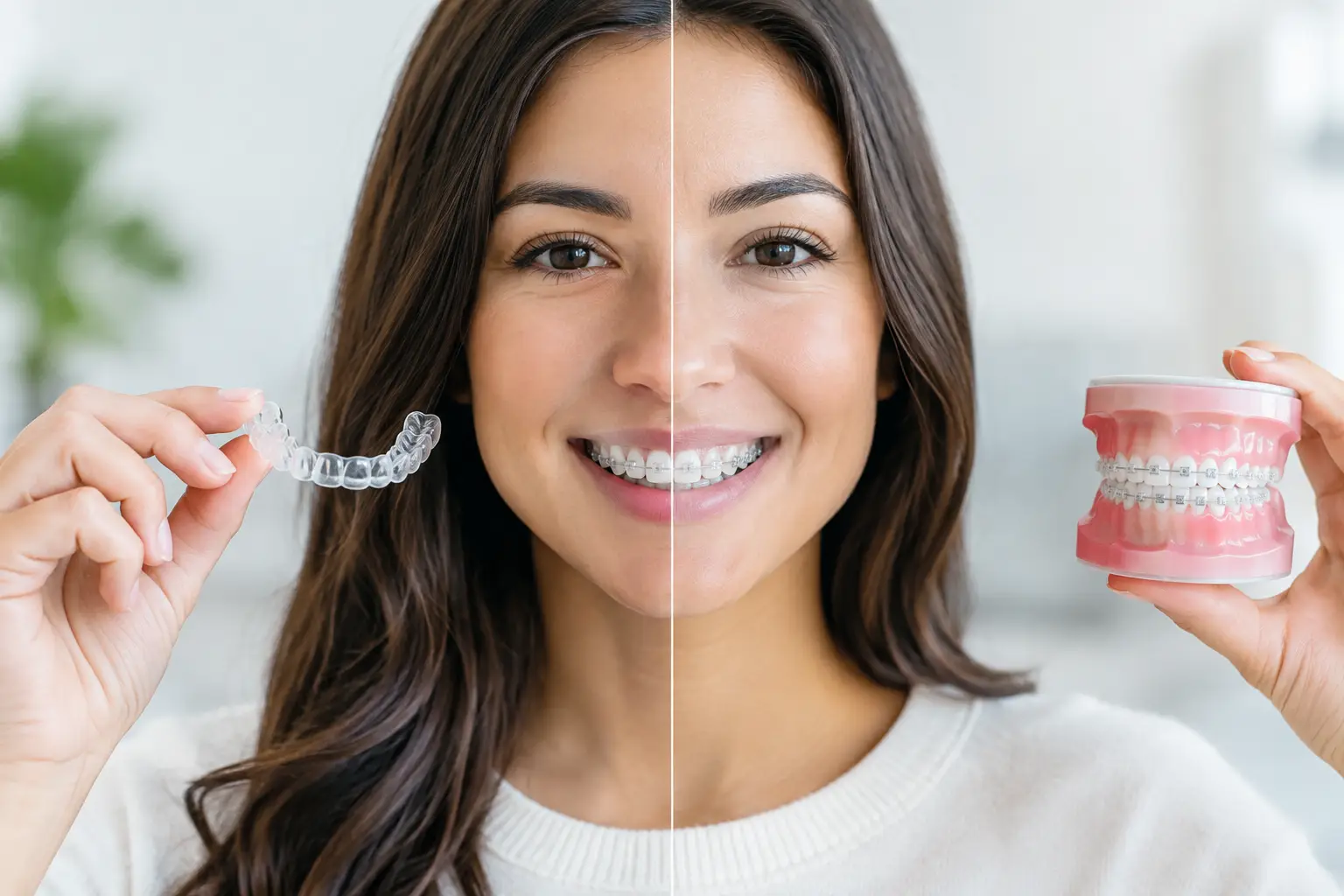
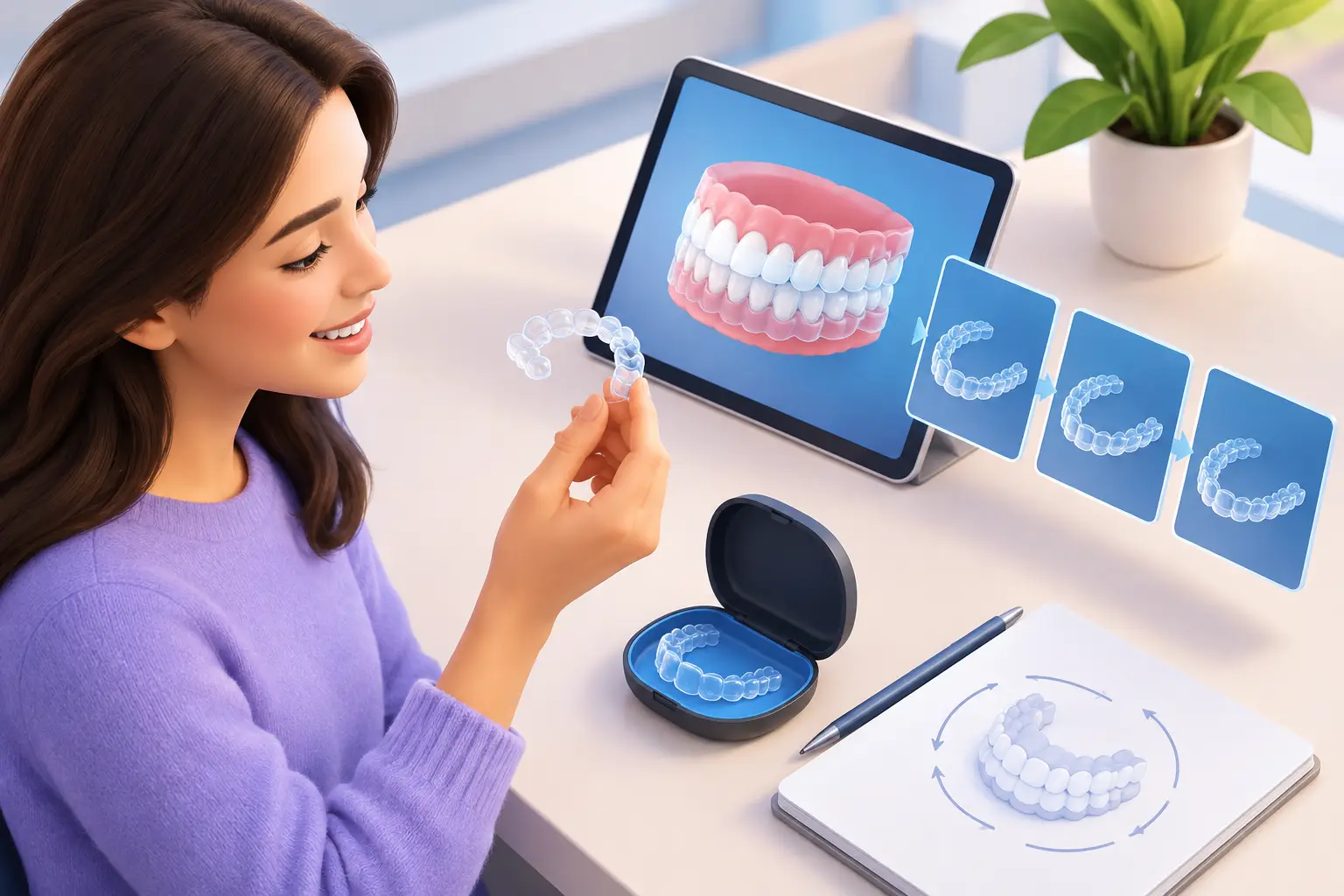
A nearly finished Invisalign treatment can bring an unexpected question: what if one or two teeth are not quite where the original plan predicted? Invisalign refinements, refinement trays, and extra aligners at the end of Invisalign are a common way to address those final details. For an adult who has put time and attention into treatment, this is not a sign that something has gone wrong. It is often the careful, personalized final stage of getting a result that matches the treatment goals as closely as possible.
Why Teeth May Not Finish Exactly as Planned
Clear-aligner treatment is planned with sophisticated digital imaging, but teeth are biological structures, not fixed points on a screen. They can respond at slightly different rates. A tooth may move most of the way but need a more targeted adjustment for its final position, angle, or contact with the neighboring teeth.
Sometimes the difference is subtle. You may notice it when you compare your smile with the original plan, or your dentist may see it during a detailed examination that is difficult to make out in a mirror. The goal is not to chase an unrealistic idea of perfection. It is to evaluate the result thoughtfully and decide whether additional movement would make a meaningful difference to the appearance, function, and stability of your smile.
This is why the final appointment is more than a quick handoff to retainers. Your dentist checks how the teeth have tracked, how they relate to one another, and whether the treatment objectives have been met. If everything is where it should be, treatment can move forward. If there are remaining refinements that would improve the result, your dentist can explain the next step clearly.
What Are Invisalign Refinements?
Invisalign refinements are additional sets of custom clear aligners made after your dentist evaluates the progress of the initial series. You may also hear them called refinement trays or extra aligners. They are designed from updated records rather than simply extending the original sequence.
The process typically begins with an in-person assessment. Your dentist looks at the current positions of your teeth and discusses what is different from the planned result. This conversation matters because not every small variation requires more treatment. Some details may be purely cosmetic, while others may affect the way teeth come together or the long-term goals of the plan.
If refinement is recommended, new digital scans or impressions are taken. These records provide a current map of your smile, allowing the next series of aligners to be designed around where your teeth are now, not where they were at the beginning. Once the refinement trays are ready, your dentist will check their fit and guide you through the next phase.
Refinement Trays Are a Planned Adjustment, Not a Setback
Many adults worry that needing extra aligners means they have failed treatment or done something incorrectly. That is rarely a useful way to view it. Refinements are part of the adaptability of clear-aligner orthodontics. A treatment plan can be adjusted as your teeth respond in real life.
Your dentist will consider several questions before recommending another set of trays. Are the remaining changes noticeable? Would they improve the final outcome? Are the treatment goals still the same, or have your priorities changed since you began? For example, a patient may have initially focused on straightening crowded front teeth but later want to discuss a small detail that becomes more apparent as the smile improves.
There are also times when the best decision is to finish rather than continue pursuing minor changes. Every treatment decision involves judgment, and the right stopping point depends on your individual goals, tooth movement, and clinical findings. A good conversation should leave you understanding both the potential benefit of refinements and the reason behind the recommendation.
What to Expect During the Final Evaluation
At a final evaluation, your dentist may compare current scans, photos, or clinical observations with the original treatment plan. They will look beyond whether the front teeth appear straight. Small details such as alignment, spacing, rotation, and how the upper and lower teeth meet can all be relevant.
Bring up anything you have noticed. Perhaps a particular tooth still appears slightly turned in photos, a small gap is visible, or the result looks different to you than you expected. These observations are useful. You spend more time seeing your smile in everyday settings than anyone else, and your concerns deserve a direct answer.
Your dentist can then help distinguish between a concern that may benefit from refinement trays and a feature that is within a healthy, acceptable result. Clear explanations are especially valuable here. You should not feel pressured to guess whether a detail is worth addressing or to accept an outcome you do not understand.
How to Support a More Predictable Result
The most helpful thing you can do during any clear-aligner phase is follow the instructions given for your specific treatment and attend scheduled check-ins. Aligners need to fit properly to guide teeth as intended. If a tray seems not to sit fully, feels unexpectedly different, or becomes damaged, contact your dental team rather than trying to solve the issue on your own.
Keep your aligners clean and store them safely whenever they are out of your mouth. Bring your current trays to appointments, especially if you have questions about fit or progress. If your schedule, travel, or a major life event makes treatment more difficult to manage, let your dentist know. A straightforward conversation can help the team plan the next steps around your real life.
It also helps to remember that treatment plans are collaborative. Your dentist provides clinical guidance and monitors the details that support a lasting result. You provide feedback about your goals and what you are noticing day to day. That partnership is particularly valuable during the finishing stage, when small adjustments can have an outsized effect on how you feel about your smile.
Moving From Refinements to Retainers
Once your dentist confirms that treatment is complete, retainers help maintain the tooth positions achieved with Invisalign. This transition is important because teeth can naturally shift over time. Your dental team will explain the retainer plan that fits your situation and show you how to care for it.
If you have refinements, retainers are generally planned after the refinement phase is finished, based on the final position of your teeth. That means the retainer is made to support the result you and your dentist have agreed upon. It is one more reason not to rush the final review simply because you are eager to be done.
A Thoughtful Finish Is Worth the Conversation
For adults balancing work, family, and a full calendar, it is understandable to want a clear finish line. But if your teeth do not finish exactly as planned, a careful evaluation is a constructive next step, not an inconvenience or a disappointment. Refinement trays may be appropriate, or your dentist may confirm that the result has met the goals you set together.
At Seattle Oral Care, that final conversation is approached with the same attention given at the start of treatment: listen closely, examine carefully, and make recommendations that fit the person in the chair. A smile does not have to follow a perfectly straight path to reach a thoughtful, well-supported finish.