A wisdom tooth can be completely quiet for years, then become a concern just as you are ready to start orthodontic treatment. If you are an adult with wisdom teeth still in and are planning aligners, it is reasonable to ask whether they need to come out first. The reassuring answer is that wisdom teeth and Invisalign can often coexist. Removal is recommended only when your wisdom teeth pose a current or likely problem for your oral health or your treatment plan.
Your Invisalign evaluation should look beyond the front teeth you want to straighten. A careful exam and dental imaging help your dentist assess the position of your wisdom teeth, the health of the surrounding gums and bone, and whether there is enough room for each tooth to function comfortably.
Wisdom Teeth and Invisalign: When Removal Is Not Needed
Many adults successfully complete Invisalign treatment while keeping their wisdom teeth. If the teeth are fully erupted, healthy, easy to clean, and not affecting the teeth beside them, there may be no clinical reason to remove them simply because you want aligners.
This is particularly common for adults whose wisdom teeth have been stable for years. Invisalign trays are designed to move specific teeth according to a detailed plan. A healthy wisdom tooth that is not part of that movement does not automatically interfere with the process.
It is also worth clearing up a common concern: wisdom teeth are not reliably proven to cause crowding of the front teeth. Teeth can shift over time for several reasons, including natural age-related changes, bite forces, gum health, and inconsistent retainer wear. Removing healthy wisdom teeth solely to prevent future front-tooth crowding is not always necessary.
The question is not, “Do all wisdom teeth need to be removed before Invisalign?” It is, “What do these particular wisdom teeth mean for your long-term dental health and the movements we are planning?”
When Wisdom Tooth Removal May Be Recommended
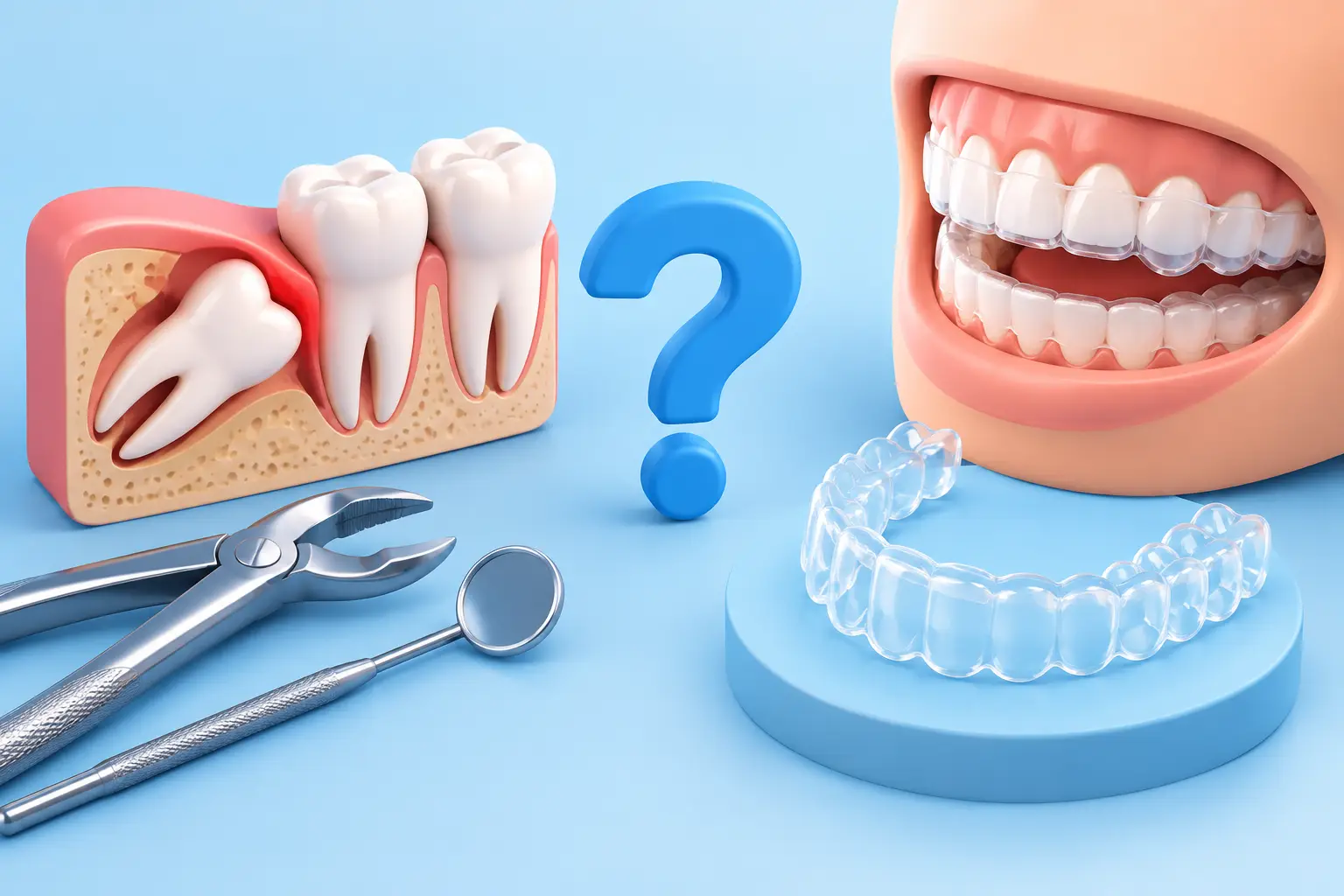
Removal may be the better choice when a wisdom tooth is partially erupted, impacted, damaged, infected, or difficult to keep clean. These conditions can create problems whether or not you choose Invisalign, but orthodontic treatment can make it especially valuable to address them before treatment begins.
A partially erupted wisdom tooth may have a flap of gum tissue around it that traps food and bacteria. This can lead to recurring inflammation, tenderness, swelling, or infection. If the tooth sits at an angle against the molar in front of it, it can contribute to decay or damage where a toothbrush cannot easily reach.
An impacted wisdom tooth may also require attention if imaging shows a cyst, signs of pressure on a neighboring tooth, or a position that makes future problems likely. In other cases, a wisdom tooth has erupted but has extensive decay, gum disease, or no useful role in your bite. Keeping a tooth is not always the same as preserving health.
Your dentist may also recommend removal if it will make treatment more predictable. For example, if your Invisalign plan calls for moving the back teeth or improving the bite in a way that involves limited space near the wisdom teeth, their position may matter more. This is not a one-size-fits-all decision. It depends on the complexity of your bite, the health of the teeth, and the goals you share with your dental team.
Do I Need Wisdom Teeth Removed Before Invisalign?
You may need wisdom teeth removed before Invisalign if they are actively causing disease, are likely to damage nearby teeth, or will interfere with planned tooth movement. If they are healthy and stable, you may be able to begin aligner treatment without extraction.
The timing matters as much as the decision itself. When removal is recommended, many patients prefer to complete it before starting Invisalign. This allows the gums to heal and gives the care team a stable starting point for digital scans and treatment planning. It can also prevent a surprise surgical need in the middle of treatment.
That said, treatment does not always have to stop completely if a wisdom tooth becomes a concern later. Depending on your case, your dentist and oral surgeon can coordinate the timing around your aligner schedule. A personalized plan protects both your comfort and the accuracy of your orthodontic treatment.
If you feel anxious about extraction, let your dentist know. A good consultation should include an honest conversation about what is being recommended, why it is needed, what recovery may involve, and whether there are reasonable alternatives. You deserve clear answers before moving forward.
How Invisalign Planning Accounts for Wisdom Teeth
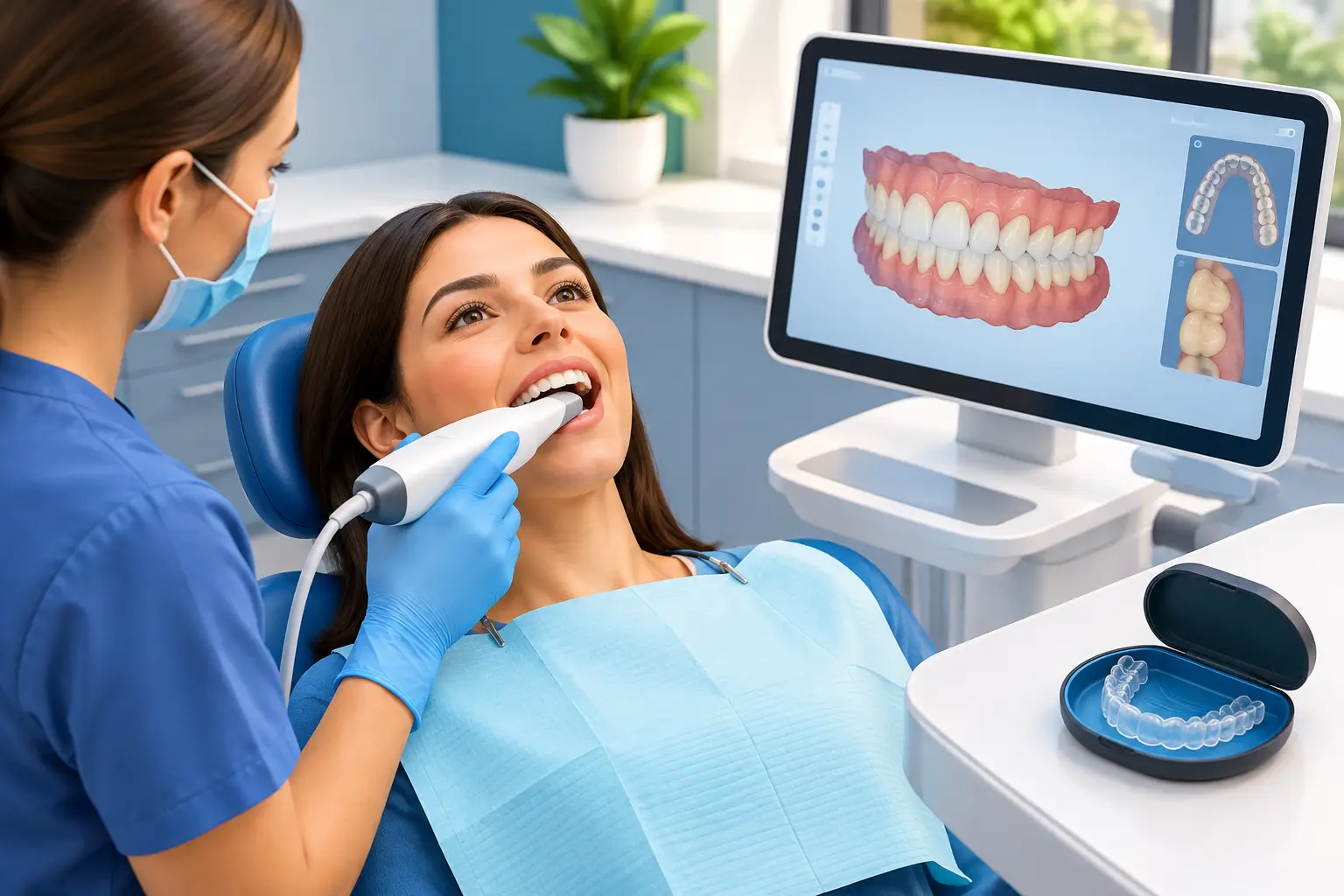
Invisalign begins with a detailed scan, photographs, and an assessment of your bite. Your dentist evaluates not only whether your teeth look crowded or crooked, but also how they meet, how your jaw functions, and what support the teeth have from healthy gums and bone.
Dental X-rays or three-dimensional imaging may be used when wisdom teeth need closer evaluation. These images can show whether a wisdom tooth is fully developed, impacted, close to important structures, or affecting the roots of adjacent teeth. They also help determine whether a referral to an oral surgeon is appropriate.
For a straightforward case, the plan may be simple: monitor the wisdom teeth during regular appointments while the aligners move the teeth that need correction. For a more complex situation, coordinated care may involve a general dentist, orthodontic provider, and oral surgeon. The benefit of this approach is not more treatment than you need. It is making decisions with the full picture in view.
At Seattle Oral Care, treatment planning is designed to be thoughtful and coordinated, especially when orthodontics overlaps with restorative or surgical needs. That means discussing how today’s Invisalign choices can support a healthy, functional smile for years to come.
What Happens If Wisdom Teeth Are Removed During Invisalign?
If removal becomes necessary during treatment, the next step depends on where you are in your aligner sequence and whether the wisdom teeth affect the planned movement. In many cases, the trays can be paused briefly while you heal. Your dentist will tell you whether to continue wearing a current tray, return to an earlier tray, or wait before resuming.
Because each aligner is made to fit your teeth closely, it is important not to make this decision on your own. Skipping trays or forcing an aligner that no longer fits can compromise your progress. A short, well-managed pause is usually easier than trying to push through discomfort or an untreated dental problem.
After healing, your dentist may simply restart treatment. If the extraction changes the plan for your back teeth or bite, a new scan and refinement aligners may be recommended. Refinements are a normal part of many Invisalign cases and help ensure the final result matches the treatment goals.
Questions to Ask at Your Invisalign Consultation
Before committing to treatment, ask whether your wisdom teeth are healthy, whether they are likely to cause future problems, and whether they affect the specific tooth movements in your plan. It is also helpful to ask whether removal is urgent or elective, how recovery could affect the timeline, and who will coordinate your care if an extraction is needed.
You should leave the appointment understanding the reason behind the recommendation. “Because they are wisdom teeth” is not a complete answer. A clear explanation should connect the condition of the tooth to your health, comfort, and orthodontic goals.
Healthy wisdom teeth do not have to stand between you and a straighter smile. A thorough evaluation can replace uncertainty with a plan that respects both your immediate goals and your long-term oral health. If you are considering Invisalign, start with a conversation that looks at your whole smile, not just the teeth you want to change.