
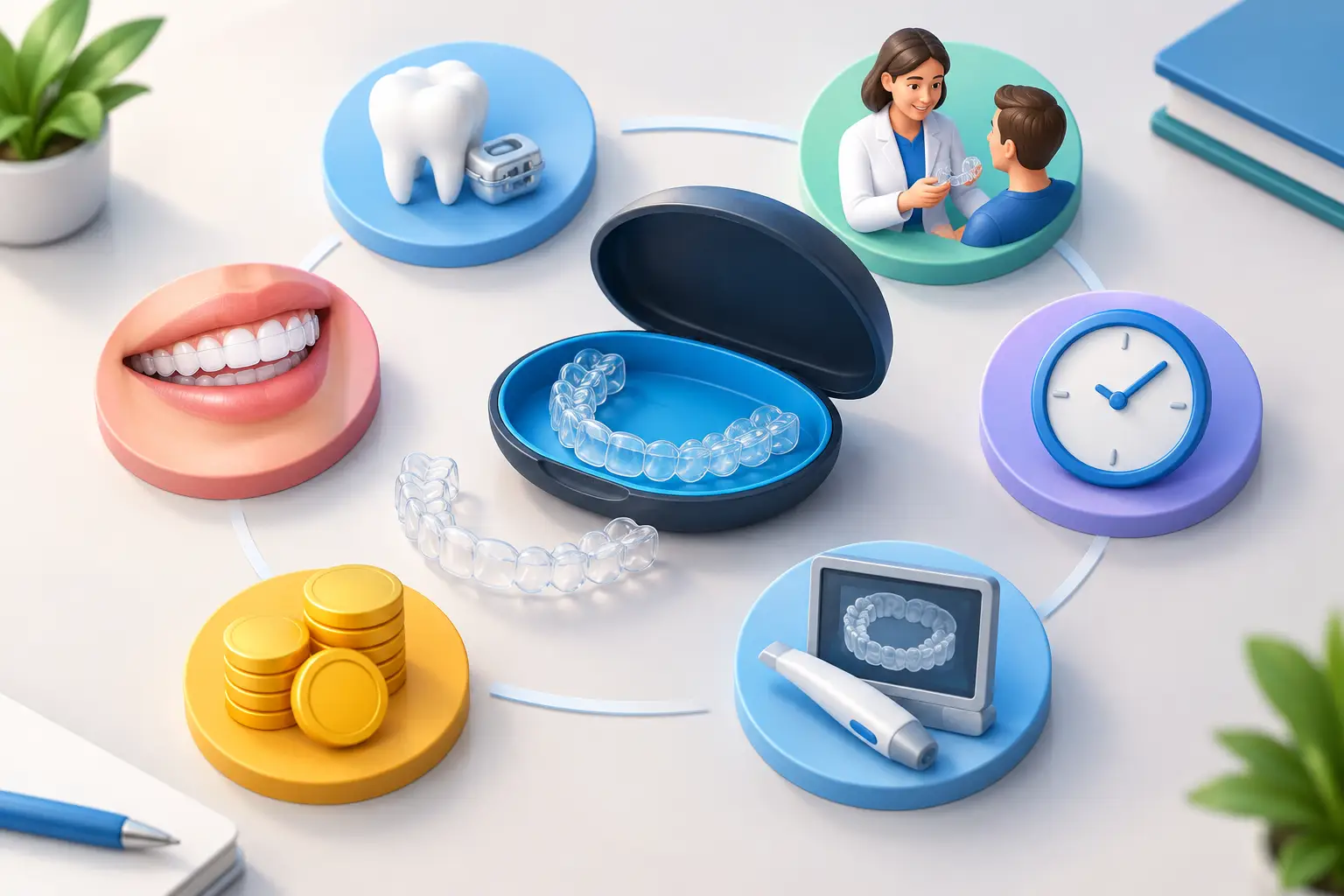
A straighter smile can feel like a meaningful investment, especially when you want orthodontic care that fits comfortably into adult life. Invisalign treatment cost and Invisalign price are not one-size-fits-all figures because every smile starts in a different place and has different goals.
For some patients, treatment involves small cosmetic adjustments. For others, clear aligners may address crowding, spacing, bite concerns, or tooth movement needed before restorative dentistry. A personal evaluation is the most reliable way to understand both the scope of care and the financial commitment.
What determines Invisalign cost?
The biggest factor is the complexity of your tooth movement. Mild cases that require fewer aligners and a shorter treatment period generally cost less than comprehensive cases involving significant crowding, spacing, or bite correction. Treatment may also take longer when teeth need to move in carefully planned stages for a healthy, stable result.
Your plan may include digital scans, custom aligners, regular progress visits, attachments placed on certain teeth, and retainers to help protect your results after active treatment. Whether these items are included in a quoted fee varies by practice, so it is reasonable to ask what the estimate covers before moving forward.
In Seattle and surrounding communities, local operating costs and the experience of the dental team can also affect pricing. Choosing care based only on the lowest initial number can be tempting, but clear aligner treatment relies on detailed planning and ongoing supervision. The goal is not simply to straighten visible front teeth. It is to create a smile that looks good, functions comfortably, and is designed to last.
Invisalign cost factors to discuss at your consultation
A thoughtful consultation should make the financial side of treatment feel clearer, not more confusing. Your dentist should evaluate your teeth, gums, bite, and overall oral health before recommending aligners. If you have untreated decay, gum disease, a failing restoration, or missing teeth, those needs may need attention first or may affect the sequence of your care.
Ask whether your estimate includes refinements. Refinement aligners are sometimes needed after the first series to make smaller finishing adjustments. Also ask about retainers, replacement aligners if one is lost, and the expected schedule for check-in visits. These details can prevent surprises later.
Payment options may make treatment more manageable. Many dental practices offer financing arrangements or phased payment options, although availability and terms differ. A clear written estimate gives you a practical starting point for deciding what works for your budget.
Invisalign cost vs braces cost
When comparing Invisalign cost vs braces cost, the answer is often closer than people expect. Traditional braces can be less expensive in some situations, particularly for straightforward treatment, but costs overlap considerably depending on case complexity, treatment length, and the type of braces selected.
Clear aligners offer benefits that many adults value: they are removable for meals and brushing, discreet in professional settings, and usually easier to keep clean than brackets and wires. That convenience requires commitment. Aligners must be worn as instructed, typically most of the day, and removed only for eating, drinking anything other than water, and oral hygiene.
Braces may be the better choice for certain complex movements or for patients who would find it difficult to wear removable aligners consistently. Invisalign can be an excellent option for many cases, but it is not automatically the right option for every smile. The best value comes from selecting the treatment that fits your clinical needs and daily routine.
Does insurance cover Invisalign?
Does insurance cover Invisalign? Sometimes. If your dental plan includes orthodontic benefits, it may contribute toward clear aligner treatment up to a lifetime maximum. Coverage is often a percentage of the treatment fee, not the full cost, and adult orthodontic coverage can differ from coverage for children.
Some plans cover braces but exclude clear aligners, while others provide the same orthodontic benefit regardless of the appliance used. Insurance policies also may have waiting periods, age limits, network requirements, or documentation rules. Before starting treatment, ask your insurer about orthodontic coverage, remaining lifetime maximums, and whether Invisalign is included under your plan.
Your dental office can often help review available benefits and explain what information is needed for a more accurate estimate. Even when insurance does not cover treatment, a transparent plan can help you consider financing and timing without pressure.
The right question is not only, “What does Invisalign cost?” It is also, “What result am I investing in, and what support will I have along the way?” A personalized consultation can give you clear answers, a comfortable pace, and a treatment plan built around your smile.