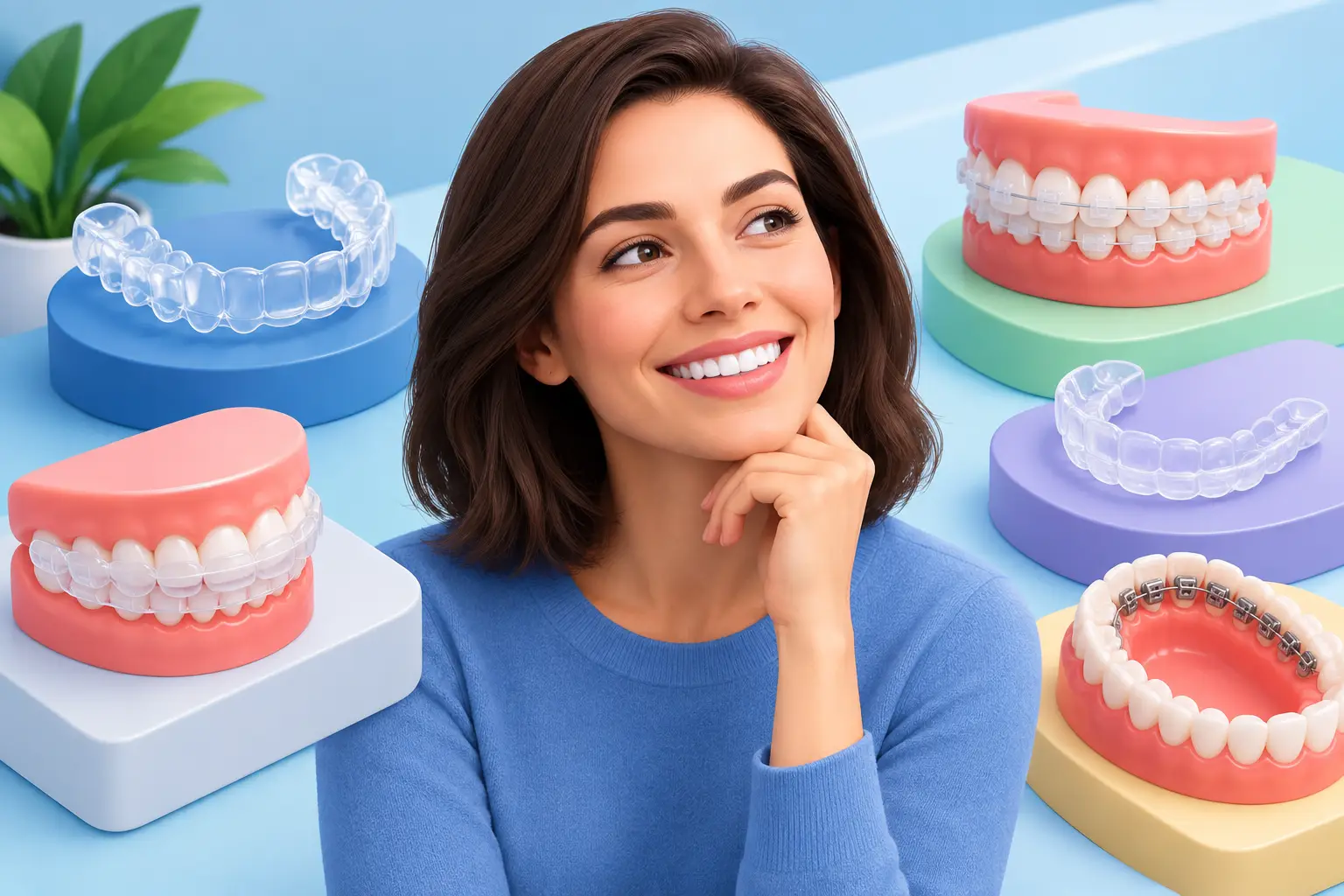
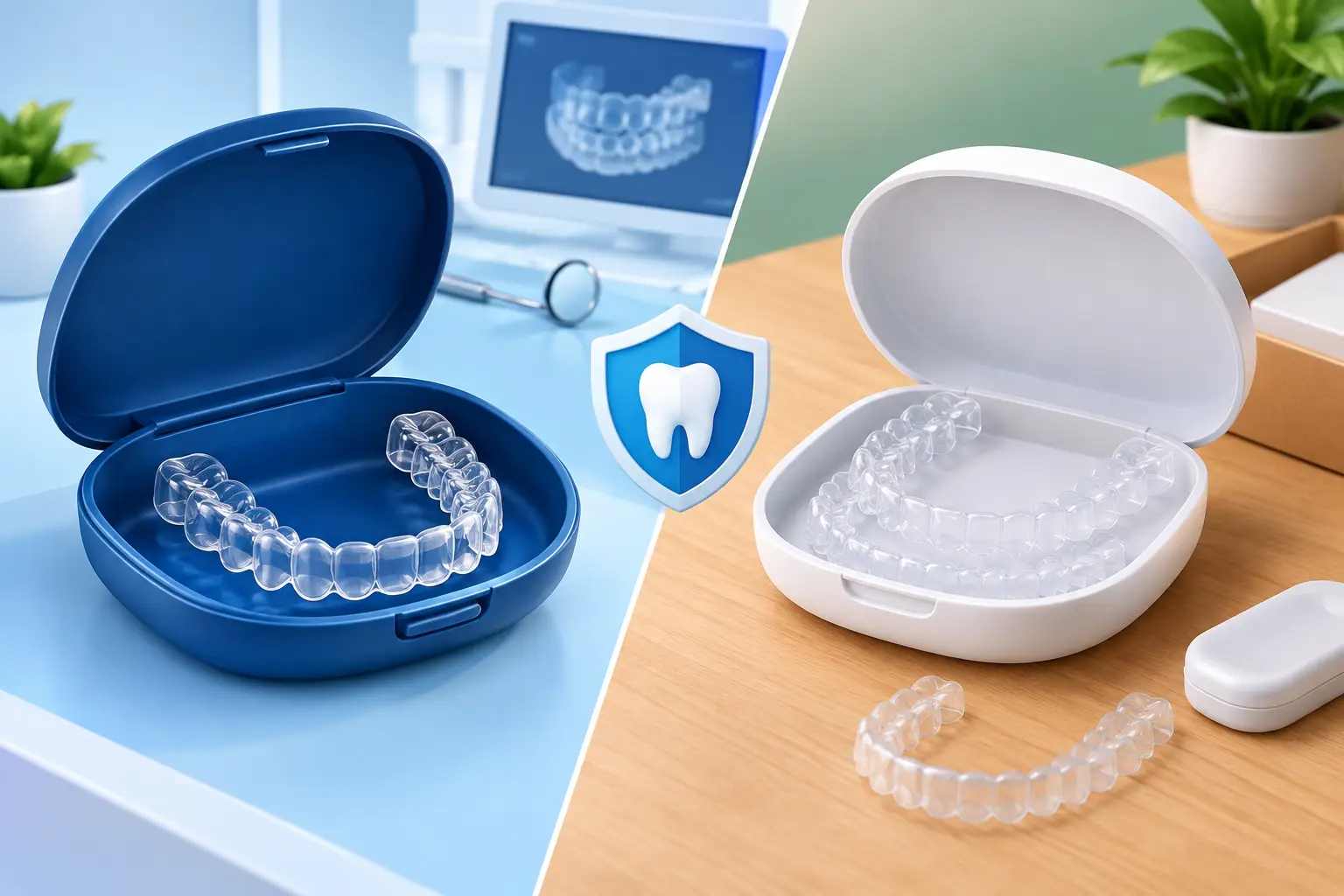
An adult comparing a cheap online kit with in-office treatment is usually weighing more than convenience. Invisalign vs at home aligners, and clear aligners vs Invisalign more broadly, is a decision about how much clinical evaluation and support you want while your teeth are moving. The trays may look similar. The care model behind them is not.
For some adults with mild cosmetic crowding, the appeal of a mail-order aligner was understandable: take impressions or scans, receive trays at home, and avoid appointments. But orthodontic treatment changes more than the position of visible front teeth. It affects your bite, gum health, tooth roots, and the way your teeth function together. A lower price can be meaningful, but it should be considered alongside the safeguards built into treatment.
What happened to SmileDirectClub - and why it matters
SmileDirectClub announced that it was shutting down its global operations in December 2023 after filing for bankruptcy. For people who were in active treatment, the immediate concern was not simply where to order another set of trays. It was continuity of care: who would answer questions, assess a problem, provide a refinement, or help if teeth stopped moving as planned?
The closure did not mean that every person who used mail-order aligners had a poor result. It did, however, make one aspect of remote care very clear: orthodontic treatment can last months, and patients need a reliable plan for support throughout that time.
That lesson applies beyond one company. Before choosing any aligner option, ask who is responsible for your care, how you can reach them, and what happens if treatment needs to change. A smile should not be left without a plan halfway through.
Clear aligners vs Invisalign: the biggest difference is oversight
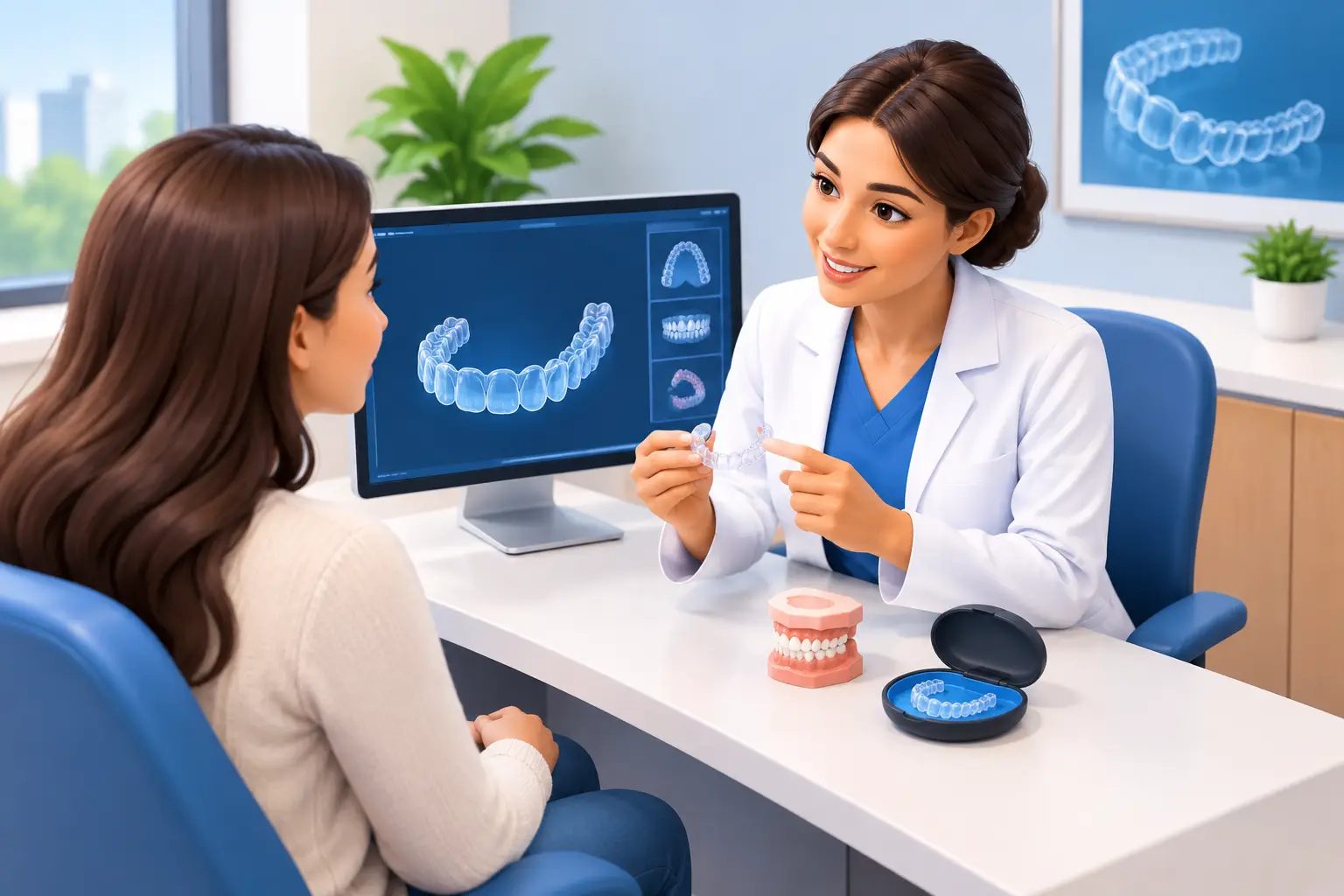
“Invisalign” is often used as a general term for clear trays, but Invisalign is a specific system provided through dental professionals. With doctor-supervised aligners, a dentist or orthodontic provider evaluates your oral health, creates a treatment plan, monitors progress, and adjusts the plan when needed.
At-home aligners historically relied more heavily on remote photographs, self-taken impressions, or scans made outside a dental office. The convenience was real, but remote records cannot always reveal concerns that affect whether tooth movement is appropriate. Not every adult needs extensive orthodontic treatment, but every adult deserves a careful assessment before starting it.
In-office treatment also gives your provider a fuller view of your smile goals. Perhaps you want a small gap closed, but your bite is already placing uneven pressure on certain teeth. Perhaps crowded lower teeth are difficult to clean and your gums are inflamed. Or perhaps a worn tooth, old crown, implant, or missing tooth needs to be considered before aligners begin. These details can shape a safer, more predictable plan.
Why X-rays and a gum check before straightening matter
A healthy-looking smile is not always a healthy foundation for tooth movement. X-rays and gum check before straightening are not unnecessary extras. They help a clinician look beneath the surface for bone loss, cavities between teeth, infection, root concerns, or other conditions that could complicate treatment.
Gum disease is especially important to identify. Teeth depend on healthy bone and gum tissue for support. If periodontal disease is active, moving teeth before stabilizing the gums may increase risk and make the final result less durable. A periodontal evaluation can also identify recession or areas that may need extra attention during treatment.
X-rays help your provider evaluate roots, existing dental work, and structures that cannot be assessed from a selfie or a home impression. For adults with crowns, bridges, implants, significant wear, or a history of restorative dentistry, this broader view is particularly valuable. Aligners can often be part of an excellent restorative plan, but the treatment sequence matters.
Mid-course corrections when teeth do not track
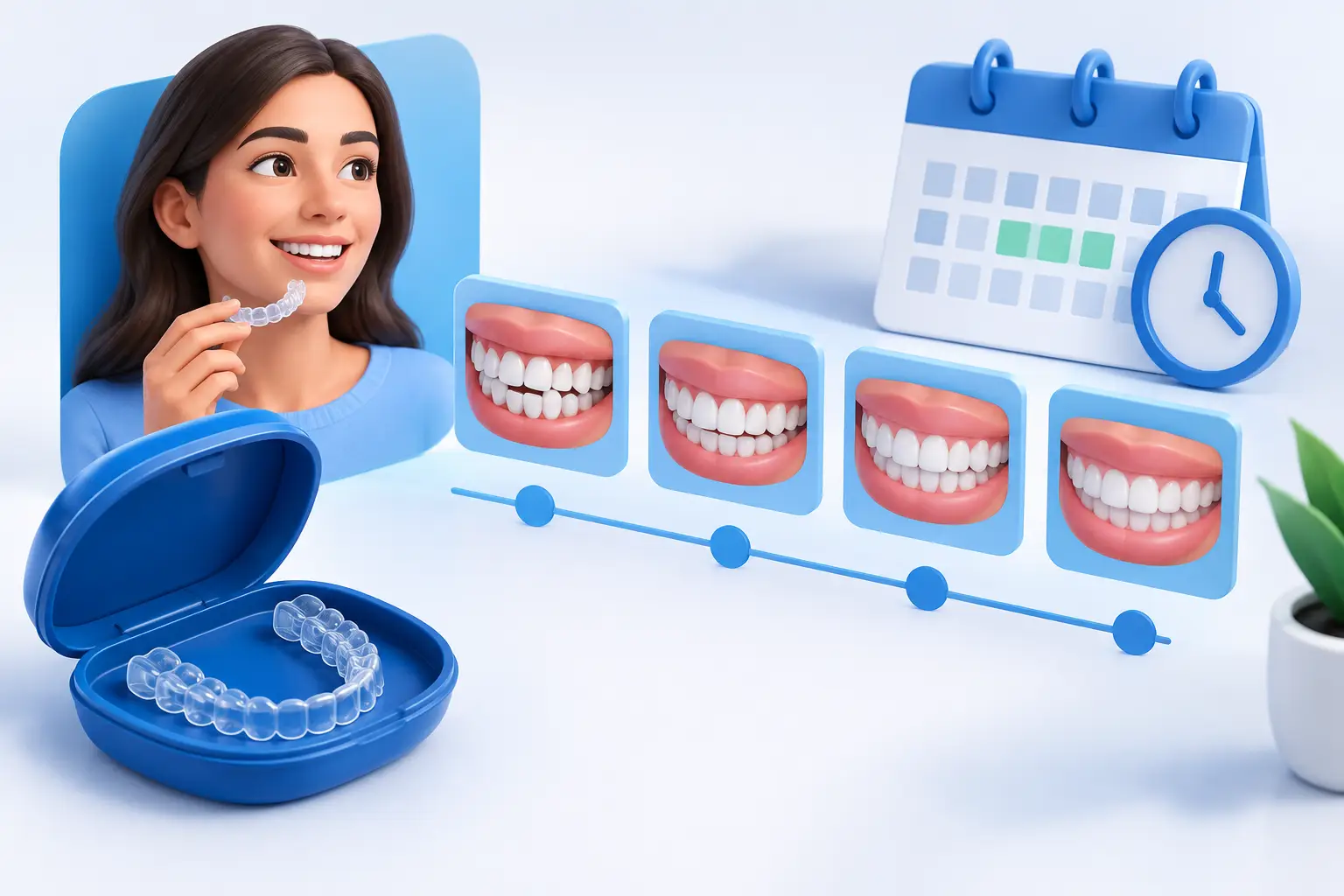
Clear aligners work by applying planned pressure in a sequence. Each tray assumes that the teeth have reached a certain position before the next tray is worn. Sometimes, a tooth does not “track” as expected. The tray may no longer fit closely around it, or progress may stall.
This does not necessarily mean treatment has failed. It means the plan may need attention. With doctor-supervised aligners, your provider can assess why movement has slowed and determine the next step. That may include additional attachments, small adjustments between teeth to create room, more time in a tray, new scans, or a refinement series of aligners.
These mid-course corrections are common enough that they should be part of the conversation from the start. Teeth do not move like software commands. Biology, wear time, bite forces, and individual anatomy all play a role. A treatment plan should leave room for real-life response, not just the ideal digital simulation.
The price question: compare what is included
Mail-order aligners were often marketed as a less expensive alternative to office-based care. For someone focused only on the first payment, the difference could appear significant. Yet a fair comparison includes more than the tray package.
Ask what the quoted fee covers: diagnostic records, X-rays, clinical exams, treatment planning, progress visits, refinements, replacement aligners, retainers, and follow-up care. Also ask whether there are fees if your bite needs additional correction or if a tooth is not tracking as planned.
The right option depends on your needs. A straightforward case may require fewer visits than a complex case, but fewer appointments should not mean less accountability. For many adults, the value of in-office treatment is knowing that the same care team is available to monitor both the appearance and health of their smile.
Retainers and follow-up care protect the result
Finishing aligner treatment is not the end of orthodontic care. Teeth naturally have a tendency to shift over time, which is why retainers and follow-up care are essential. Without consistent retainer wear, even a beautifully aligned smile can gradually change.
Your provider can recommend the right retainer design, explain how often to wear it, and check that it fits properly. Follow-up visits also give you an opportunity to discuss concerns such as bite changes, jaw discomfort, wear on the trays, or a retainer that has been lost or damaged.
This is another reason to think beyond the initial price. The long-term goal is not simply to complete a set of aligners. It is to keep your teeth healthy, comfortable, and stable after treatment.
What to ask at a free consultation and 3D scan before deciding
A free consultation and 3D scan before deciding can be a helpful first step when it includes an honest conversation about your goals and clinical needs. Not every office offers the same consultation format, so ask what is included and whether diagnostic X-rays or an exam are recommended before treatment begins.
Use the visit to ask who will oversee your case, how often progress will be checked, and how the office handles refinements. If you have gum concerns, missing teeth, implants, crowns, or previous orthodontic work, mention them early. Those details are not obstacles to be hidden. They are information that helps create a plan designed for your smile.
At Seattle Oral Care, clear-aligner planning can be coordinated with preventive, periodontal, restorative, and surgical care when needed. That coordinated approach can be reassuring for adults who want straight teeth without overlooking the health of the teeth and gums supporting them.
The best aligner choice is the one that fits your goals and gives you confidence in the care behind every tray. Before committing to any treatment, make sure you know who will be there to check your progress, answer your questions, and help protect your result long after your smile looks straighter.