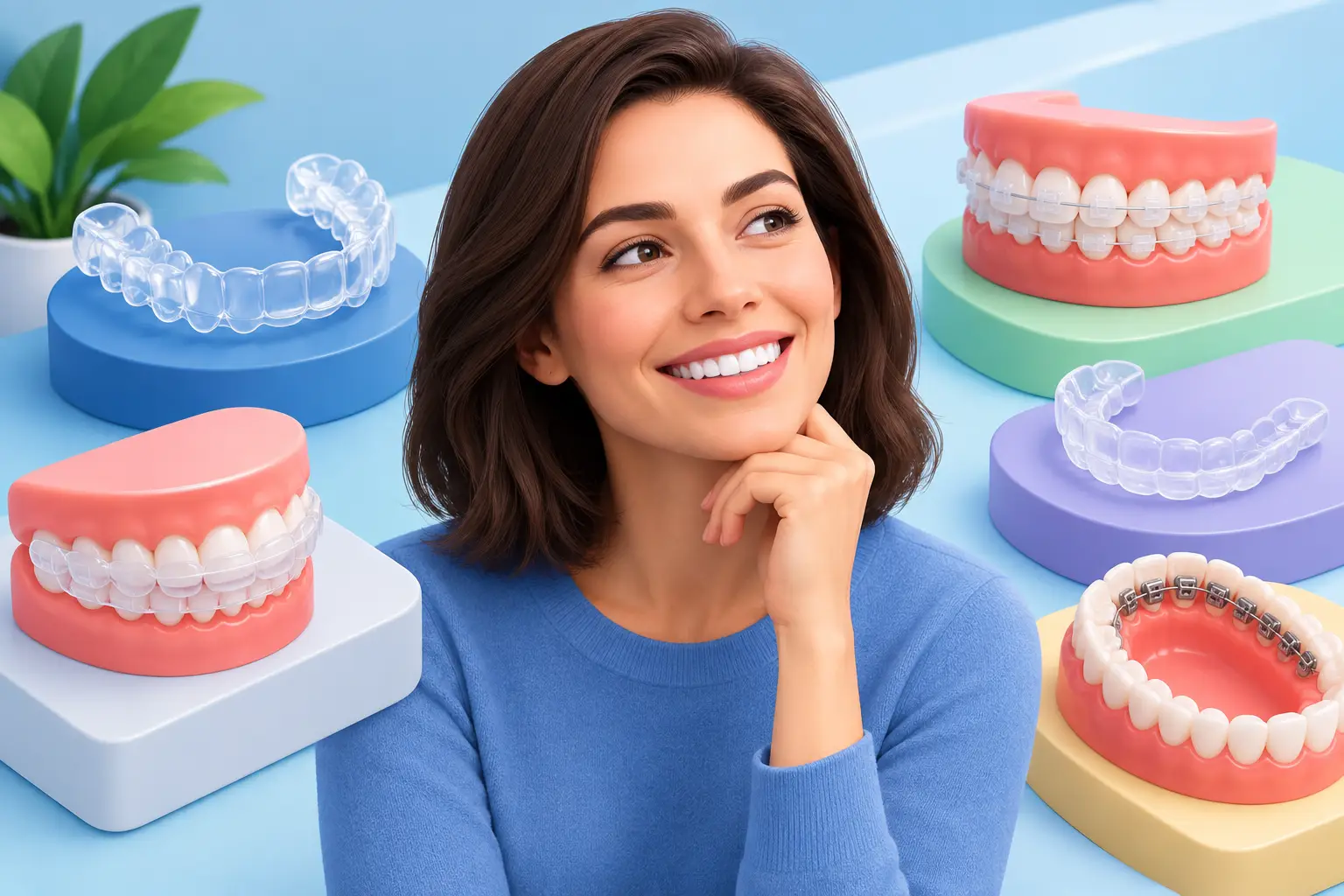
A crooked front tooth may be easy to hide in a photo. It can feel much harder to ignore during a presentation, on a video call, or when you catch your smile in the mirror. If you want to straighten teeth without braces , you have more choices than adults did a generation ago - and metal brackets are not the only path to a healthier-looking, more confident smile.
For an adult who never had braces as a kid, or a professional who doesn't want metal brackets, discreet treatment can be a practical fit. The right option depends on more than how your teeth look. Your bite, gum health, tooth movement goals, existing dental work, and timeline all matter. A careful evaluation helps make sure the treatment you choose supports your oral health as well as your appearance.
Teeth Straightening Options for Adults: Start With the Goal
Adults seek orthodontic treatment for different reasons. Some want to close a visible gap or correct one rotated tooth. Others have noticed that crowding has increased over time, making brushing and flossing more difficult. In some cases, teeth have shifted after prior orthodontic treatment because retainers were not worn consistently.
The first question is not simply, “What is the fastest way to make my teeth look straight?” It is, “What needs to change for my smile and bite to function comfortably for years?” Moving teeth changes the relationship between the teeth, jaw, gums, and restorations such as crowns or bridges. That is why an in-person assessment is more valuable than choosing a treatment based on before-and-after photos alone.
For many adults, clear aligner therapy is the most natural place to begin the conversation. For others, cosmetic bonding or veneers may be appropriate when the concern is primarily the visible shape, size, or color of teeth rather than their position.
Clear Aligners for Adults: A Discreet Orthodontic Option
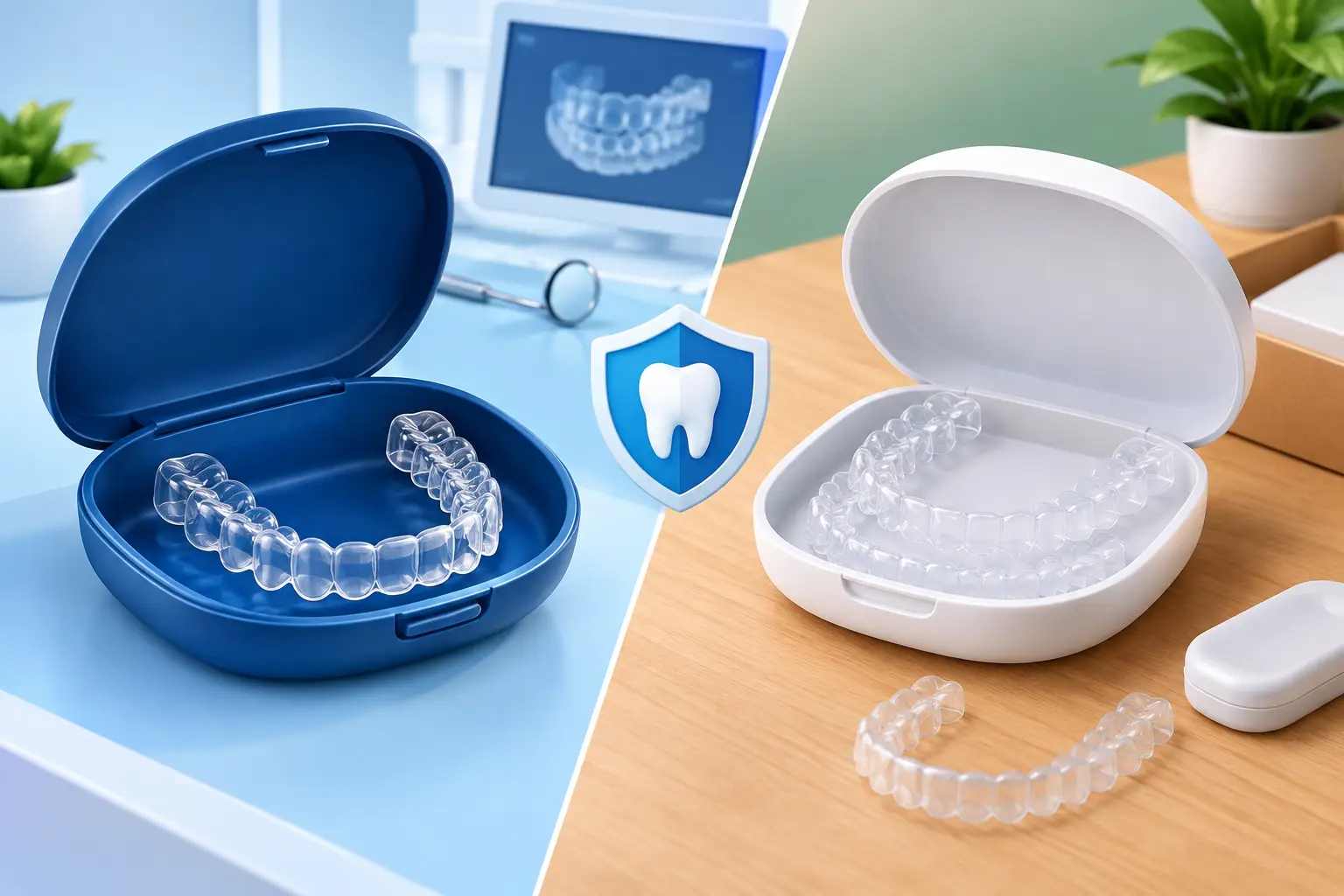
Clear aligners for adults use a series of custom, removable trays to apply gentle pressure and gradually guide teeth into planned positions. Invisalign is one well-known type of clear aligner treatment. Because the trays are transparent and fit closely over the teeth, they are often called invisible braces, though they work differently from traditional braces.
Aligners are removed for meals and for brushing and flossing. That can make everyday hygiene easier than it is with brackets and wires. They also appeal to adults who want a more subtle treatment option at work, in social settings, or during important life events.
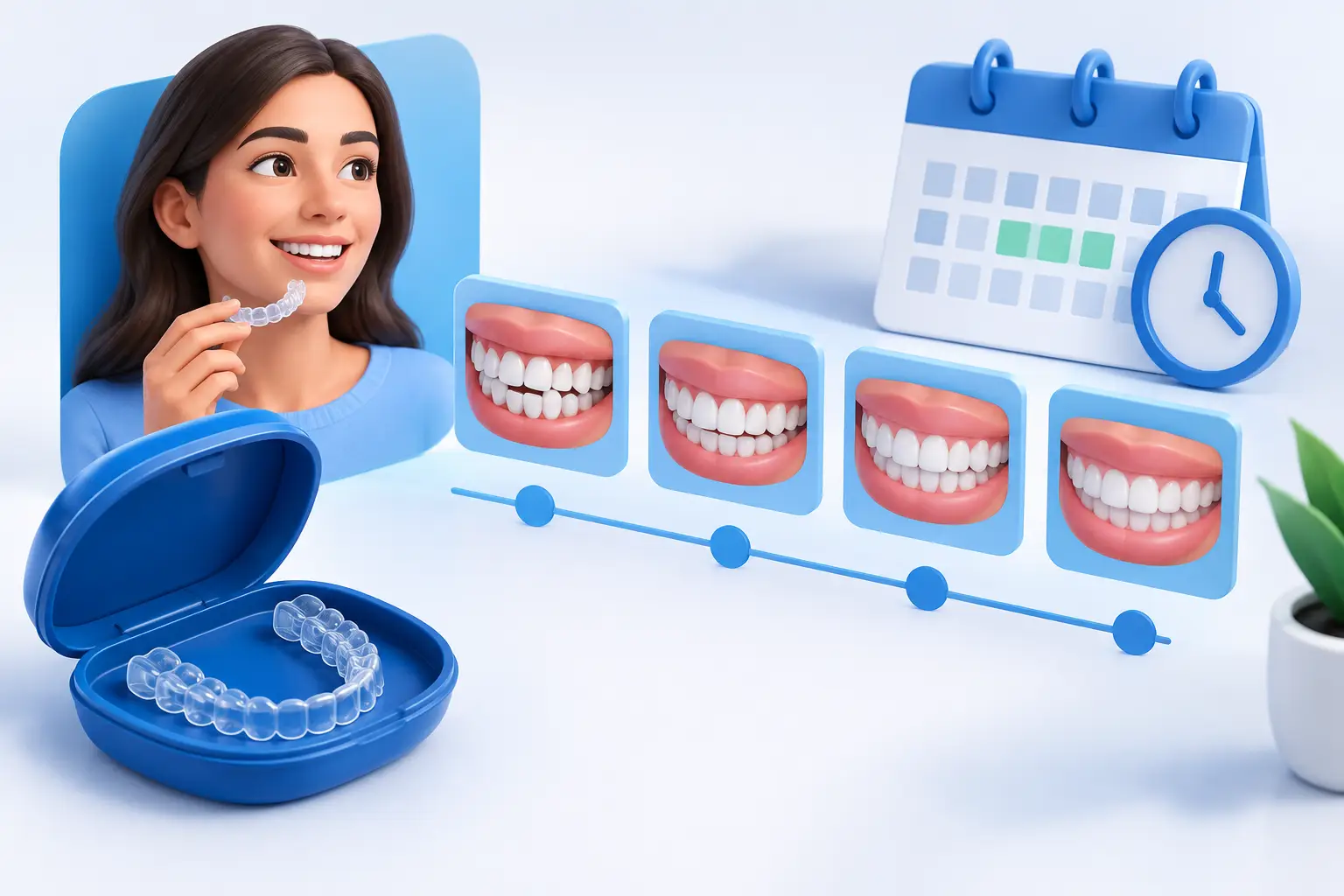
Successful aligner treatment requires consistency. Most patients need to wear aligners about 20 to 22 hours each day, changing to new sets as directed. Taking them out frequently or leaving them out for long periods can slow progress and affect the final result. For a patient who knows that routine will be difficult to maintain, another approach may be more predictable.
Clear aligners can address many common concerns, including mild to moderate crowding, spacing, certain bite issues, and tooth relapse after previous braces. More complex movements may still be possible, but they require thoughtful planning and close monitoring. Some cases benefit from small tooth-colored attachments that help aligners grip and move specific teeth. These attachments are discreet, but they are not completely invisible.
Treatment time varies. Limited cosmetic correction may take several months, while more comprehensive bite correction can take a year or longer. Once active treatment is complete, a retainer is essential. Teeth naturally have a tendency to shift, even after a successful result.
When Clear Aligners May Not Be the Best Fit
Clear aligners are not automatically the answer for every crooked smile. Significant jaw discrepancies, severely rotated teeth, advanced gum disease, untreated cavities, or a bite that places excessive pressure on certain teeth may need additional care first. Traditional braces, restorative treatment, periodontal care, or a coordinated combination of services may provide a safer and more durable path.
Adults with crowns, implants, bridges, or extensive dental work can still be candidates for aligners, but planning becomes more individualized. An implant does not move like a natural tooth, for example. Your treatment plan must account for that limitation rather than trying to force an orthodontic solution where it does not belong.
How to Fix Crooked Teeth Without Braces With Veneers or Bonding
Not every uneven-looking smile requires orthodontic tooth movement. When teeth are generally in a healthy position but appear crooked because of uneven edges, small gaps, chips, wear, discoloration, or differences in shape, cosmetic dentistry may offer another solution.
Dental bonding uses a tooth-colored resin to reshape part of a tooth. It can be a conservative option for a small chip, a narrow gap, or minor asymmetry. Bonding typically requires little to no removal of natural enamel, but it can stain or chip over time and may need maintenance.
Veneers are thin, custom-made coverings placed on the front surfaces of teeth. They can change a tooth’s color, shape, apparent size, and symmetry. Veneers may be an option when several front teeth have cosmetic concerns that aligners alone cannot correct, such as heavy discoloration, worn enamel, or irregular shapes.
There is an important trade-off: veneers do not move teeth or correct a bite problem. They can create the appearance of a straighter smile in carefully selected cases, but they are not a substitute for orthodontics when crowding or bite alignment is significant. Traditional veneers also generally require some enamel preparation, making the decision a long-term commitment. A thoughtful dentist will discuss conservative options first and explain the maintenance involved before recommending cosmetic treatment.
In some cases, the best result comes from combining treatments. Aligners can place teeth in healthier positions, followed by minor bonding to refine a worn edge or improve symmetry. This approach may preserve more natural tooth structure than using veneers to camouflage significant crowding.
What a Consultation Can Tell You About Your Options
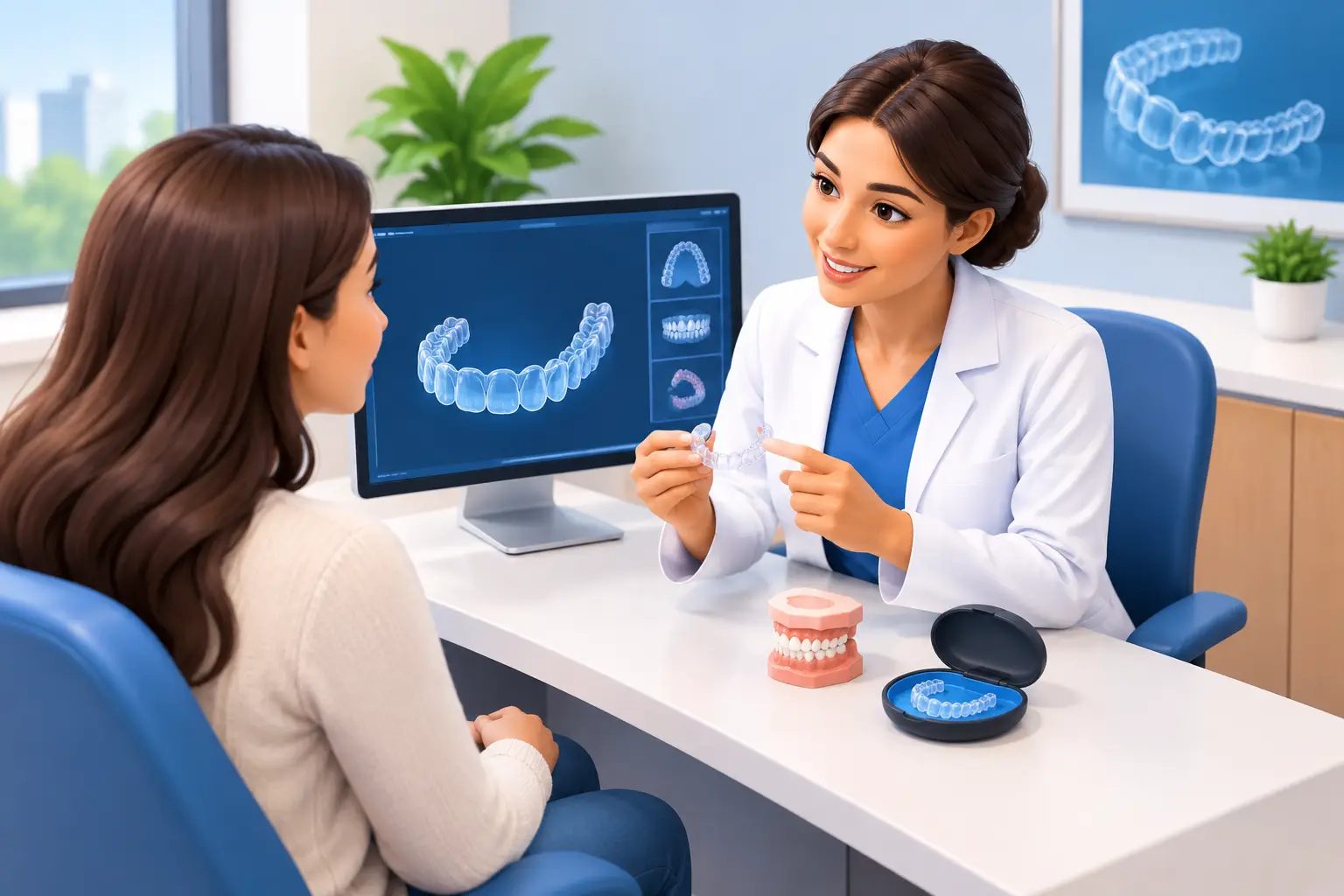
A consultation replaces guesswork with a plan designed around your mouth, goals, and comfort level. At Seattle Oral Care, this process begins with listening. You should be able to explain what bothers you about your smile, what you hope will change, and any concerns you have about time, cost, discomfort, or visibility during treatment.
Your clinical evaluation may include photographs, digital scans, X-rays, an examination of your teeth and gums, and an assessment of how your teeth come together. These records help identify concerns that are not obvious from the front of the smile, including tooth wear, gum recession, cavities between teeth, or bite forces that could compromise a cosmetic result.
A consultation can also clarify:
- whether your teeth need to move or simply need cosmetic refinement
- whether your gums and bone are healthy enough for orthodontic treatment
- how existing crowns, bridges, implants, or missing teeth affect the plan
- how long treatment may take and what commitment aligners require
- what retention and long-term maintenance will look like
For patients with more complex needs, coordinated care can be especially reassuring. A general dentist, prosthodontist, periodontist, or oral surgeon may each have a role in building a plan that protects your oral health while improving your smile. You should not have to choose between a beautiful result and a functional one.
A Straighter Smile Should Still Feel Like Your Smile
The best treatment is not necessarily the quickest or the most advertised. It is the one that respects your tooth structure, supports a comfortable bite, fits your daily routine, and gives you a result you can maintain. Whether that means clear aligners, limited bonding, veneers, or a combination of care, a conversation with an experienced dental team can turn a vague concern into clear, manageable next steps.
If you have spent years holding back your smile because you missed orthodontic treatment earlier in life, it is not too late to explore a solution that feels right for you. Gentle care and a well-designed plan can make the process feel far more approachable than you may expect.