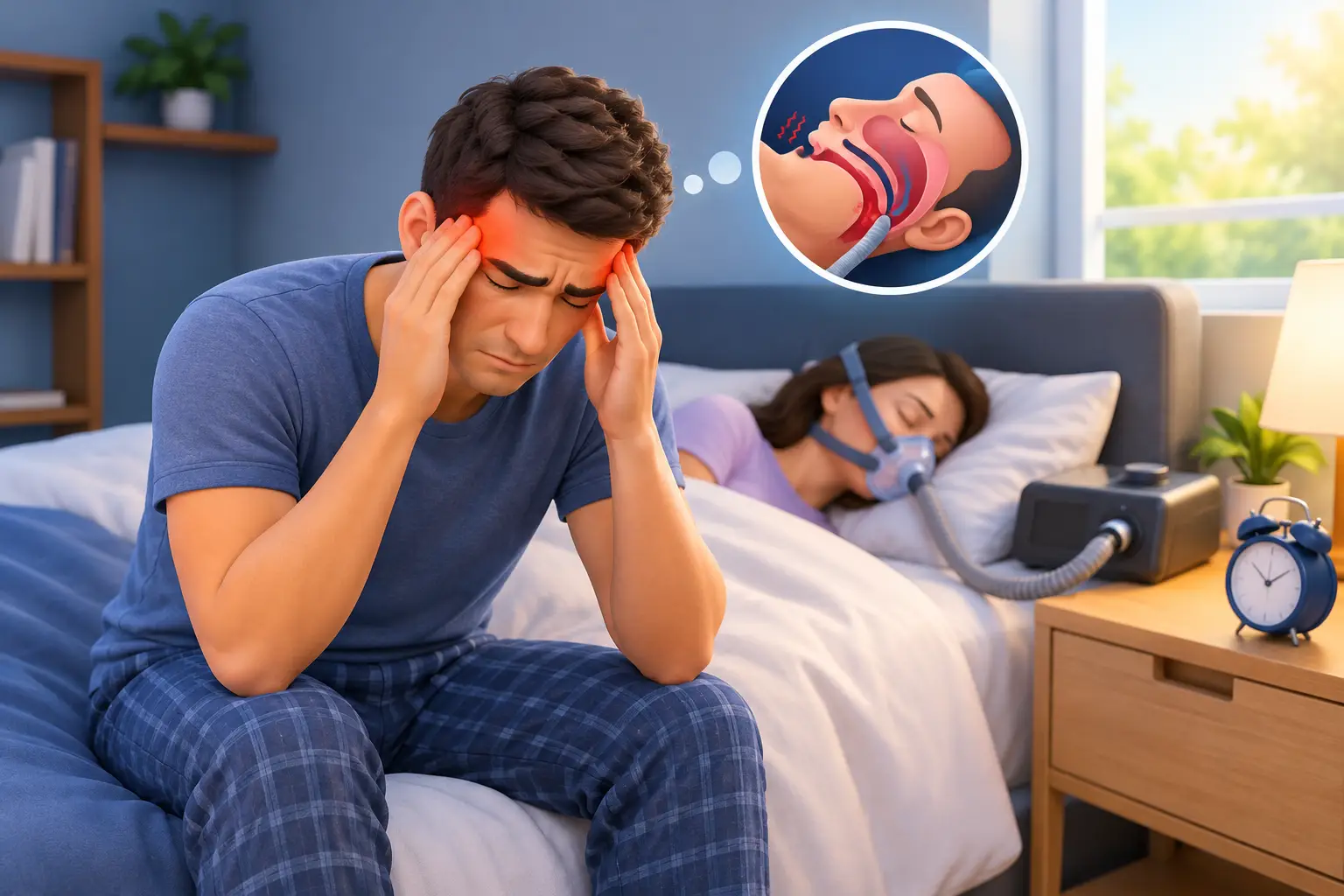
Waking up with a headache every day can make the first hour of the morning feel harder than it should. If you are wondering whether sleep is the cause, the connection between morning headaches and sleep apnea is worth discussing with a physician. Sleep apnea is one possible explanation, but it is far from the only one, and a careful evaluation matters.
A recurring morning headache is not something you need to simply push through with coffee and a pain reliever. Your symptoms, sleep habits, medications, stress level, jaw comfort, and overall health can all provide useful clues. The goal is not to self-diagnose. It is to notice patterns, share them clearly, and get the right guidance.
Can Sleep Apnea Cause Morning Headaches?
Sleep apnea involves repeated disruptions in breathing during sleep. Because those disruptions can affect sleep quality and how rested you feel, some people with sleep apnea and headaches notice pain most often upon waking. The headache may fade as the day goes on, or it may linger. Either pattern deserves attention when it becomes frequent.
Still, a morning headache does not automatically mean sleep apnea. Headaches can have many causes, including dehydration, medication effects, caffeine changes, stress, sinus concerns, high blood pressure, migraine, neck strain, teeth grinding, and other medical conditions. More than one factor may be present at the same time.
That is why it helps to think beyond the headache itself. The question is not just, “Do I wake up in pain?” It is also, “What is happening during my sleep, and how am I feeling during the day?”
Signs That Sleep May Be Worth Discussing
You may want to bring up sleep-disordered breathing with your physician if morning headaches occur alongside loud, frequent snoring; witnessed pauses in breathing; gasping or choking during sleep; a dry mouth upon waking; or ongoing daytime sleepiness. Trouble concentrating, irritability, and waking unrefreshed can also be useful details to share.
A bed partner may notice signs that you cannot. If someone has mentioned your snoring, restless sleep, or pauses in breathing, write down what they have observed. Even a few notes can make a medical conversation more productive.
It also helps to consider timing. Did the headaches begin after a change in schedule, stress, alcohol use, medication, weight, travel, or illness? Do they happen after sleeping in a particular position? Do they improve on weekends, or become worse after a poor night of sleep? Patterns do not provide a diagnosis, but they give your physician a clearer starting point.
Jaw Tension Can Be Part of the Picture, Too
For some people, morning discomfort is centered around the temples, cheeks, or jaw. Clenching or grinding during sleep may contribute to muscle soreness and headaches. Dental concerns such as bite changes, worn teeth, or jaw-joint discomfort can be relevant, particularly when you wake with a tight jaw or sensitive teeth.
Jaw clenching and sleep-disordered breathing can also overlap in some patients, but one does not prove the other. A dental exam can identify signs of wear or tension in the mouth, while a physician can evaluate headache and sleep concerns more broadly. Coordinated care is often more helpful than trying to assign every symptom to a single cause.
What to Track Before Your Appointment
You do not need a complicated sleep journal. A simple record for a week or two can be enough to make your symptoms easier to describe. Note when headaches occur, where the pain is located, how long it lasts, and what seems to ease or worsen it. Include your bedtime, wake time, alcohol or caffeine intake, and whether you felt rested.
If you share a bedroom, ask your partner what they notice. Snoring volume, restless movement, gasping, or breathing pauses are all observations your physician may want to hear. Also list medications and supplements, including anything you use for sleep, allergies, congestion, pain, or anxiety.
Bring your notes to a primary care appointment. Depending on your symptoms and history, your physician may discuss next steps, which can include further headache evaluation or a sleep assessment. A sleep test is the appropriate way to assess for sleep apnea. It is not possible to confirm the condition based on snoring or morning headaches alone.
When a Morning Headache Needs Prompt Medical Attention
Persistent headaches should be evaluated, especially when they are new, changing, severe, or interfering with daily life. Seek urgent medical care for a sudden and severe headache, a headache after a head injury, or pain accompanied by confusion, fainting, weakness, numbness, vision changes, fever, stiff neck, chest pain, or trouble speaking.
This is particularly important if a headache feels distinctly different from your usual pattern. Trust that instinct. It is always appropriate to ask for medical guidance when something feels off.
Where Dental Sleep Care May Fit In
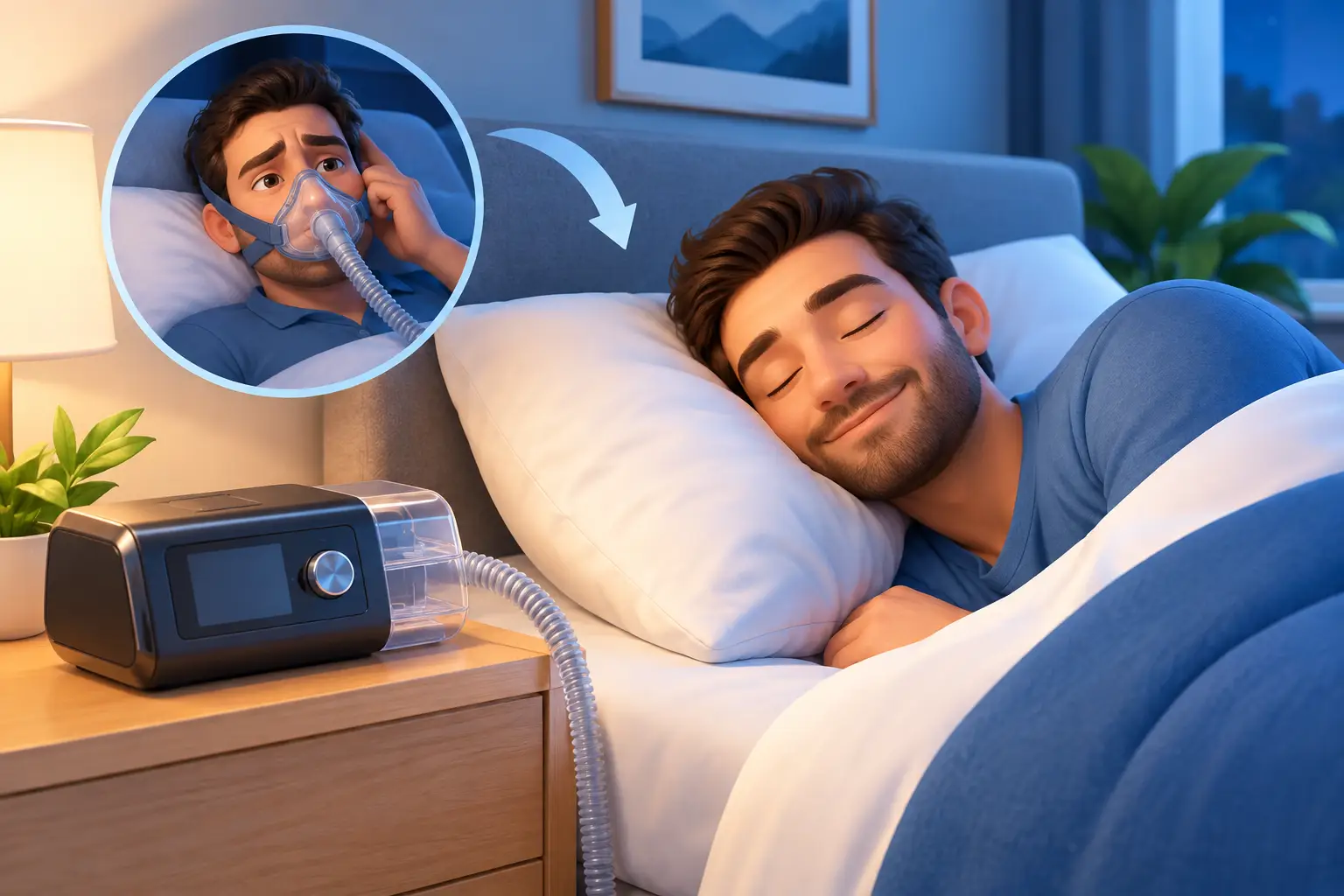
If a physician diagnoses obstructive sleep apnea, dental sleep medicine may become part of the conversation. Some patients are referred for an oral appliance, while others may use one in coordination with other care. The right approach depends on the diagnosis, medical history, comfort, anatomy, and the recommendations of the treating physician and sleep team.
An oral appliance is custom-made to fit the teeth and guide the lower jaw into a prescribed position during sleep. It is not an over-the-counter mouthguard, and it should not be selected as a substitute for a medical evaluation. Proper fitting and follow-up are important because the teeth, bite, jaw joints, and comfort all need to be monitored over time.
At Seattle Oral Care, sleep-focused dental care is provided with an individualized approach and in coordination with a patient’s medical team when appropriate. For patients who feel anxious about dental treatment, the process begins with a conversation. You should understand what an appliance is designed to do, what follow-up involves, and whether it fits into your broader sleep care plan.
A Better Next Step Than Guessing
It is understandable to search for a simple answer when you are tired and hurting every morning. But daily headaches are a reason to pause, pay attention, and speak with a physician rather than assume the cause. Sleep apnea may be part of the picture, or the answer may lie elsewhere.
Start by documenting what you notice tonight and tomorrow morning. That small step can help turn a frustrating, repetitive symptom into a clearer conversation and a more thoughtful plan for your care.