
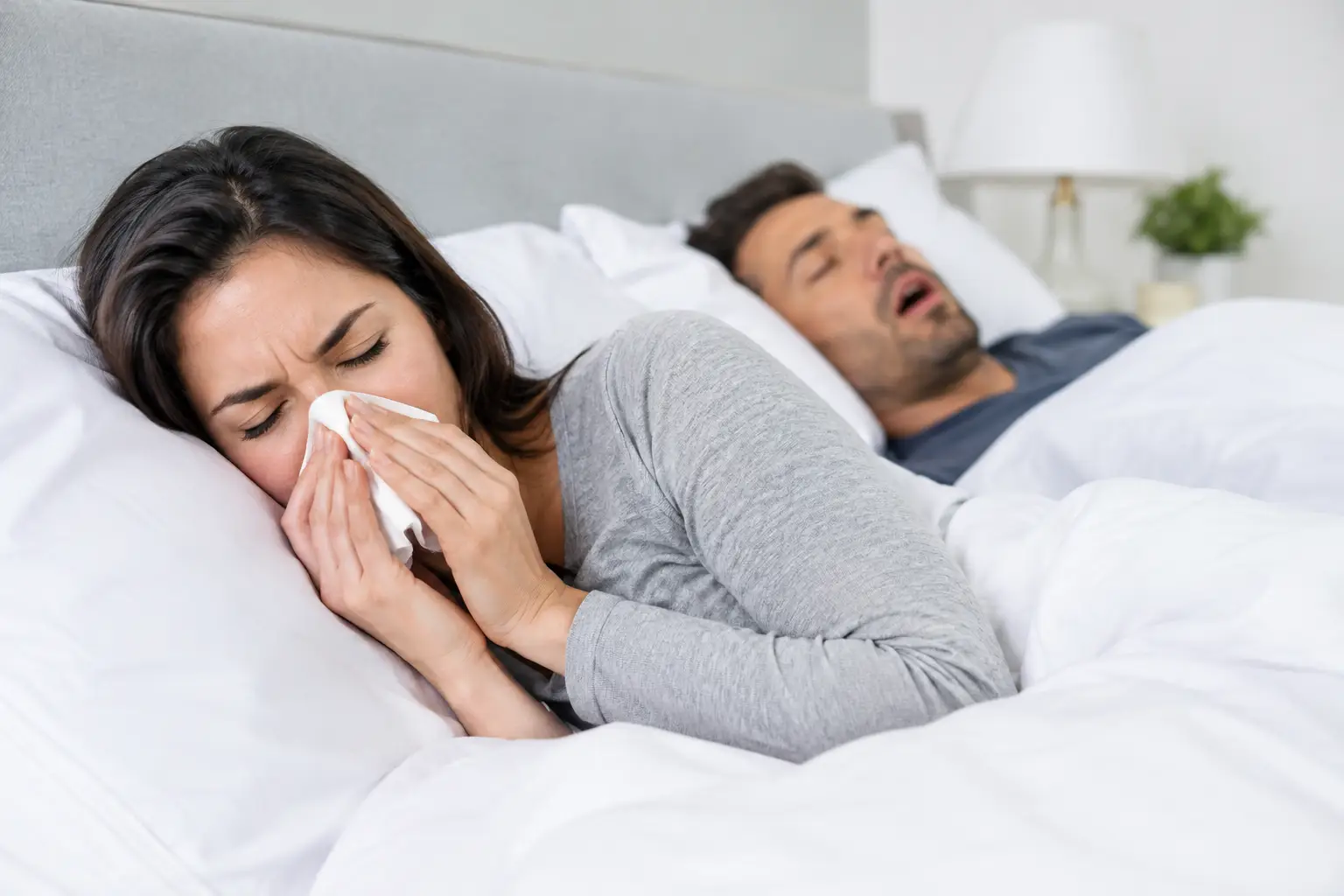
A blocked nose can turn a quiet night into a noisy one quickly. Nasal congestion and snoring often travel together because a stuffy nose changes how you breathe during sleep. For a person who snores mainly when congested, the pattern may be temporary and tied to allergies, a cold, or irritation. It is still worth paying attention to, especially if snoring is loud, frequent, or paired with poor sleep and daytime fatigue.
How a stuffy nose can lead to snoring
When you are awake, you can consciously adjust your breathing if your nasal passages feel blocked. During sleep, that control fades. If air cannot move easily through your nose, you are more likely to breathe through your mouth.
Mouth breathing can dry the throat and allow the soft tissues at the back of the mouth to relax into a narrower airway. As air moves through that smaller space, the tissues vibrate. That vibration is the sound of snoring.
Nasal blockage does not cause every case of snoring. The tongue, soft palate, jaw position, body position, alcohol use, certain medications, and weight can all contribute. Still, a congested nose can be the factor that pushes an otherwise mild snoring tendency into a more noticeable problem.
Allergies and snoring: why the pattern may be seasonal
Allergies and snoring are commonly connected. Allergic reactions can cause swelling inside the nose, increased mucus, postnasal drip, and itchiness that disrupts comfortable breathing. Symptoms may be worse overnight, when exposure to allergens in bedding or the bedroom combines with lying flat.
Someone who sleeps quietly most of the year but begins snoring during allergy flares may be experiencing a congestion-driven change in airflow. The same can happen with a respiratory infection. In these cases, snoring may improve after the underlying inflammation settles.
That does not mean you should simply ignore it. Repeated nights of poor breathing can leave you tired, irritable, and less focused. If congestion is frequent, treating the trigger can support better sleep as well as more comfortable daytime breathing.
Clues that congestion may be playing a major role
A person who snores mainly when congested often notices a clear connection between nasal symptoms and nighttime noise. Snoring may begin with a cold, worsen when allergy symptoms are active, or improve after nasal breathing returns to normal. You may also wake with a dry mouth, need to sleep with your mouth open, or feel more congested after lying down.
Keep in mind that a pattern can have more than one cause. Nasal congestion may reveal an existing tendency toward airway narrowing rather than being the only explanation. If snoring continues after the stuffiness clears, another sleep-related breathing concern may be involved.
What you can try for temporary congestion-related snoring
When symptoms are occasional and clearly tied to a cold or allergy flare, gentle measures may help reduce nasal blockage before bed. A saline rinse or spray can help clear mucus and moisturize nasal passages. Keeping the bedroom free of common irritants, washing bedding regularly, and avoiding known allergy triggers can also be useful.
Sleeping on your side rather than your back may reduce snoring for some people. Elevating the head slightly can make nasal drainage more comfortable, although it will not correct every source of airway obstruction. Staying hydrated and avoiding alcohol close to bedtime can help, too, since alcohol relaxes throat muscles and can make snoring louder.
Over-the-counter allergy medicines or nasal sprays may be appropriate for some adults, but they are not one-size-fits-all solutions. Some medications can cause dryness, drowsiness, or interactions with other prescriptions. Decongestant nasal sprays should generally be used only as directed and for a short period, as overuse can lead to rebound congestion. A physician, pharmacist, or allergy specialist can help you choose an approach that fits your health history.
When snoring needs a closer look
Snoring is common, but it is not always harmless. Obstructive sleep apnea occurs when the airway repeatedly narrows or closes during sleep. The body briefly wakes enough to restore breathing, often without the person remembering it. These interruptions can happen many times in one night.
Congestion can make obstructive sleep apnea worse, but allergies and a stuffy nose do not explain apnea on their own. Seek an evaluation if you or a sleep partner notice loud habitual snoring, pauses in breathing, gasping or choking during sleep, frequent awakenings, morning headaches, dry mouth, or significant daytime sleepiness.
Other reasons to speak with a clinician include high blood pressure, difficulty concentrating, mood changes, or falling asleep unintentionally during quiet activities. These symptoms do not prove sleep apnea, but they deserve a conversation. A sleep evaluation may include a home sleep test or an overnight study, depending on your symptoms and medical needs.
Why the jaw and airway matter
For some people, the shape and position of the jaw can affect the space available for airflow during sleep. A lower jaw that falls backward, a tongue that relaxes toward the throat, or soft tissues that crowd the airway can all contribute to snoring. This is why dental sleep medicine can be part of a coordinated plan for appropriate patients.
A custom oral appliance is a small device worn during sleep that gently supports the lower jaw in a forward position. This can help keep the airway more open for certain people with snoring or obstructive sleep apnea. It is not a replacement for every treatment. Continuous positive airway pressure, commonly called CPAP, remains an effective option for many people, particularly when sleep apnea is more severe.
The right choice depends on the diagnosis, the severity of airway obstruction, comfort, medical history, and how well a person can consistently use treatment. An oral appliance should be professionally fitted and monitored. A poorly fitted device can cause jaw discomfort, tooth movement, or bite changes over time.
A practical way to track your symptoms
Before an appointment, notice the details that can help a clinician see the full picture. Consider when snoring occurs, whether it changes with congestion, how often you wake during the night, and whether you feel restored in the morning. If a partner has noticed pauses in breathing or gasping, write that down as well.
It can also help to note possible triggers: allergy symptoms, recent illness, alcohol before bed, sleep position, new medications, or weight changes. This information does not replace testing, but it makes the conversation more specific and productive.
Better sleep starts with the right question
If your snoring appears only when you have a stuffy nose, addressing congestion may be the first sensible step. But if the snoring is persistent, disruptive, or accompanied by signs of interrupted breathing, do not assume allergies are the whole story. A thoughtful evaluation can identify whether nasal congestion is a temporary trigger, part of a larger airway issue, or both.
You deserve sleep that leaves you rested, not worried about what happens after the lights go out. Bringing up snoring at a dental or medical visit can be a simple, meaningful step toward clearer breathing and more restorative nights.