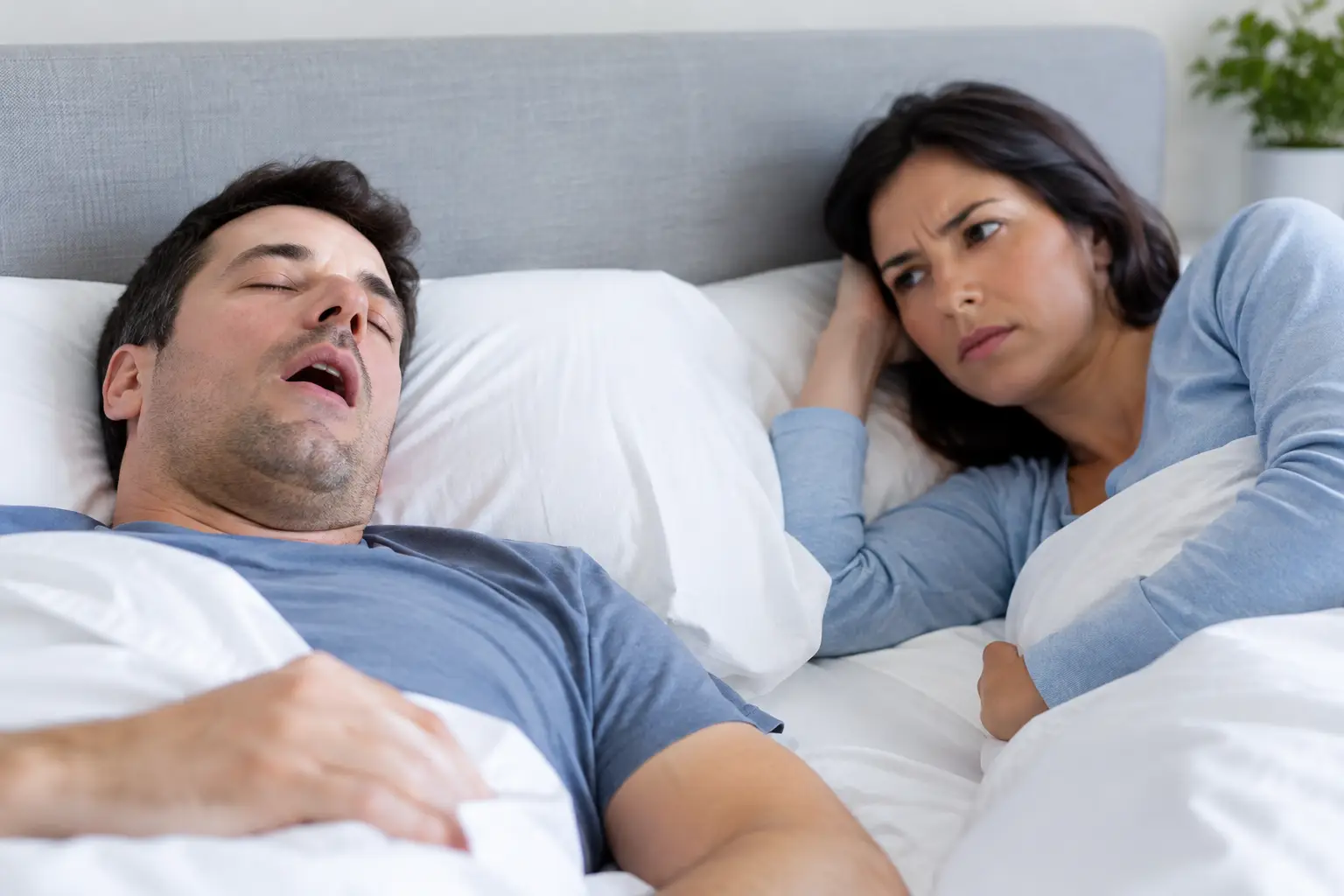
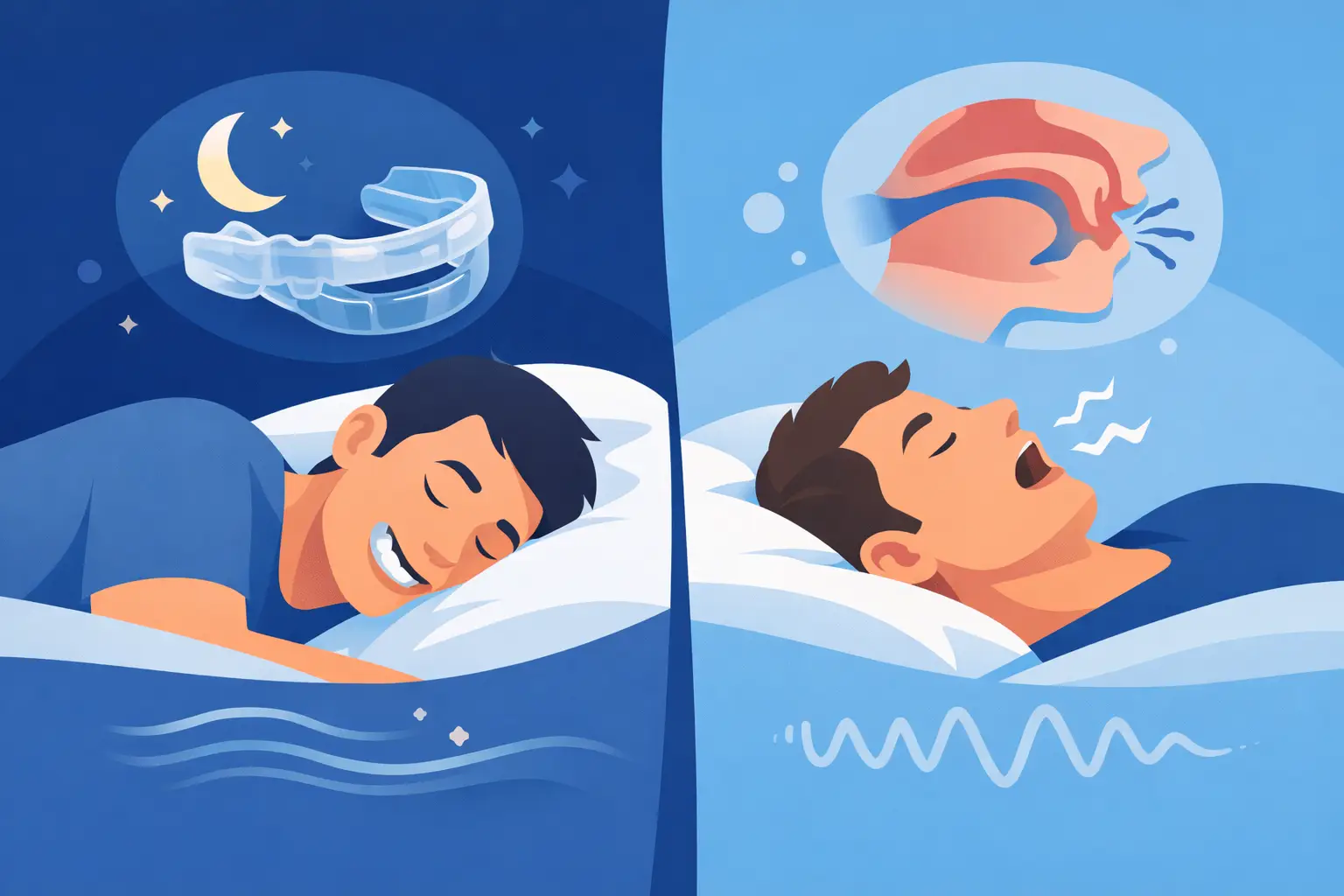
A night guard may protect your teeth, but it does not automatically protect your breathing. When comparing Night Guards for Sleep Apnea vs. Snoring , the key question is not simply whether you make noise at night. It is whether your airway is narrowing or closing while you sleep - and that requires the right diagnosis and appliance.
A Night Guard and a Sleep Appliance Do Different Jobs
A traditional night guard is designed for bruxism, the clenching and grinding that can wear down teeth, crack restorations, strain jaw muscles, and cause morning headaches. It creates a protective barrier between the upper and lower teeth. For patients with tooth wear, this can be a valuable part of preventive care.
An oral appliance for sleep apnea or snoring is different. It is typically a custom mandibular advancement device that holds the lower jaw slightly forward during sleep. This forward position can help keep the tongue and soft tissues from narrowing the airway.
The two devices may look somewhat similar, especially when viewed online. Their purpose, fit, and effect on the jaw are not the same. Wearing a standard grinding guard when you need airway treatment can leave the underlying problem untreated. In some situations, an ill-fitting or over-the-counter device may also worsen jaw discomfort or alter how your teeth meet.
Snoring Is Common, but It Is Not Always Harmless
Snoring happens when air moves through a partially narrowed airway and causes surrounding soft tissues to vibrate. Nasal congestion, alcohol, sleep position, weight changes, and the anatomy of the mouth and throat can all contribute.
For some people, snoring is disruptive but not dangerous. For others, it is a sign of obstructive sleep apnea, a condition in which breathing repeatedly slows or stops during sleep. Those pauses can lower oxygen levels and interrupt restorative sleep, even if you do not remember waking up.
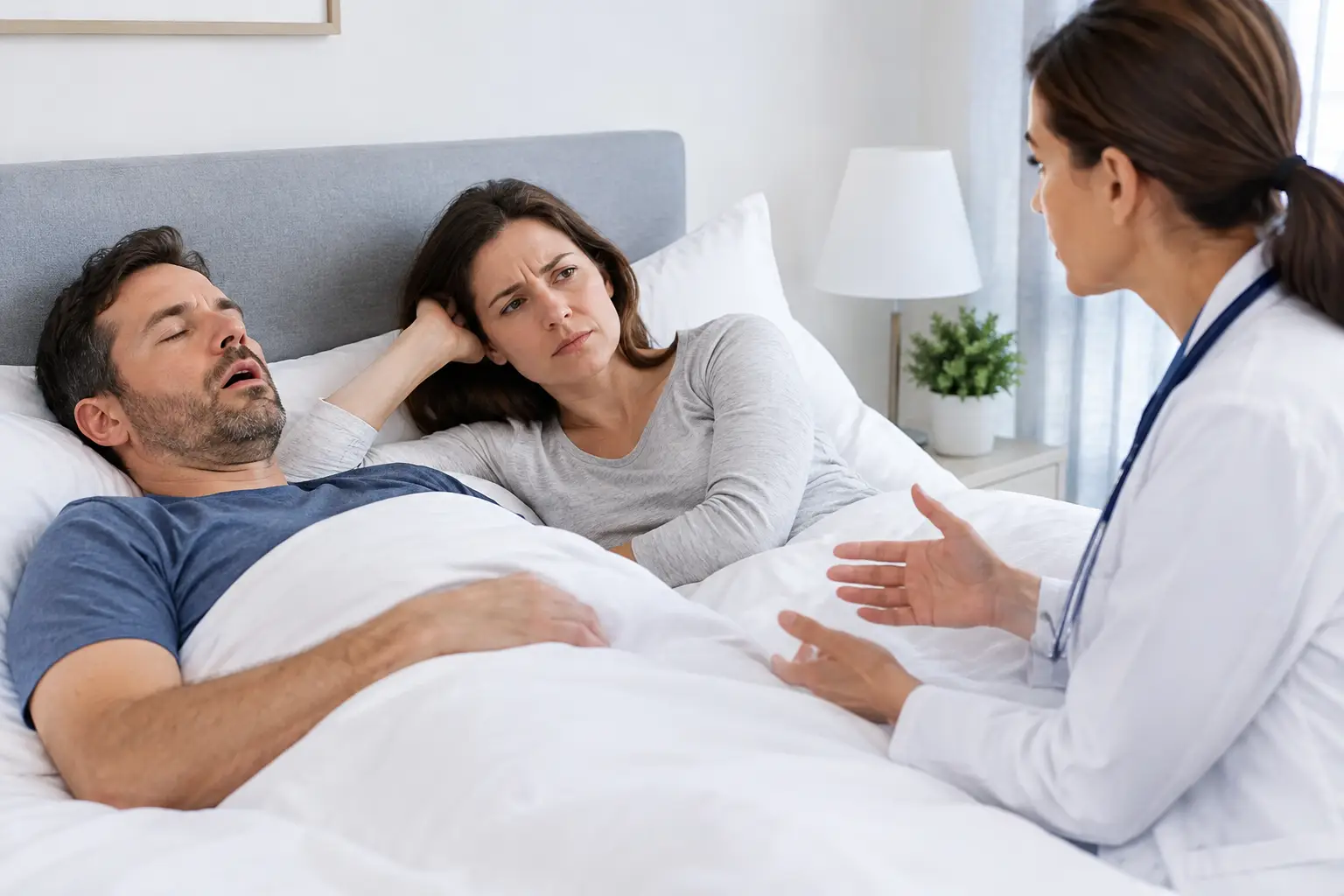
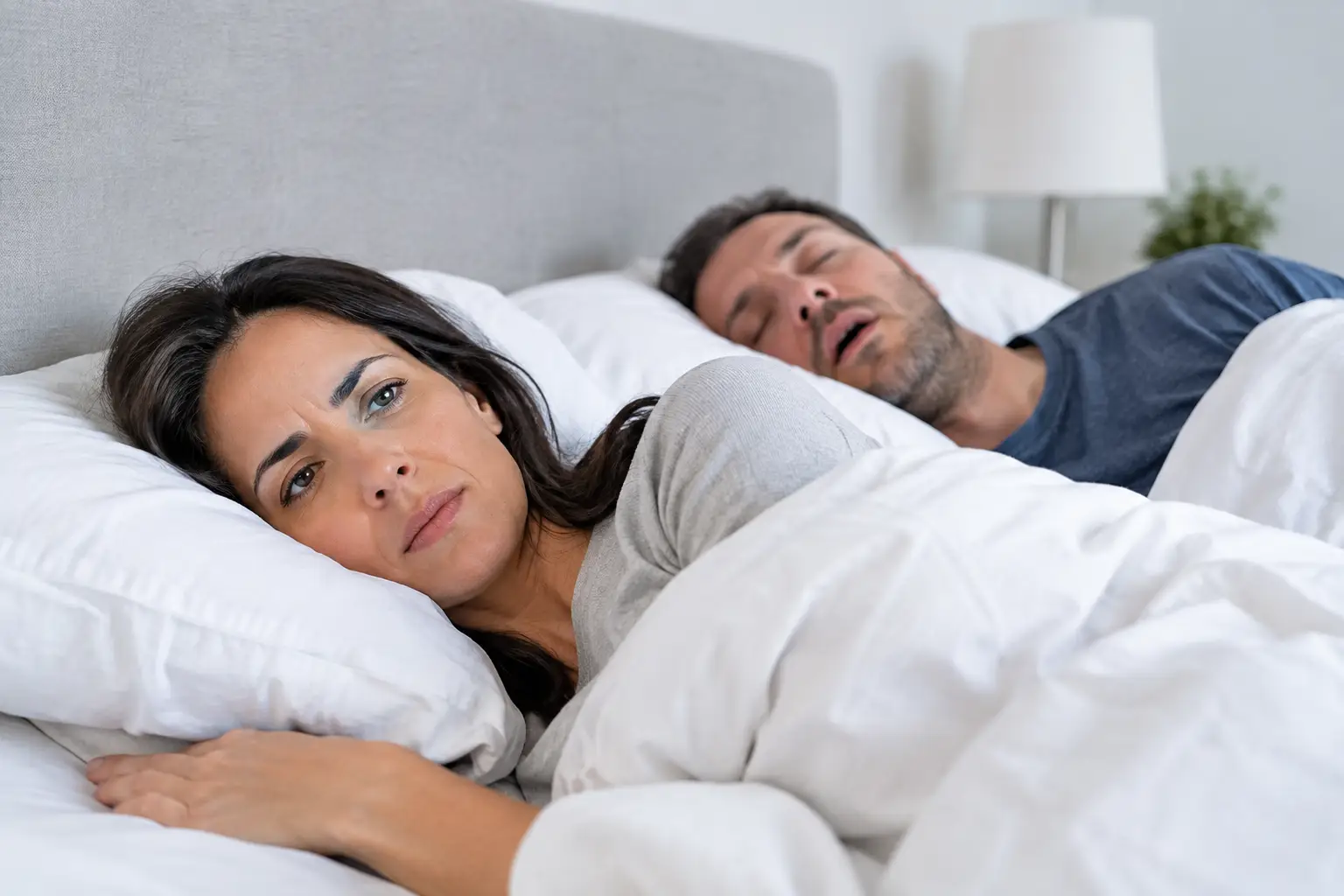
Consider an evaluation if snoring is paired with daytime sleepiness, waking up gasping or choking, morning headaches, trouble concentrating, high blood pressure, or reports of breathing pauses from a bed partner. These symptoms do not confirm sleep apnea on their own, but they are good reasons to speak with a physician or sleep professional.
How Oral Appliance Therapy Can Help Sleep Apnea
Sleep apnea must be diagnosed through appropriate medical testing, often a home sleep test or an overnight sleep study. Once a physician determines the type and severity of sleep apnea, treatment options can be discussed.
CPAP is often recommended for moderate to severe obstructive sleep apnea and remains highly effective when used consistently. However, some patients struggle with the mask, airflow, travel demands, or overall comfort. For appropriate candidates, a custom oral appliance may be an effective alternative or a treatment used in coordination with CPAP.
Oral appliance therapy is often considered for people with primary snoring, mild to moderate obstructive sleep apnea, or severe sleep apnea when CPAP is not tolerated. The right recommendation depends on your sleep-study results, medical history, airway anatomy, bite, jaw health, and treatment goals.
Why a Custom-Fitted Device Matters
Store-bought boil-and-bite guards and online devices can seem like a quick answer. But sleep-related appliances need careful fitting and follow-up. A properly made device should be comfortable enough to wear, adjustable when needed, and designed to minimize unnecessary pressure on your teeth and jaw joints.
Your dental provider should also monitor your bite, tooth movement, gum health, and jaw function over time. This is especially important if you have crowns, implants, missing teeth, dentures, TMJ symptoms, or significant tooth wear. Sleep treatment should support your long-term oral health, not create a new problem to solve later.
At Seattle Oral Care, sleep-focused treatment is planned with the same careful attention used for restorative care. An AADSM-certified prosthodontist can help determine whether a custom oral appliance is appropriate and coordinate care with your physician when sleep apnea is suspected or diagnosed.
What to Do If You Grind and Snore
It is possible to have both bruxism and sleep-disordered breathing. In fact, some people clench or grind during sleep disruptions. That does not mean a standard night guard is the full answer.
A dental exam can identify signs of grinding, such as flattened or fractured teeth, worn crowns, sensitive teeth, and jaw muscle tenderness. A sleep evaluation can assess whether snoring points to an airway concern. From there, treatment may involve a protective night guard, a custom oral appliance, CPAP, restorative care for damaged teeth, or a coordinated plan that addresses more than one need.
If your snoring is affecting your energy, your relationship, or your health, you do not have to guess which device belongs in your mouth at night. A thoughtful evaluation can clarify what is happening and help you move toward quieter nights, healthier breathing, and better-rested mornings.