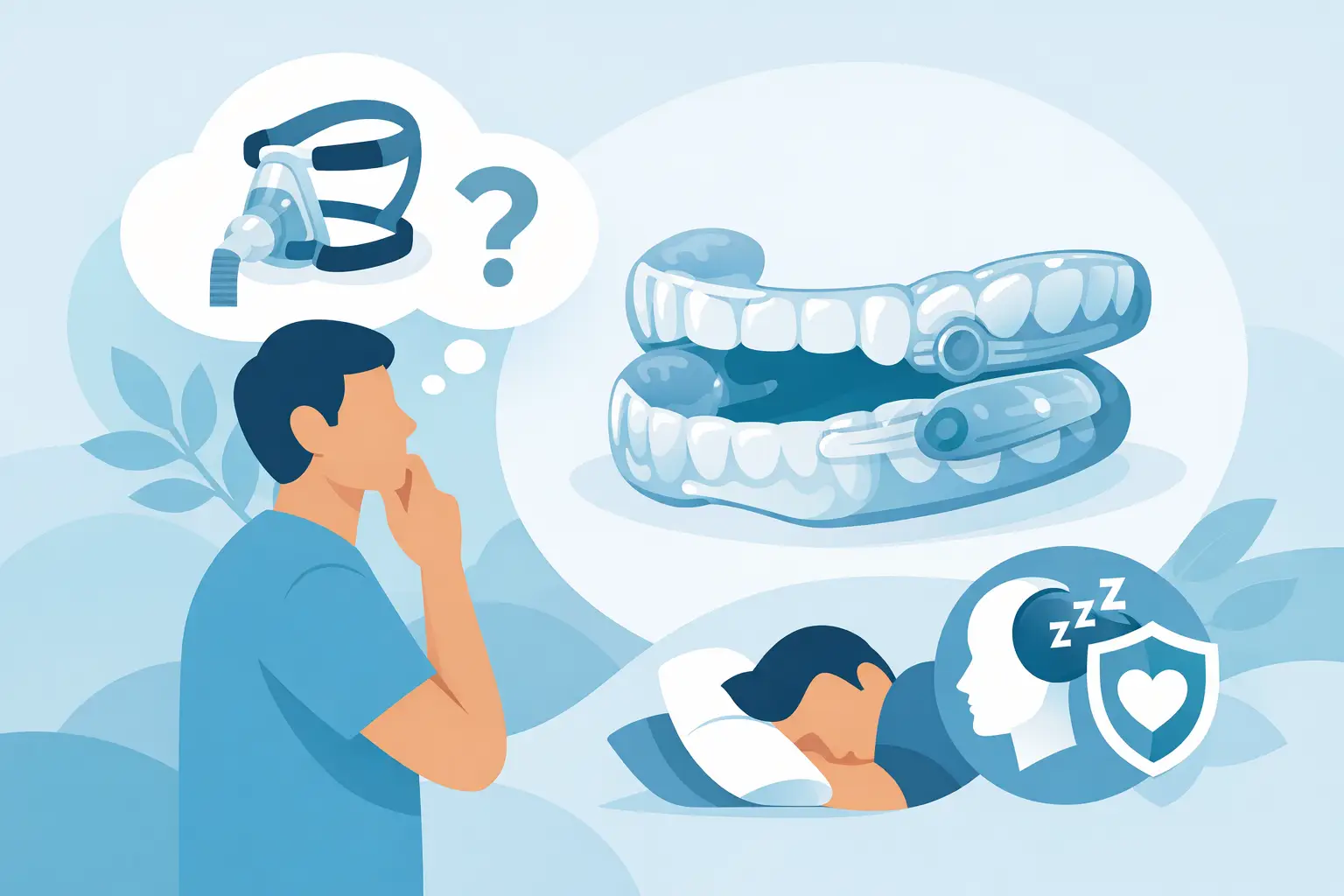
Waking up tired, falling asleep during meetings, or hearing that your snoring keeps everyone else awake can be more than frustrating. If you are asking, “am I a candidate for oral appliance therapy?” the answer depends on your sleep diagnosis, your airway, and the health of your teeth and jaw - not simply how loudly you snore.
An oral appliance is a custom-fitted device worn during sleep. It gently moves the lower jaw forward to help keep the airway open. For the right patient, it can be a comfortable, quiet alternative to CPAP or a useful part of a broader sleep apnea treatment plan.
Who Is a Good Candidate for Oral Appliance Therapy?
Oral appliance therapy is most often recommended for adults with mild to moderate obstructive sleep apnea. It may also be appropriate for people with severe obstructive sleep apnea who cannot tolerate CPAP, although CPAP is often the first recommendation for more severe cases because it can provide more consistent airway support.
A good candidate usually has a sleep study confirming obstructive sleep apnea or has been evaluated for persistent, disruptive snoring. Snoring alone does not automatically mean an appliance is the right answer. A sleep evaluation matters because untreated sleep apnea can affect blood pressure, heart health, daytime alertness, and quality of life.
You may be a strong candidate if you have been prescribed CPAP but struggle with the mask, pressure, noise, travel, or wearing it consistently. Many patients want an option that is smaller and easier to bring on the road. Others prefer an appliance because it does not require electricity or tubing.
Oral appliance therapy eligibility also depends on oral health. The device needs stable teeth or carefully planned dental support to hold it securely. Healthy gums, a stable bite, and enough jaw movement are all helpful. A custom appliance should be made and monitored by a qualified dental sleep medicine provider, not purchased as a one-size-fits-all product online.
What Happens Before Treatment?
A thoughtful evaluation protects both your sleep and your smile. Your care team will review your sleep study, medical history, medications, symptoms, and prior CPAP experience. The dentist will also examine your teeth, gums, jaw joints, bite, and range of lower-jaw movement.
This is especially valuable if you have crowns, bridges, implants, missing teeth , gum disease, jaw discomfort, or a history of extensive restorative dentistry. These factors do not necessarily prevent treatment. They simply mean your appliance design and follow-up plan need to be more precise.
For patients with diagnosed sleep apnea, treatment is typically coordinated with the medical provider managing the sleep condition. After the appliance is adjusted to a therapeutic position, follow-up sleep testing may be needed to confirm that it is controlling apnea effectively. Feeling better is encouraging, but objective results matter too.
Who Should Not Use an Oral Appliance?
The question of who should not use an oral appliance requires nuance. Some conditions rule out a standard appliance, while others can be addressed after dental treatment or through a modified approach.
An oral appliance may not be the best first choice for someone with untreated severe obstructive sleep apnea, particularly when CPAP is tolerated and effective. It is also not designed to treat central sleep apnea, where breathing pauses stem from the brain’s signaling rather than a blocked airway.
Dental concerns can also make treatment unsuitable until they are stabilized. These include active periodontal disease, significantly loose teeth, untreated dental infection, or severe jaw-joint pain. People with very limited ability to move the lower jaw forward may not get enough airway benefit from a mandibular advancement appliance.
Missing teeth do not automatically disqualify you. However, the remaining teeth, implants, dentures, and bite must be evaluated carefully. A device that does not fit securely can damage teeth, irritate gums, or fail to stay in place through the night. Patients with removable dentures may need a different treatment approach or restorative planning before an appliance can be considered.
A Comfortable Device Still Needs Ongoing Care
Even when an appliance is appropriate, it is not a set-it-and-forget-it solution. Early side effects can include temporary tooth tenderness, jaw soreness, increased saliva, dry mouth, or changes in how the teeth meet in the morning. These concerns are often manageable with gradual adjustments and regular monitoring.
Long-term follow-up helps protect your bite and confirms the device continues to work as your health, weight, medications, and dental condition change. A professionally fitted appliance is designed for comfort, durability, and adjustability - all of which matter when it is used night after night.
At Seattle Oral Care, an AADSM-certified prosthodontist can assess whether an oral appliance fits your sleep needs and your dental health. A clear evaluation gives you something more useful than a guess: a treatment plan built around better breathing, healthier sleep, and lasting oral comfort.