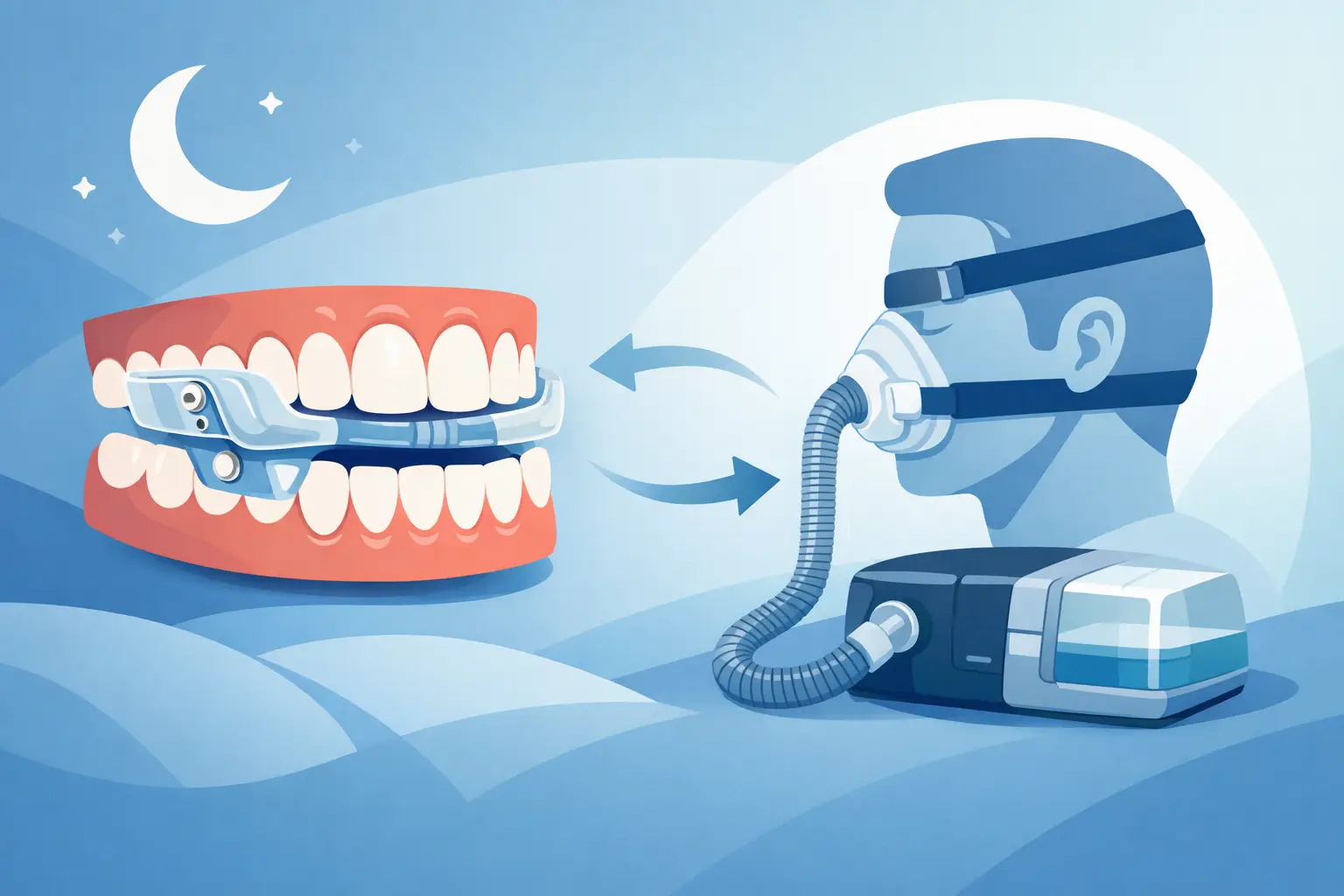
Waking up with a dry mouth, mask marks, or the feeling that your CPAP setup is harder to manage than it should be can wear down even the most motivated patient. A question we hear often is, can you use an oral appliance and CPAP together? For some people with obstructive sleep apnea, the answer is yes. This approach, called combination therapy sleep apnea treatment, may make nightly therapy more comfortable and easier to use consistently.
The goal is not to replace a prescribed CPAP device on your own. It is to coordinate two proven treatments carefully, with your sleep physician and a qualified dental sleep medicine provider working from the same plan. When it is appropriate, an oral appliance and CPAP combo can help reduce the pressure needed from CPAP while supporting a more open airway.
What combination therapy for sleep apnea means
CPAP uses gentle, pressurized air to keep the airway from collapsing during sleep. An oral appliance, often called a mandibular advancement device, is a custom-fitted appliance worn over the teeth. It positions the lower jaw slightly forward, which can help prevent the tongue and soft tissues from narrowing the airway.
With combination therapy, you wear both devices at night. The appliance supports the jaw and airway while CPAP continues to provide the air pressure needed to treat apnea. For the right patient, this may allow the sleep physician to prescribe a lower CPAP pressure. Lower pressure can mean less air leakage, less bloating from swallowed air, and a more tolerable experience with a nasal mask.
This is a coordinated treatment, not a one-size-fits-all shortcut. The amount of jaw advancement, CPAP settings, mask style, and the severity of your sleep apnea all matter.
Why use an oral appliance and CPAP together?
The most common reason is comfort. Some patients need CPAP to effectively control moderate or severe obstructive sleep apnea but struggle with higher pressures. They may remove the mask during the night, notice significant leaks, or feel pressure in their ears, nose, or stomach. An oral appliance may improve the airway enough that the CPAP device can work at a lower, more manageable setting.
Combination therapy can also be useful when an oral appliance alone improves snoring and apnea but does not fully control sleep-disordered breathing on follow-up testing. Rather than viewing that result as a failure, the care team can consider whether adding CPAP provides the needed control without returning to an uncomfortable high-pressure setting.
For some patients, the practical benefit is simply better adherence. Sleep apnea treatment only works when it is used. A setup that is comfortable enough to wear through the night can be more valuable than a theoretically ideal treatment that stays on the nightstand.
Who may be a candidate for an oral appliance and CPAP combo?
A combination approach is often considered for adults who have been diagnosed with obstructive sleep apnea and have difficulty tolerating CPAP at prescribed pressures. It may also be appropriate for people whose CPAP data shows persistent leaks or incomplete use, even though the device is effective when worn.
Candidates need adequate teeth and gum support to retain a custom appliance safely. A dental exam should assess for untreated decay, gum disease, loose teeth, jaw joint symptoms, grinding, and existing crowns, bridges, implants, or dentures . Having restorative dental work does not automatically rule out treatment, but it can affect appliance design and monitoring.
A person with severe jaw pain, limited jaw movement, advanced periodontal disease, or unstable dental restorations may need dental treatment first or may not be an ideal appliance candidate. Likewise, patients with central sleep apnea or other complex breathing disorders need direction from their sleep physician before considering an oral appliance.
Weight changes, nasal congestion, alcohol use close to bedtime, sedating medications, and sleep position can also affect treatment needs. That is why a personalized evaluation is more useful than choosing a device based on a friend’s experience or an online review.
How coordinated treatment is planned
Effective combination therapy starts with an accurate sleep apnea diagnosis and a clear understanding of what is making CPAP difficult. Your sleep physician may review your sleep study, CPAP download data, current pressure range, residual apnea events, and mask leak patterns. Sometimes a mask adjustment, humidification change, or treatment for nasal obstruction solves the problem without adding another device.
When an oral appliance is recommended , a dental sleep medicine provider takes records of your teeth, bite, jaw movement, and oral health. The appliance is custom made, then adjusted in small, deliberate increments. Moving the jaw too far too quickly can cause discomfort, jaw joint soreness, or bite changes.
Your CPAP settings should not be lowered based only on how you feel. After the appliance has been adjusted, the sleep physician may use device data, overnight oximetry, or a follow-up sleep study to confirm that breathing is controlled. This objective testing matters because snoring may improve even when apnea events are still occurring.
What to expect during the adjustment period
Most patients need an adaptation period. The appliance can initially cause temporary tooth pressure, increased saliva, dry mouth, or mild jaw stiffness in the morning. A properly designed appliance should be adjustable and should fit securely without causing ongoing pain.
CPAP use can feel different once the appliance is in place. A nasal mask may seal better for some people because the jaw is less likely to fall open. Others may need a different mask size or style. If you use a full-face mask, your provider can help determine whether your setup remains stable and comfortable with the appliance.
Regular follow-up protects both your sleep treatment and your oral health. The dental provider monitors fit, tooth movement, bite changes, and jaw comfort. Your sleep physician monitors apnea control and CPAP performance. These appointments are especially important during the first several months and after major dental work, weight change, or a change in sleep symptoms.
Important limits and trade-offs
An oral appliance is not a universal substitute for CPAP, and it does not make CPAP settings optional. For many people with severe sleep apnea, CPAP remains the primary therapy because it can provide highly reliable airway support. Combination therapy is a way to improve comfort or treatment effectiveness for selected patients, not a guarantee that everyone can use lower pressure.
There are dental trade-offs to consider. Long-term oral appliance use can gradually change how teeth meet, especially without careful adjustment and monitoring. People who clench or grind may require a more durable appliance design. If you have implants, bridges, crowns, or partial dentures, the provider must evaluate how forces will be distributed before treatment begins.
Cost and coverage can vary as well. Medical insurance may cover CPAP, oral appliance therapy, both, or neither depending on the plan and documentation. Asking about estimated costs and coverage before treatment helps prevent surprises.
Do not make changes on your own
If your CPAP feels uncomfortable, do not stop using it or lower the pressure without guidance. Untreated sleep apnea can affect daytime alertness, blood pressure, heart health, mood, and driving safety. Bring your device concerns to your sleep physician, and bring your dental history to the provider evaluating the appliance.
At Seattle Oral Care, an AADSM-certified prosthodontist can evaluate whether a custom oral appliance fits into your broader sleep apnea care plan. The focus is on a comfortable, durable appliance and clear coordination with your medical team, so you understand what each device is doing and why.
The best sleep apnea treatment is the one that safely controls your breathing and is realistic to use night after night. If CPAP has become a struggle, a thoughtful conversation about combination therapy may be a meaningful next step.