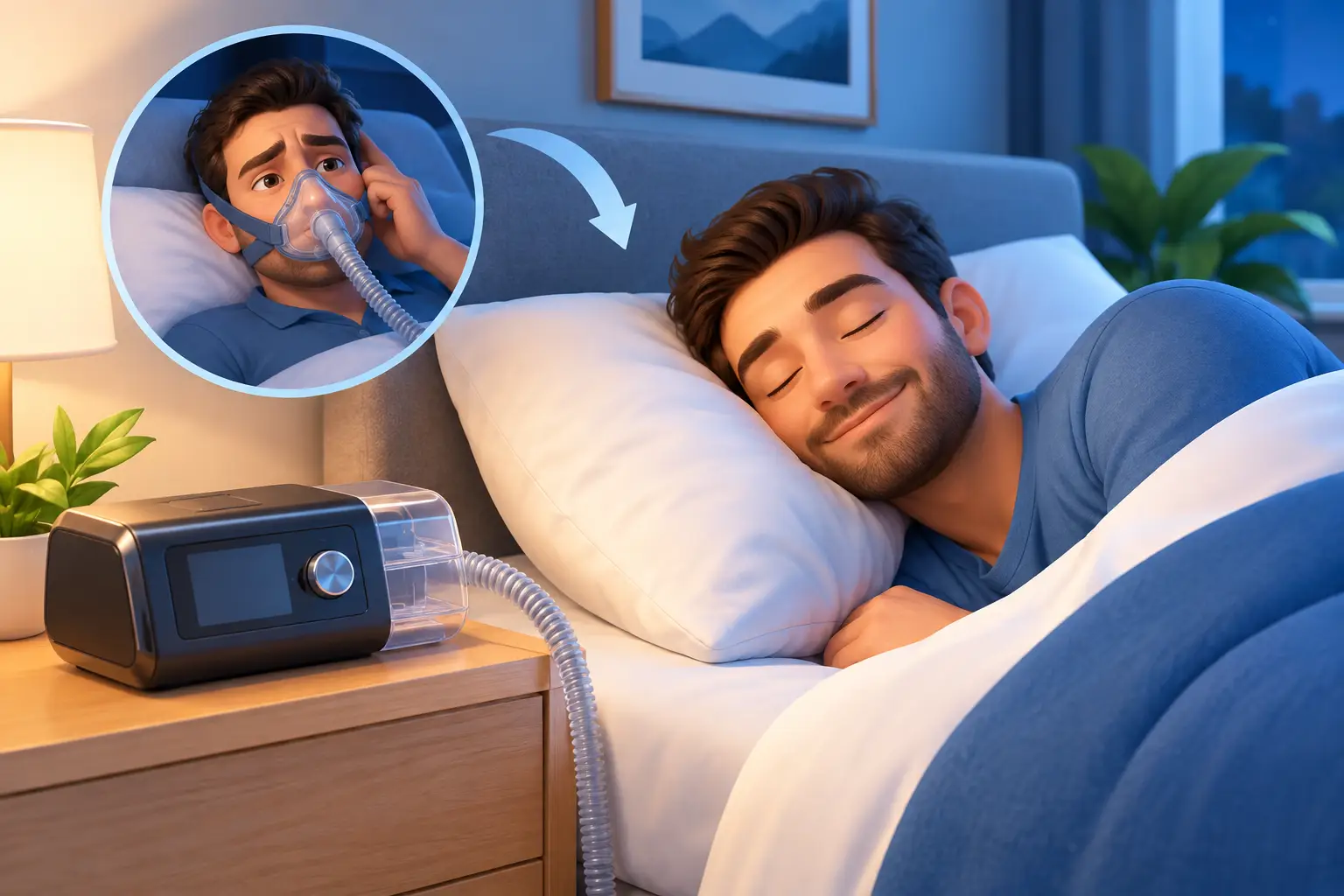

A spouse who notices gasping and pauses at night can feel frightened, and the person hearing about it may feel unsure whether to worry or wait. If your partner says, “I stop breathing in my sleep,” the right first step is to take the observation seriously and arrange a physician evaluation. You do not need to diagnose the cause at home, but you should not dismiss witnessed breathing pauses as ordinary snoring.
Stop breathing while sleeping: what to do first
Start with a calm conversation when both of you are awake. Ask your partner to describe exactly what they have noticed: whether the breathing seems to pause, whether there is a gasp or snort afterward, whether snoring is present, and whether the pattern happens in certain sleep positions. Details from the person who observes you can be very useful during a medical appointment.
Next, contact your primary care physician or another qualified medical clinician for guidance and evaluation. They can review your symptoms, health history, medications, sleep habits, and other factors that may matter. If appropriate, they may recommend further assessment of your sleep and breathing.
It can be tempting to search for a single explanation online or buy a product before an evaluation. Breathing changes during sleep can have different causes, and the safest next step depends on the individual. A professional assessment helps ensure that the concern is approached with the right level of care.
What witnessed breathing pauses can look like
People often use the word “snoring” to describe many different nighttime sounds. Snoring can be a simple sound, but a spouse may also notice quiet gaps followed by a louder breath, choking sound, or gasp. They may see restless movement, repeated position changes, or a pattern where breathing seems to resume abruptly.
The person experiencing these events may have little or no memory of them. That is common. Instead, they may notice the daytime effects: waking unrefreshed, struggling with sleepiness, feeling irritable, having trouble concentrating, or experiencing morning headaches or dry mouth. None of these symptoms proves a particular diagnosis on its own, but together with witnessed pauses, they are worth bringing to a physician.
A brief note can make the appointment more productive. Over several nights, write down what your partner observes and how you feel the next day. Include changes in snoring, gasping, sleep position, alcohol use near bedtime, nasal congestion, and any new medications. The goal is not to monitor every minute of sleep. It is simply to give the clinician a clearer picture.
When to seek urgent medical help
Most people can begin by promptly scheduling a physician visit. However, do not wait for a routine appointment if breathing trouble is accompanied by concerning symptoms while awake, such as severe shortness of breath, chest pain, fainting, confusion, bluish discoloration of the lips or face, or an inability to stay awake. Seek emergency medical care in those situations.
Trust your instincts, too. If the breathing episodes seem severe, are rapidly changing, or leave you worried about someone’s immediate safety, contact urgent medical services for advice. It is always reasonable to ask for help when breathing is involved.
Prepare for the conversation with your physician
A medical evaluation is more helpful when it includes the full story, not just the fact that someone snores. Be ready to explain when the concern started, whether it is getting worse, and what your partner has seen. Mention daytime fatigue, waking suddenly, dry mouth, headaches, mood changes, or difficulty staying alert during routine activities.
Also share relevant health information, including current medications and supplements, alcohol use, smoking or vaping, recent illness, allergies, nasal obstruction, jaw concerns, and prior sleep testing. If you have been told you grind your teeth, clench, have jaw discomfort, or have had significant dental work, that information may become relevant later if your medical team discusses sleep-related oral care options.
A physician may determine that sleep testing or a referral to a sleep specialist is appropriate. That process can help clarify what is happening during sleep and guide next steps. Try not to judge the importance of the concern by how loud the snoring is. Quiet breathing pauses and loud snoring can each deserve discussion when a partner has noticed a change.
Do not rely on home fixes as a substitute for evaluation
Changing sleep position, reducing alcohol near bedtime, addressing congestion, or keeping a consistent sleep schedule may be sensible lifestyle conversations to have with a clinician. But these steps are not a substitute for understanding why witnessed pauses or gasping are happening.
Avoid using another person’s prescribed device, borrowing an oral appliance, or attempting to alter your bite with an over-the-counter mouthpiece. Your mouth, jaw joints, teeth, and breathing needs are individual. An appliance that is poorly fitted or used without appropriate direction can cause discomfort or create dental changes, while also delaying a proper evaluation.
If a physician identifies a sleep-breathing condition and discusses oral appliance therapy as an option, a dentist trained in dental sleep medicine can work as part of the care team. At Seattle Oral Care, sleep-focused oral healthcare is approached in coordination with a patient’s medical diagnosis and physician guidance. The purpose is to make sure dental considerations, including tooth health, bite stability, jaw comfort, and existing restorations, are thoughtfully reviewed.
Why your partner’s observation matters
Sleep is one of the few parts of our health that we cannot fully observe ourselves. A spouse, roommate, or family member may be the first person to recognize a pattern that deserves attention. Their observation is not an accusation, and it is not something to brush off because you feel fine some days. It is useful information from someone who cares about you.
If your partner is anxious about watching you sleep, reassure them that you are taking action. Let them know you will schedule an evaluation and ask them to share what they have observed. This turns a worrying nighttime experience into a practical next step you can take together.
A thoughtful next step for better sleep care
When a partner says you stop breathing while sleeping, the most helpful response is not panic and not denial. Write down what has been observed, schedule a physician evaluation, and seek urgent help if breathing concerns are accompanied by serious symptoms. A clear medical assessment can replace uncertainty with a plan that fits your health, your sleep, and your daily life.
You deserve to wake up feeling heard, informed, and supported - and your partner deserves reassurance that the concern is being taken seriously.