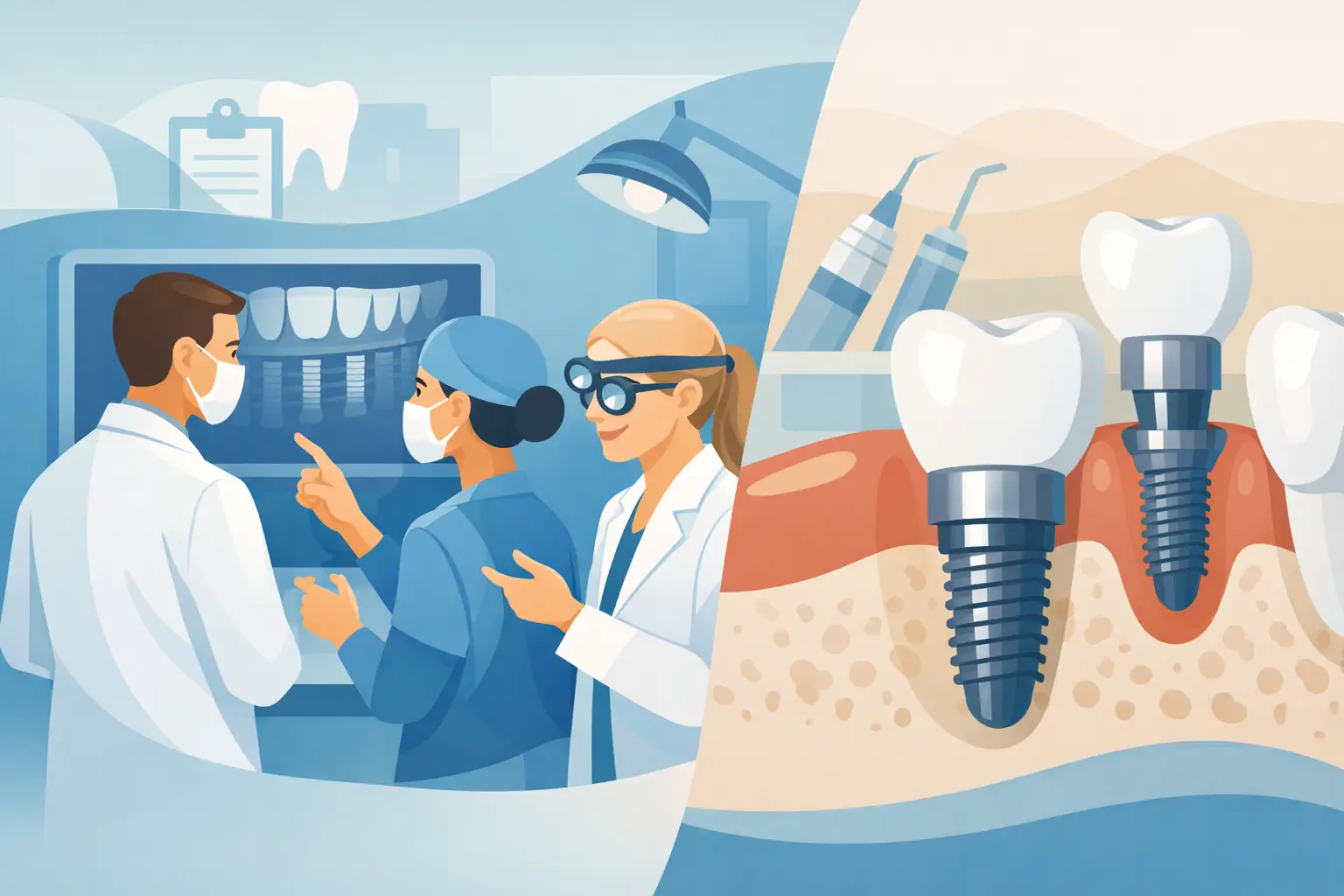
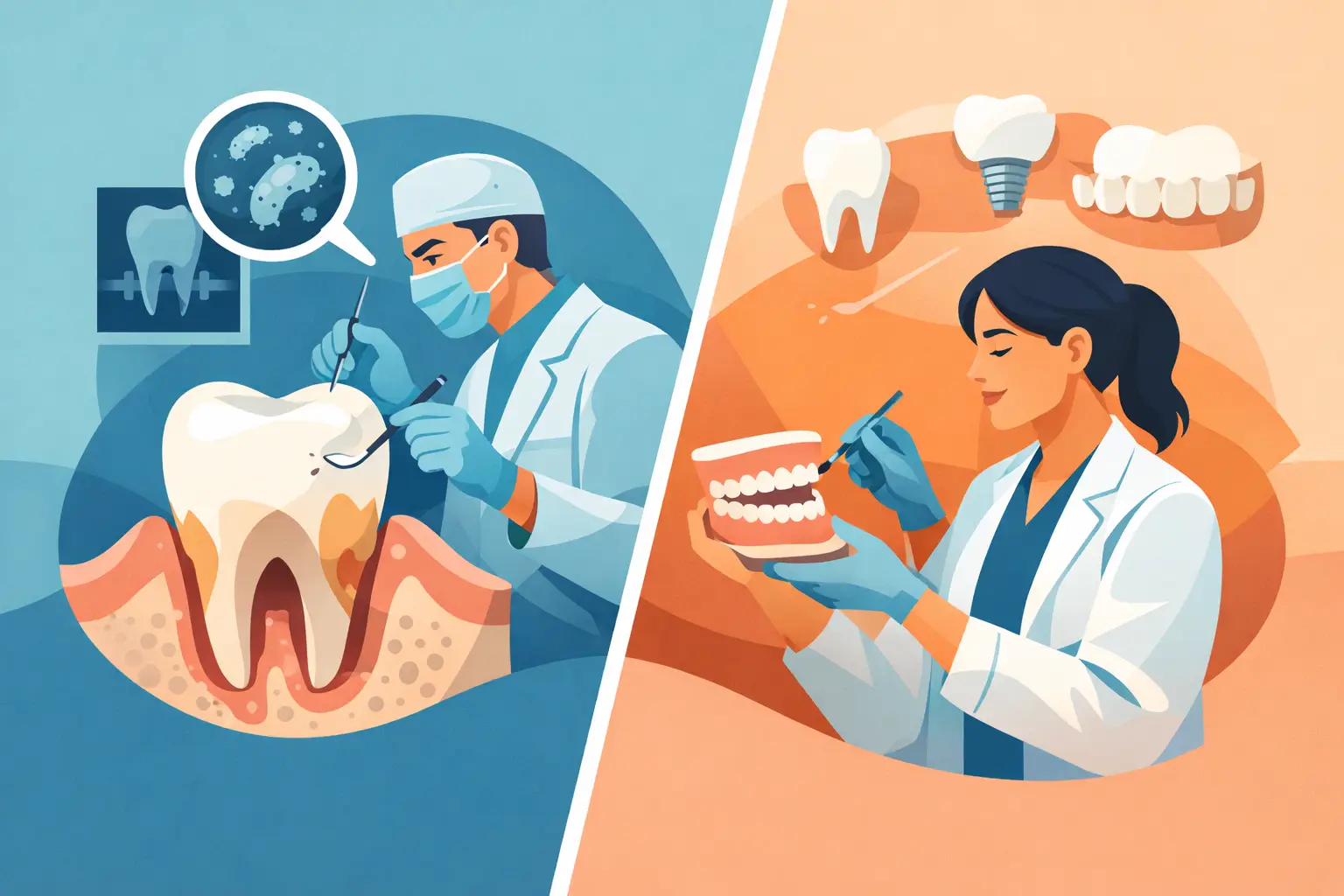
A dental implant can look like one treatment from the patient’s chair, but it often involves two very different kinds of expertise. When you are comparing a periodontist vs prosthodontist, the most useful question is not which specialist is “better.” It is which part of your oral health needs attention first, and who can help create a result that feels comfortable, functions well, and lasts.
For many people, that question comes up after tooth loss, gum disease, a failing bridge, or years of avoiding care because of a difficult past dental experience. Understanding each specialist’s role can replace uncertainty with a clear next step.
What does a periodontist do?
A periodontist is a dentist with advanced training in the gums, jawbone, and other tissues that support your teeth. Periodontal care centers on the foundation of your smile. That includes diagnosing and treating gum disease, addressing gum recession, preserving bone around natural teeth, and preparing the mouth for dental implants when needed.
Healthy gums and bone matter because they hold teeth and implants in place. If periodontal disease has caused bone loss, treating the infection and stabilizing the supporting tissues may need to happen before a crown, bridge, or implant can be expected to perform well long term.
A periodontist may provide deep cleanings for advanced gum disease, gum grafting for recession, bone grafting, ridge preservation after an extraction, and procedures to improve the shape or health of the gum tissue. They also commonly place dental implants surgically. During implant placement, the specialist positions the implant fixture in the jawbone, where it can integrate with the bone over time.
That does not mean every implant patient needs a periodontist. A straightforward case with healthy bone and gums may be managed by another qualified implant provider. But when gum disease, recession, bone loss, or more complex tissue needs are involved, a periodontist for dental implants can be a valuable part of the treatment team.
What does a prosthodontist do?
A prosthodontist is a dentist with advanced training in restoring and replacing teeth. Their work focuses on how your bite, teeth, gums, jaw joints, facial appearance, and restorations function together. They are often the clinicians who plan and create the visible replacement tooth or teeth after implant surgery.
For a single missing tooth, that may mean designing an implant crown that matches neighboring teeth in color, shape, and bite. For multiple missing teeth, it may involve an implant-supported bridge, a removable overdenture, or a fixed full-arch restoration. Prosthodontists also treat worn, broken, or severely damaged teeth with crowns, veneers, bridges, and comprehensive rehabilitation plans.
A prosthodontist for dental implants looks beyond the implant itself. The implant is the support beneath the gumline. The restoration is what you use every day to chew, speak, and smile. Its design affects cleanability, bite comfort, appearance, and the forces placed on the implant and surrounding bone.
This planning is especially meaningful when several teeth are missing, existing teeth are worn down, or a person has a complicated bite. A prosthodontist can help determine the ideal position of the final teeth before surgery begins. That approach, often called restorative-driven planning, helps the surgical and restorative phases work toward the same result.
The difference between periodontist and prosthodontist
The simplest distinction is this: a periodontist specializes in the tissues and bone that support teeth and implants, while a prosthodontist specializes in restoring the teeth you see and use.
In implant treatment, a periodontist may assess the bone, treat gum disease, perform grafting, and place the implant. A prosthodontist may plan the final tooth position, design the crown or bridge, and attach the completed restoration once healing is complete. Their roles can overlap, and both specialists may have extensive implant experience. The exact division of care depends on the clinician’s training, the complexity of the case, and the treatment plan.
There is also a third professional patients may encounter: an oral surgeon. Oral surgeons frequently remove teeth, perform grafting, and place implants, particularly in cases involving difficult extractions, significant bone loss, or other surgical considerations. Your general dentist may coordinate care and, depending on training and experience, may also provide some implant services.
The goal is not to collect referrals. It is to make sure the people planning, placing, and restoring your implant communicate clearly and share responsibility for the final outcome.
Who places dental implants: periodontist or prosthodontist?
Both may place implants. A periodontist is commonly involved in implant surgery because of specialized expertise in gum tissue and bone. Some prosthodontists also place implants, particularly when they are directing a comprehensive restorative plan. Oral surgeons are another common choice for surgical placement.
The right answer depends less on the specialty title alone and more on your clinical needs. If you have active periodontal disease, receding gums, limited bone, or need grafting, a periodontist may be particularly well suited to the surgical phase. If you need a full-mouth reconstruction or have a complex bite, a prosthodontist may take the lead in planning the final teeth and coordinating surgery around that plan.
Ask who will perform each stage of treatment, how the implant position will be planned, and who will be responsible for the final restoration. A thoughtful provider should welcome these questions and explain the sequence in plain language.
Which specialist restores dental implants?
In many cases, the specialist who restores dental implants is a prosthodontist. Implant restoration includes the custom crown, bridge, denture, or full-arch teeth that connect to the implant after healing. This phase requires careful attention to esthetics, bite forces, speech, and access for daily cleaning.
Still, prosthodontists are not the only dentists who restore implants. General dentists with appropriate training and experience may restore implants as well. What matters is that the restoration is designed for your individual mouth and that the restorative provider coordinates closely with the surgical provider.
For example, an implant crown should not simply fill a gap. It needs to meet the opposing tooth correctly, blend naturally with the smile, and allow you to clean around it. A restoration that is difficult to clean or overloaded by the bite can contribute to complications, even when the implant surgery itself was successful.
Do I need a periodontist or prosthodontist?
You may need one specialist, both, or a coordinated team. A periodontal consultation is often appropriate if you have bleeding gums, persistent bad breath, loose teeth, gum recession, a history of gum disease, or imaging that shows bone loss. It is also helpful when an implant site may require grafting or tissue management.
A prosthodontic consultation may be the better starting point if your main concern is replacing missing teeth, repairing multiple failing restorations, improving a difficult bite, or planning a full-mouth solution. The prosthodontist can evaluate how each restored tooth should function and look, then identify whether periodontal or surgical treatment is needed before restoration.
If you are unsure, start with a comprehensive exam rather than trying to diagnose the path on your own. Good treatment planning considers your health history, current gum condition, bone levels, bite, goals, budget, timeline, and comfort level. There is rarely one “right” implant plan for every patient.
Choosing the right implant specialist
When choosing the right implant specialist, look for more than a list of credentials. Experience matters, but so does coordination. You should understand who is planning the result, who is placing the implant, who is restoring it, and how your care will be monitored after treatment.
It is reasonable to ask how many implant cases the team has completed, whether they use three-dimensional imaging when appropriate, what happens if grafting is needed, and how they will help you maintain the implant over time. You should also feel heard. If dental anxiety has kept you from seeking care, a gentle, unhurried consultation can make a meaningful difference.
At Seattle Oral Care, a prosthodontist, periodontist, oral surgeon, and general dentist can coordinate treatment when a case calls for multiple perspectives. With more than 2,000 implants placed across the team, the focus remains on a plan that supports both your immediate needs and your long-term oral health.
The best implant care is not about choosing a label. It is about choosing a team that can protect the foundation, plan the final smile carefully, and explain every step so you can move forward with confidence.