
When one person’s snoring regularly wakes the other at 2 a.m., separate bedrooms can feel less like a relationship decision and more like an act of survival. Sleeping in separate bedrooms because of snoring may help both partners get through the next workday, but it can also leave couples wondering whether they are drifting apart - and whether they can ever comfortably share a bed again.
The good news is that a separate-room arrangement does not mean a relationship is failing. It can be a practical, caring short-term solution. It also deserves a closer look, because loud, frequent snoring can sometimes be a sign of obstructive sleep apnea, a condition that affects breathing, sleep quality, and overall health.
Sleep Divorce: A Practical Choice, Not a Personal Failure
The term “sleep divorce” describes couples who choose to sleep apart, whether every night or only when needed. For some, it is the best way to protect sleep during a demanding season of life. Different work schedules, a new baby, insomnia, pain, temperature preferences, and restless sleep can all make separate sleeping arrangements reasonable.
Snoring is one of the most common reasons. The person who snores may wake repeatedly without realizing it. Their partner may lie awake listening, wear earplugs, move to the couch, or start each day exhausted and resentful. Neither person is choosing the problem.
For many couples, separate rooms bring immediate relief: fewer arguments at bedtime, more consistent sleep, and better patience during the day. There is nothing inherently unhealthy about choosing the arrangement that helps both people rest. The concern is not the separate room itself. The concern is when snoring is severe, disruptive, or connected to interrupted breathing.
When Couples Sleeping Apart for Snoring Need a Health Conversation
Snoring happens when air has difficulty moving through the airway during sleep, causing tissues in the throat to vibrate. Nasal congestion, alcohol close to bedtime, sleeping on the back, and anatomy can all contribute. But habitual loud snoring can also accompany obstructive sleep apnea, in which the airway repeatedly narrows or closes during sleep.
A partner is often the first person to notice warning signs. It is worth discussing a professional evaluation when snoring occurs most nights, is loud enough to be heard through a door, or includes gasping, choking, snorting, or observed pauses in breathing.
Other signs can appear during the day. These include waking unrefreshed, morning headaches, dry mouth, daytime sleepiness, difficulty concentrating, irritability, or dozing off unintentionally. Some people with sleep apnea do not fit a stereotype or realize how fragmented their sleep has become. They may simply feel that they need more coffee than they used to, or that they are never fully rested.
Sleep apnea should be assessed by an appropriate medical sleep professional. A sleep study, performed at home in many cases or in a sleep center when needed, can identify whether apnea is present and how severe it is. That diagnosis matters because untreated obstructive sleep apnea may be associated with high blood pressure, heart concerns, metabolic problems, and increased accident risk from fatigue.
A Couple Who Moved to Separate Rooms and Wants to Share a Bed Again
If you are a couple who moved to separate rooms and want to share a bed again, start by separating the relationship issue from the sleep issue. It is easy for both partners to internalize the arrangement: the snoring partner may feel embarrassed or rejected, while the other partner may feel guilty for needing quiet. In reality, both needs are valid.
Choose a time to talk that is not bedtime and not the morning after a difficult night. A simple starting point is: “I miss being close to you, and I also need sleep. Can we look for a solution together?” This keeps the conversation focused on teamwork rather than blame.
Do not promise that sharing a room again must happen immediately. That pressure can turn bedtime into a test. Instead, agree on a plan that protects sleep while you address the cause of snoring. You might begin with shared wind-down time, reading together, or cuddling before one partner goes to their own room. Closeness does not disappear simply because sleep happens in different places for a while.
Once treatment or sleep changes are underway, try returning to the same bed on lower-pressure nights, such as weekends. Pay attention to how both partners feel the next day. If either person is losing meaningful sleep, adjust rather than forcing the experiment. The goal is not to prove that you can sleep together at any cost. The goal is for both people to feel rested, connected, and safe.
Treatment Can Change the Conversation
The right approach depends on the reason for snoring and whether sleep apnea is diagnosed. Lifestyle adjustments can help some people, particularly when snoring is positional or worsened by alcohol near bedtime. Treating chronic nasal congestion, maintaining a healthy weight when appropriate, and avoiding sedating substances without medical guidance may also be part of a care plan.
For diagnosed obstructive sleep apnea, CPAP therapy is a highly effective treatment and may be recommended, especially for more severe cases. Some patients find they do well with CPAP, while others struggle with comfort, travel, mask fit, or consistent use. The answer should never be to simply stop treatment without speaking with the treating clinician.
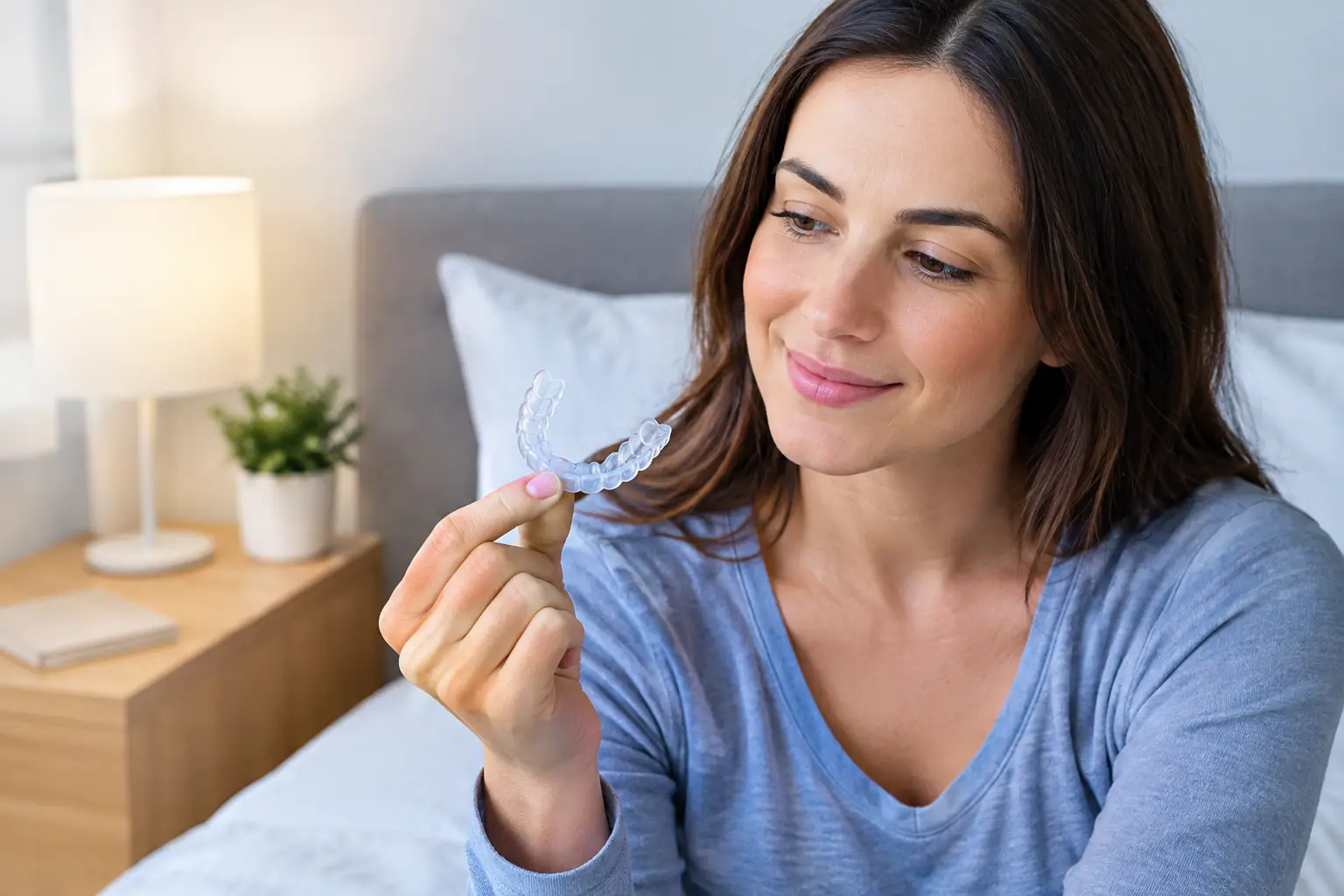
For eligible patients with mild to moderate obstructive sleep apnea, or for those who cannot tolerate CPAP, a custom oral appliance may be an option. This appliance is worn during sleep and is designed to gently position the lower jaw forward, helping keep the airway more open. It is not the same as an over-the-counter mouthguard. A properly fitted device requires careful planning, follow-up, and monitoring of the teeth, jaw joints, bite, and sleep symptoms.
At Seattle Oral Care, an AADSM-certified prosthodontist can work alongside a patient’s physician and sleep team to evaluate whether oral appliance therapy may be appropriate. This coordinated approach matters because effective sleep treatment should support both breathing and long-term oral health.
Small Bedroom Changes May Help, but They Are Not a Substitute for Care
Bedroom adjustments can reduce disruption while you pursue answers. A supportive pillow or positional strategy may help a person who snores more on their back. White noise can make intermittent sounds less startling, and separate blankets can reduce movement-related wakeups. Keeping the room cool and setting a consistent bedtime may improve sleep quality for both partners.
These strategies are useful when they provide relief, but they cannot diagnose or treat sleep apnea. Earplugs may help the non-snoring partner sleep, yet they can also mask sounds such as gasping or choking that deserve attention. If the snoring is persistent or concerning, do not let a quieter room delay an evaluation.
Make Rest Part of Caring for Each Other
There is no prize for enduring sleepless nights together. Choosing separate bedrooms temporarily can be an act of consideration, not distance. At the same time, recurring snoring is worth taking seriously because restful sleep affects mood, health, energy, and the small moments of patience that help a relationship feel strong.
If snoring has changed the way you and your partner sleep, consider making a conversation and a clinical evaluation your next shared step. Better sleep may not only make room for quieter nights. It may help make sharing a bed feel possible again.