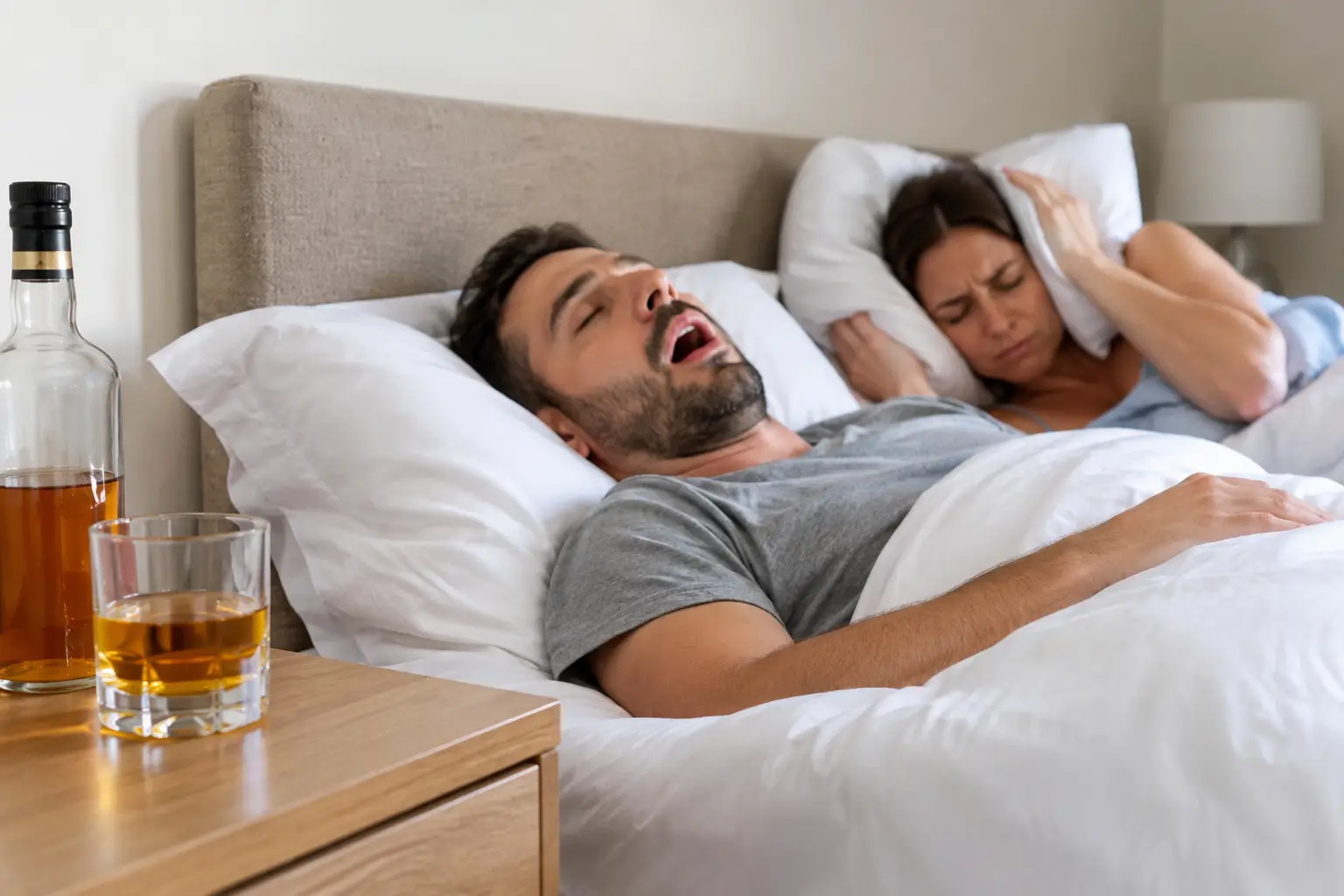
A quiet weeknight can make snoring seem like a minor annoyance. Then, after dinner, drinks, or an evening out, the sound becomes noticeably louder and more frequent. So, does alcohol make snoring worse? For many people, yes. Alcohol relaxes the tissues that help keep the upper airway open, making it easier for airflow to become noisy or partially blocked during sleep.
If you are a person who snores mostly after evenings out, that pattern is worth paying attention to. It may simply reflect alcohol’s effect on your airway, but it can also reveal a tendency toward obstructive sleep apnea - a condition that causes repeated breathing interruptions during sleep.
Why Do I Snore After Drinking?
Snoring happens when air moves through a narrowed airway and causes the soft tissues in the throat, tongue, and palate to vibrate. Alcohol can make that narrowing more likely in several ways.
First, alcohol relaxes muscles throughout the body, including the muscles of the tongue and throat. During normal sleep, these muscles naturally relax somewhat. After drinking, they may relax more deeply, allowing the tongue or soft palate to fall farther back and reduce the space available for air to pass.
Alcohol can also change the way your body responds when breathing becomes difficult. Normally, the brain briefly signals the body to tighten airway muscles or shift position when airflow is restricted. Alcohol may blunt that response, so a partial blockage can last longer and produce louder snoring.
For some people, drinking also contributes to nasal congestion, dehydration, or acid reflux. Each can make nighttime breathing less comfortable. A stuffy nose encourages mouth breathing, while reflux can irritate the throat. Neither causes every case of snoring, but both can add to the problem.
Snoring and Alcohol: Why Timing Matters
The amount of alcohol matters, but the timing often matters just as much. Having a drink with an early dinner may affect sleep differently than having several drinks shortly before bed. Alcohol levels are typically highest in the first part of the night, when the relaxing effect on the airway is more pronounced.
Alcohol can initially make a person feel sleepy, which is why some people use it to unwind. But falling asleep faster is not the same as getting restorative sleep. As the body processes alcohol later in the night, sleep may become lighter and more fragmented. You may wake more often, change positions repeatedly, or feel unrefreshed in the morning even after spending enough hours in bed.
This is one reason a partner may notice that snoring is particularly intense after late social events. The issue is not always that the person suddenly became a habitual snorer. It may be that alcohol exposed a narrower airway that is usually less obvious.
Can Alcohol Make Sleep Apnea Worse?
Yes. Alcohol does not create obstructive sleep apnea in every person, but it can worsen existing sleep apnea and make its symptoms more apparent. In obstructive sleep apnea, the airway repeatedly narrows or closes during sleep. The brain briefly wakes the body to restore breathing, often without the person remembering those awakenings.
When throat muscles are more relaxed after alcohol, airway collapse can occur more easily or more often. Breathing pauses may last longer, oxygen levels may drop more, and snoring may become louder. People with untreated sleep apnea may also feel especially fatigued, foggy, or headache-prone the next day after drinking.
A person who snores only after drinking does not automatically have sleep apnea. Still, occasional alcohol-related snoring should not be dismissed if it comes with other warning signs. Pay attention to witnessed pauses in breathing, choking or gasping during sleep, morning headaches, dry mouth, frequent nighttime urination, daytime sleepiness, or difficulty concentrating. High blood pressure and a family history of sleep apnea can also raise concern.
What You Can Try at Home
If snoring is mild, occasional, and clearly worse after alcohol, a few practical adjustments may help. Try to finish drinking at least three to four hours before bedtime so your body has more time to metabolize alcohol before you sleep. Reducing the number of drinks can also make a meaningful difference, particularly if loud snoring follows more than one drink.
Sleeping on your side rather than your back may help keep the tongue and soft tissues from settling backward. Treating seasonal congestion, staying hydrated, and avoiding a heavy late-night meal can also support more comfortable breathing. If reflux is a factor, elevating the head of the bed and avoiding lying down immediately after eating may be useful.
Be especially cautious about combining alcohol with sleep medications, sedatives, opioids, or certain antihistamines. These substances can further relax the airway and increase drowsiness. Never change prescribed medication without speaking with the clinician who manages it, but do ask whether alcohol could affect your breathing or sleep quality.
These steps can reduce a trigger. They are not a substitute for evaluation when snoring is frequent, disruptive, or accompanied by breathing pauses.
When Snoring Needs a Closer Look
Snoring deserves professional attention when it affects your energy, your relationship, or your health. It is particularly important to seek an evaluation if a bed partner hears pauses in breathing, if you wake gasping, or if you feel sleepy while driving or during quiet daytime activities.
A sleep evaluation can clarify whether the concern is primary snoring, obstructive sleep apnea, nasal obstruction, or a combination of factors. Your medical and dental history, airway anatomy, jaw position, weight changes, medications, and sleep habits can all play a role. A home sleep test or an in-lab sleep study may be recommended to measure breathing events and oxygen levels.
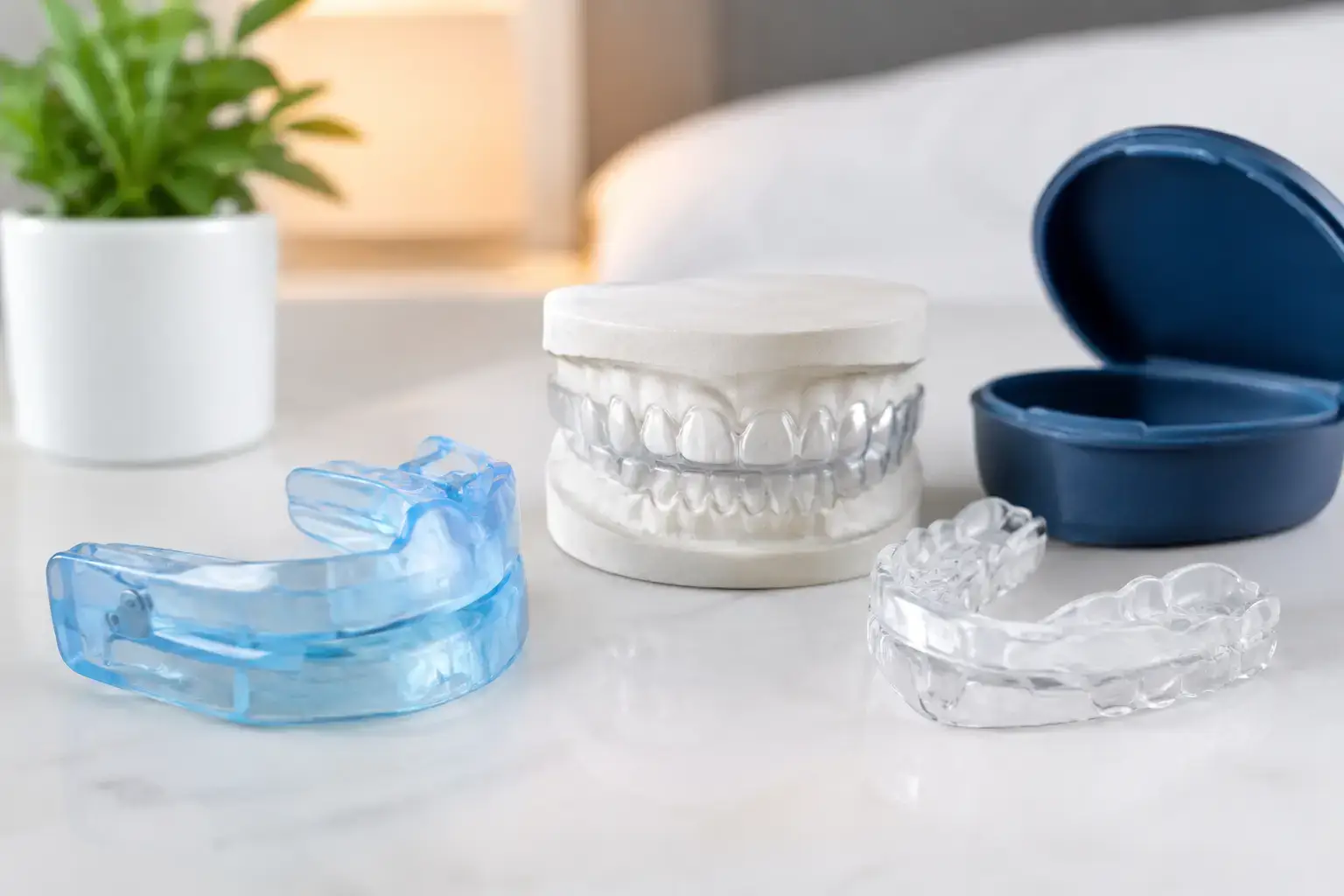
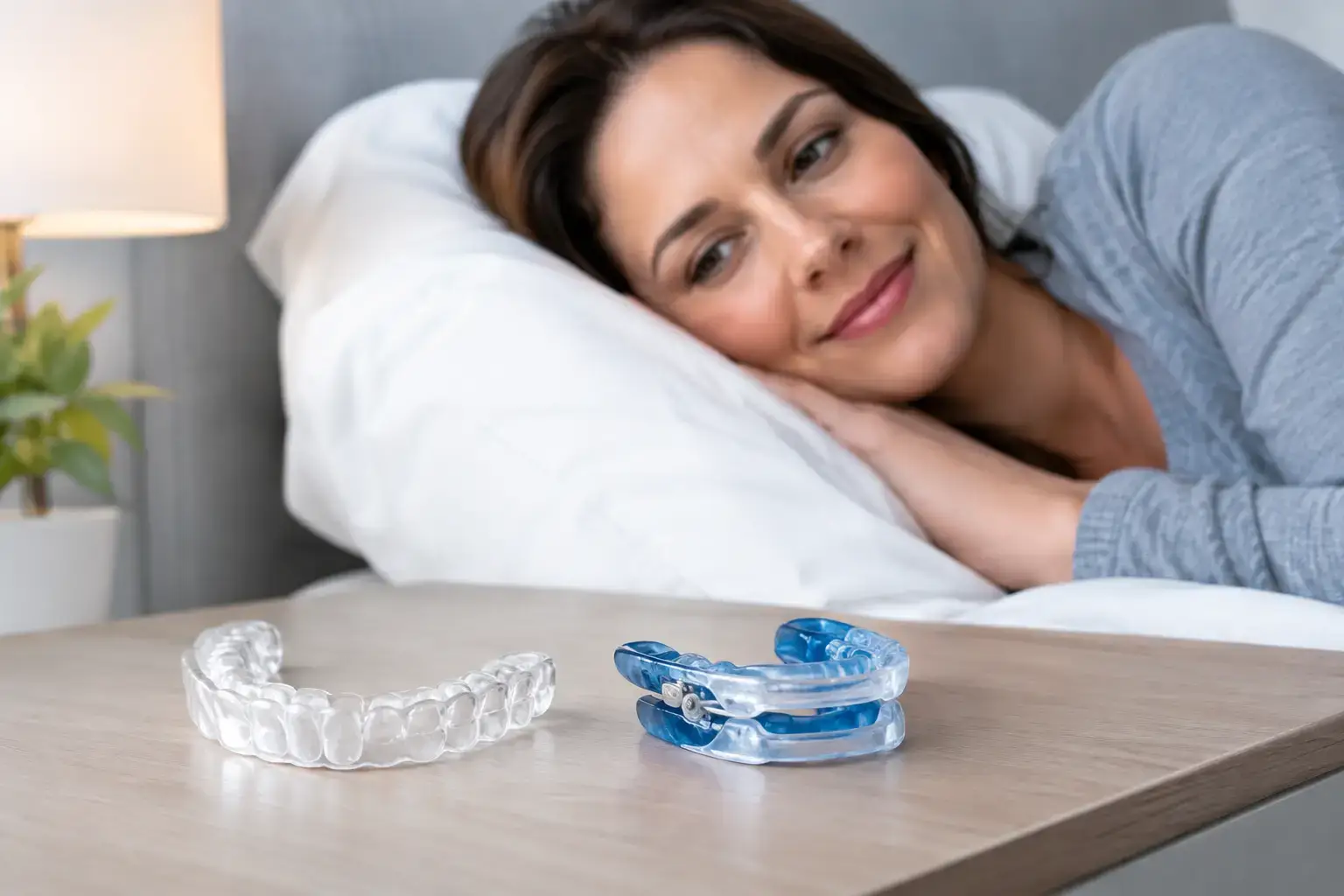
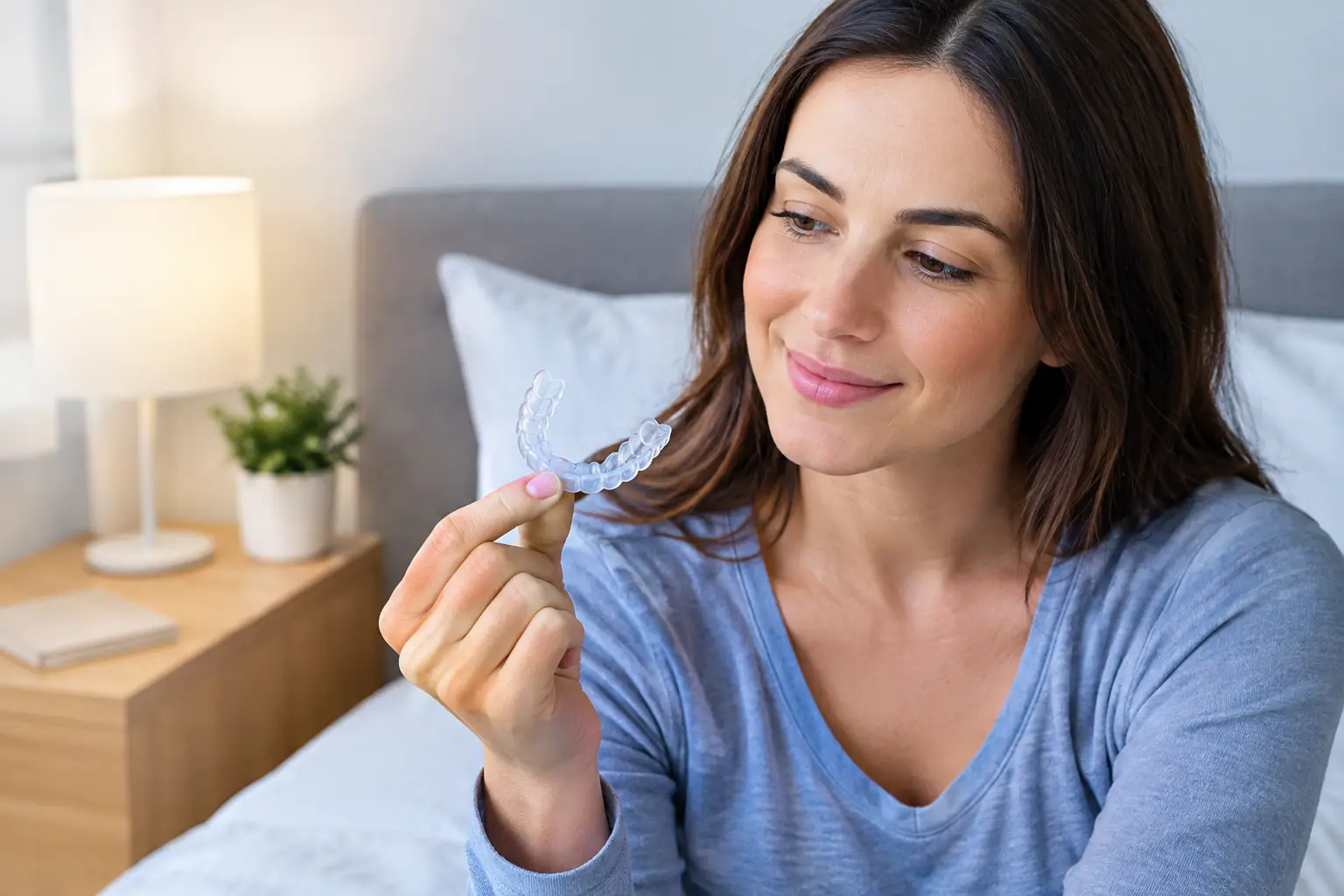
For people diagnosed with obstructive sleep apnea, treatment is individualized. CPAP is often effective and may be recommended depending on the severity of the condition. For appropriate candidates, a custom oral appliance can gently position the lower jaw forward during sleep to help keep the airway open. Unlike over-the-counter mouthguards, a professionally fitted appliance is designed around your bite, comfort, and breathing needs, with follow-up visits to protect your teeth and jaw health.
At Seattle Oral Care, sleep-focused oral healthcare is provided with careful attention to the whole picture. An AADSM-certified prosthodontist can work with your sleep physician to determine whether oral appliance therapy is appropriate and to monitor your comfort and results over time.
A More Useful Way to Track the Pattern
Before an appointment, it can help to notice what changes on nights when snoring is worse. Consider the timing and amount of alcohol, whether you slept on your back, nasal congestion, meal timing, and how you felt the next day. If a partner is comfortable sharing observations, their perspective can be valuable because they may notice pauses or gasping that you do not remember.
You do not need to eliminate every social occasion to take snoring seriously. The goal is to understand your pattern and make choices that support safer, more restorative sleep. If alcohol consistently turns mild snoring into loud, disrupted breathing, that is a good reason to start a conversation with a qualified sleep professional. Better sleep should leave you feeling cared for, rested, and ready for the day ahead.