
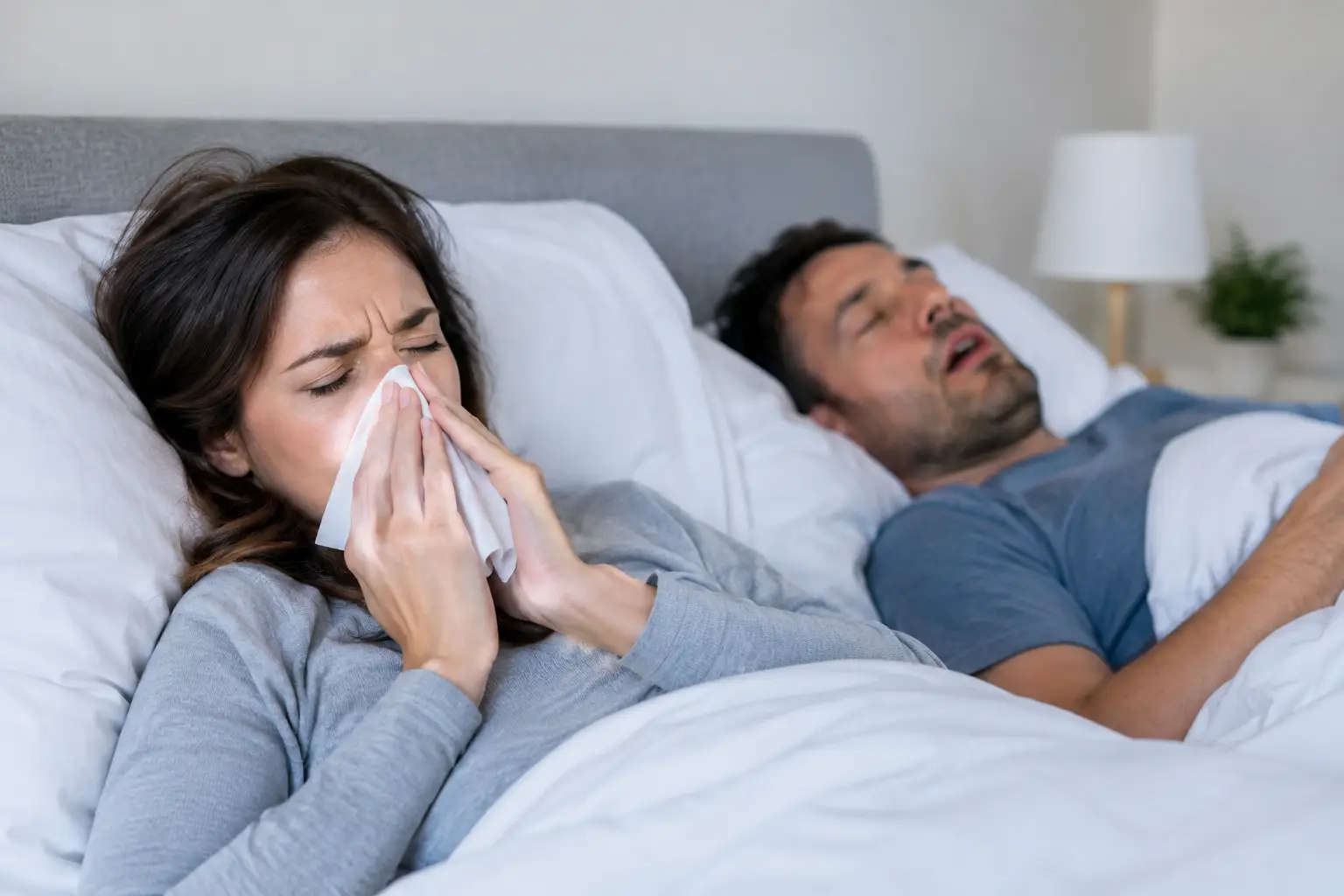
A blocked nose can turn an otherwise quiet night into a noisy one. Nasal congestion and snoring often occur together because when air cannot move freely through the nose, the mouth opens to breathe. For a person who snores mainly when congested, the pattern may be temporary, but it still deserves attention if sleep quality, daytime energy, or a bed partner’s sleep is affected.
Why a Stuffy Nose Can Lead to Snoring
Snoring happens when moving air causes relaxed tissues in the throat to vibrate. Nasal breathing normally helps keep airflow steady and supports the tongue and jaw in a more stable position during sleep. When the nose is swollen, blocked by mucus, or simply feels too narrow, many people switch to mouth breathing.
That change can dry the mouth and throat and allow the jaw to fall backward. The tongue and soft tissues may then narrow the airway, creating the vibration we hear as snoring. This is why stuffy nose snoring can feel especially noticeable during a cold, sinus irritation, or a difficult allergy season.
Congestion is not always the only factor. Sleeping on your back, drinking alcohol near bedtime, certain sedating medications, weight changes, and the natural anatomy of the nose, palate, and jaw can all make snoring louder. A congested nose may be the trigger that reveals an existing tendency toward airway narrowing.
Allergies and Snoring: A Common Connection
Allergies and snoring are closely related for many adults in the Seattle area, where seasonal pollen, mold, dust mites, and pet dander can keep nasal passages irritated. Allergic inflammation causes the lining inside the nose to swell and may increase mucus production. Even if there is no obvious runny nose, the feeling of reduced airflow can encourage mouth breathing at night.
Some people notice that snoring appears only during certain months or after time around a known trigger. Others wake with a dry mouth, scratchy throat, or pressure around the nose and eyes. These clues can point toward nighttime congestion, although they do not diagnose the cause on their own.
Managing allergies can reduce snoring for some people. That may mean limiting bedroom exposure to triggers, washing bedding regularly, discussing appropriate allergy treatment with a medical provider, or using saline rinses as recommended. If you are considering an over-the-counter nasal spray, ask a pharmacist or clinician which type is appropriate. Decongestant sprays can provide short-term relief, but using them longer than directed may lead to rebound congestion.
When Congestion Is Probably the Main Cause
If your snoring begins with a cold and resolves when you can breathe comfortably through your nose again, congestion is likely playing a major role. The same may be true if snoring is limited to allergy flares or an occasional night of sinus irritation.
A person who snores mainly when congested may find that practical changes make a meaningful difference. Sleeping on the side rather than the back can help. Elevating the head slightly may reduce the sensation of nasal blockage for some people. Staying well hydrated, avoiding alcohol close to bedtime, and keeping the bedroom air comfortably humid can also support easier breathing.
Still, temporary does not always mean harmless. Even short periods of disrupted sleep can leave you feeling foggy, irritable, or less alert behind the wheel. If congestion returns often, lasts for weeks, or repeatedly interferes with sleep, it is reasonable to discuss the underlying cause with a healthcare professional.
Signs Snoring May Be More Than a Stuffy Nose
Nasal congestion can make ordinary snoring worse, but it does not rule out obstructive sleep apnea. Sleep apnea occurs when the airway partially or completely closes repeatedly during sleep. These interruptions can lower oxygen levels and fragment restorative sleep, often without the sleeper realizing it.
Consider a sleep evaluation if snoring is loud and frequent, continues after congestion clears, or is accompanied by witnessed pauses in breathing, choking or gasping, morning headaches, dry mouth, frequent nighttime urination, or excessive daytime sleepiness. Difficulty concentrating, irritability, and falling asleep unintentionally can matter, too.
Risk can vary from person to person. Body weight, age, alcohol use, nasal obstruction, enlarged tissues, jaw position, and family history may all play a part. People who are not overweight and people who do not snore every night can still have sleep-disordered breathing. The question is not whether someone fits a stereotype. It is whether their breathing and sleep are being disrupted.
If you have chest pain, severe shortness of breath, or concerning breathing symptoms while awake, seek urgent medical care. For persistent snoring or suspected sleep apnea, a clinician can help determine whether a sleep study is appropriate.
How Oral Appliance Therapy Fits In
For diagnosed obstructive sleep apnea or persistent primary snoring, treatment should address the reason the airway narrows. Continuous positive airway pressure, commonly called CPAP, is an effective treatment for many people. Others may be candidates for a custom oral appliance, depending on their diagnosis, anatomy, and treatment goals.
An oral appliance is a small, custom-fitted device worn during sleep. It gently positions the lower jaw forward to help keep the airway more open. It is not a replacement for treating a cold, sinus infection, or allergies, and an over-the-counter mouthguard is not the same as a professionally fitted sleep appliance. A poorly fitting device may be uncomfortable, affect the bite, or fail to provide the airway support a patient needs.
At Seattle Oral Care, oral appliance therapy is provided as part of a coordinated approach to sleep-focused dental care. An AADSM-certified prosthodontist evaluates oral health, jaw comfort, and dental stability before recommending an appliance. This matters because successful treatment should support both breathing and long-term dental health.
For some patients, a medical sleep provider, primary care clinician, allergy specialist, and dental sleep professional may each have a role. That team-based approach can be especially useful when nasal congestion, allergies, jaw position, and sleep apnea overlap.
What You Can Do Before Your Next Appointment
Pay attention to the pattern rather than judging one noisy night. Notice whether snoring occurs only with colds or allergies, whether it is worse on your back, and whether you wake rested. A bed partner’s observations can be valuable, especially if they have noticed pauses, gasping, or sudden changes in breathing.
It can also help to keep a brief record of congestion symptoms, allergy exposures, sleep position, medications, alcohol use, and daytime fatigue for one or two weeks. This gives your medical or dental provider a clearer starting point than a general description of “I snore sometimes.”
Do not ignore nasal symptoms that are one-sided, associated with recurrent nosebleeds, facial pain, fever, or a lasting loss of smell. Those concerns need medical evaluation rather than simply another snoring remedy.
A clear nose may quiet snoring, but restful sleep depends on more than silence. If your snoring persists, your energy is slipping, or someone has noticed pauses in your breathing, a thoughtful evaluation can help you move from guessing to a plan that supports healthier nights and better days.