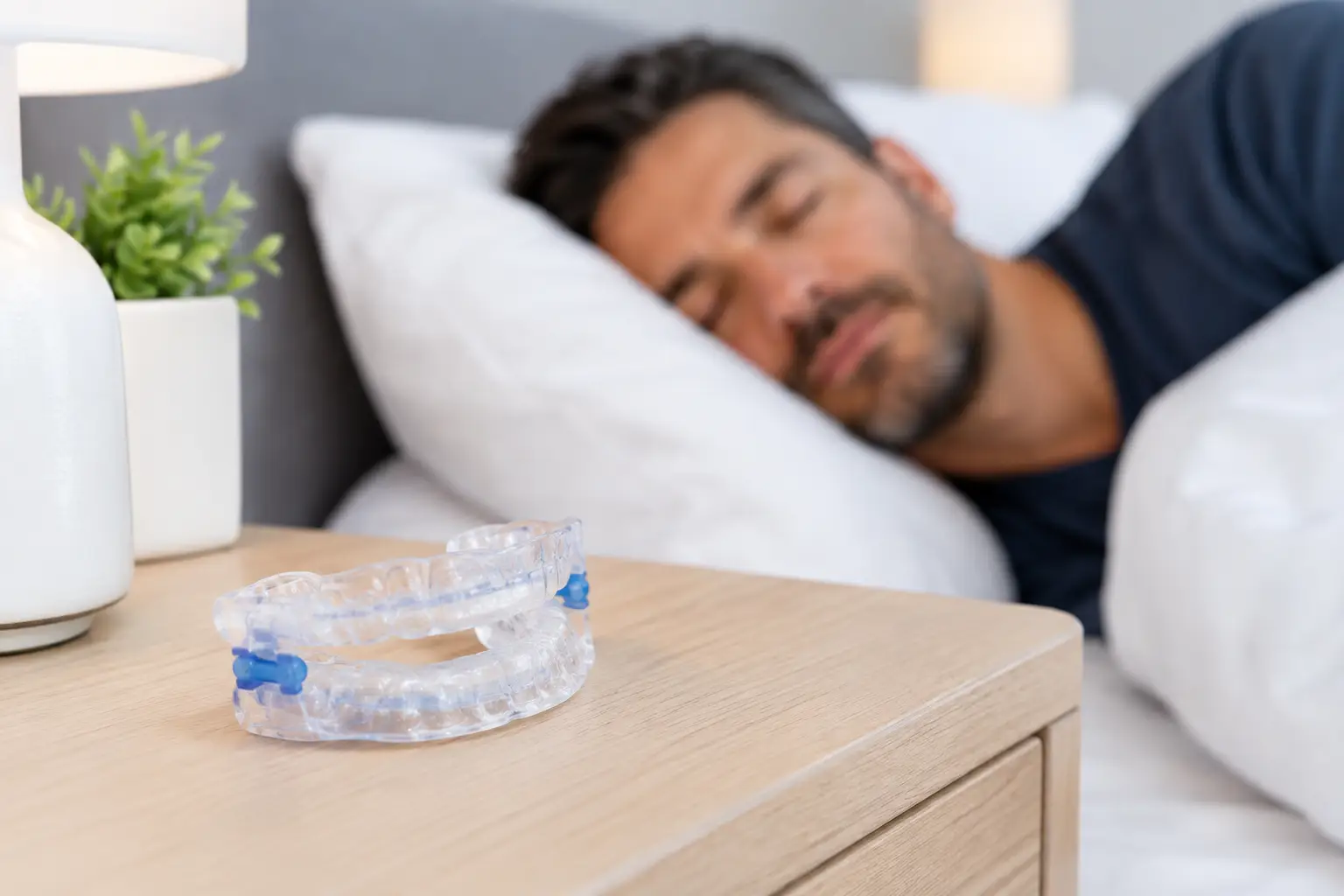
A sleep apnea oral appliance can become part of your nightly routine so gradually that it is easy to overlook changes in the device itself. If you have been asking, how long does a sleep apnea oral appliance last , the most honest answer is that there is no single deadline. Its condition, fit, function, and effect on your sleep matter far more than a date on the calendar.
A well-made custom appliance is designed for regular use, but it works under demanding conditions. It sits in a warm, moist environment, withstands nightly pressure from the jaw, and must continue to hold the lower jaw in a therapeutic position without harming your teeth or bite. Materials, clenching habits, daily cleaning, weight or health changes, and routine professional follow-up all affect oral appliance lifespan.
Your appliance should still fit, function, and feel stable
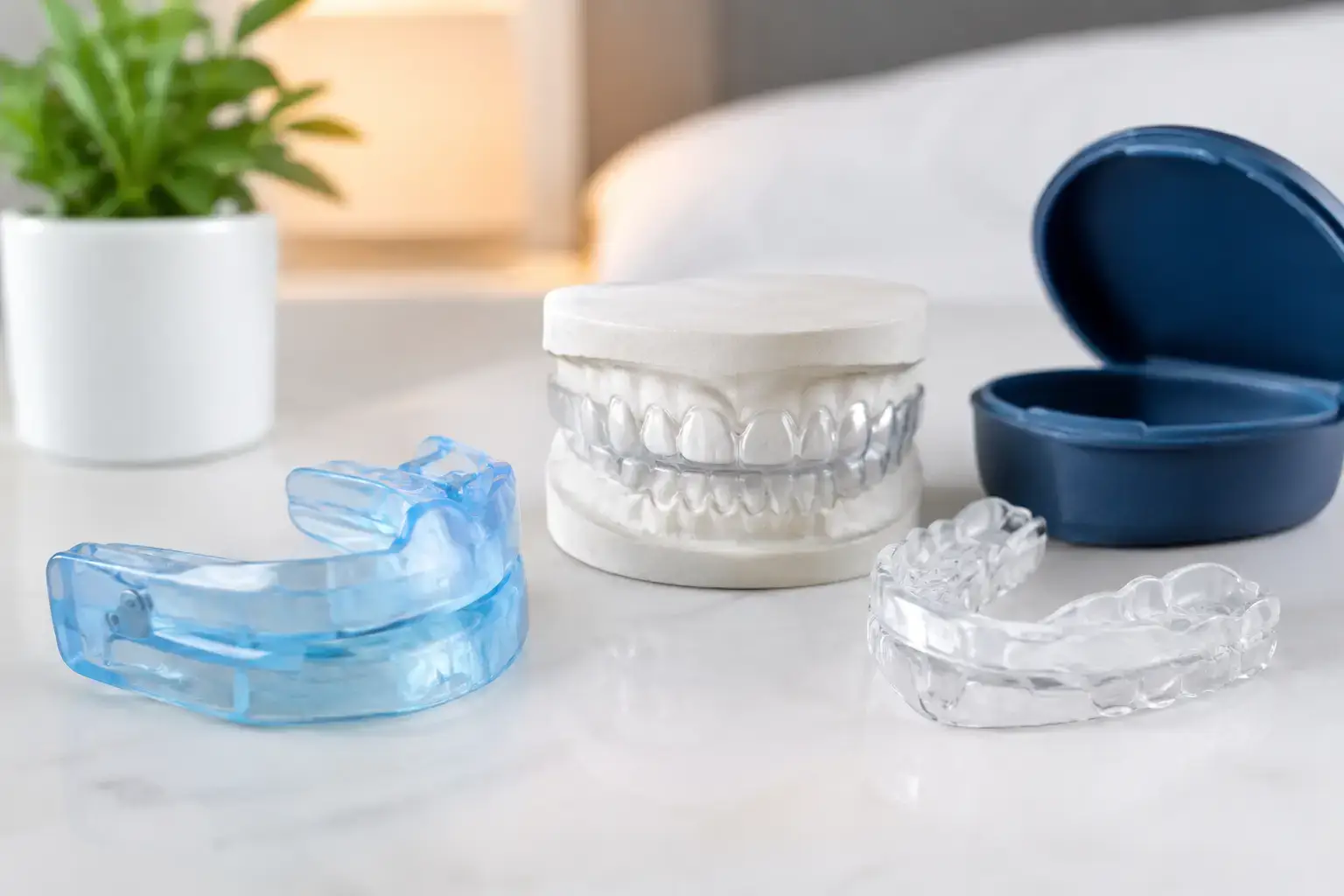
An oral appliance for obstructive sleep apnea is not simply a mouthguard. It is a medical-dental device calibrated to support your airway by positioning your jaw forward during sleep. When it remains in good condition and still fits precisely, it can help reduce airway collapse, snoring, and apnea symptoms for appropriate patients.
Over time, though, small changes can add up. Teeth can shift, restorations can be placed or replaced, gums can change, and your jaw relationship may evolve. An appliance that once seated securely may begin to feel loose, tight, uneven, or difficult to insert. Those changes deserve attention even when the appliance does not look visibly damaged.
The question is not only whether the mouthpiece is intact. It is whether it still supports safe, effective, comfortable treatment.
When to replace a sleep apnea mouthpiece
A long-term wearer wondering when to replace the device should schedule an evaluation if any of the following changes occur:
- The appliance cracks, chips, warps, develops sharp edges, or has a broken adjustment component.
- It no longer seats fully or feels noticeably looser or tighter than it did before.
- You wake with new jaw soreness, tooth pain, gum irritation, headaches, or bite changes that do not resolve as directed by your dentist.
- Snoring returns, daytime sleepiness increases, or a bed partner notices more breathing pauses.
- The appliance has persistent odor, staining, buildup, or surface roughness that does not improve with proper cleaning.
- You have had dental work, tooth movement, tooth loss, or changes to crowns, bridges, implants, or dentures that affect the fit.
Not every concern means you need a completely new device. Sometimes an adjustment, repair, professional cleaning, or reevaluation of the appliance settings is appropriate. In other situations, replacement is the safer choice because a damaged or poorly fitting appliance cannot deliver predictable therapy.
Why oral appliance lifespan varies from person to person
The materials used in your appliance make a difference. Custom oral appliances may include durable acrylic components, flexible materials, metal hardware, or adjustment mechanisms, depending on the design and your clinical needs. Each material has strengths and limitations. A device designed to accommodate grinding may need a different approach than one intended for a patient with minimal jaw pressure.
Clenching and grinding can be especially hard on an appliance. Many people are not aware they clench during sleep until they notice worn surfaces, soreness, or repeated stress on the device. Strong bite forces can contribute to cracks, distortion, or wear around moving parts. Your dentist may be able to identify patterns of pressure and recommend adjustments that protect both the appliance and your teeth.
Care habits matter as well. Rinsing the appliance after use, cleaning it with products recommended by your dental team, allowing it to dry appropriately, and storing it in its protective case can help prevent damage. Heat can distort certain materials, while harsh cleaners or abrasive toothpaste can roughen surfaces and make buildup more likely. A clean-looking appliance is helpful, but professional inspection is still necessary because stress fractures and fit changes are not always visible at home.
Changes in your mouth can change the fit
Your oral appliance was made from a precise record of your teeth and bite. That precision is central to both comfort and treatment effectiveness. If you receive a new crown, have an implant restored, begin orthodontic treatment, lose a tooth, or experience gum changes, the appliance may no longer fit as intended.
Even without major dental treatment, teeth can drift gradually. This is one reason ongoing dental care is part of successful sleep appliance therapy. Your dentist can monitor the condition of the appliance, your bite, tooth wear, gum health, and jaw comfort together rather than treating the device as a one-time purchase.
Some patients also experience morning bite changes because the jaw has been held forward overnight. A temporary change that resolves with the exercises or morning repositioning guidance provided by your dentist may be expected. A bite that remains altered, feels uncomfortable, or makes chewing difficult should be evaluated promptly.
A return of symptoms is a reason to check treatment
If your snoring, tiredness, morning headaches, or witnessed breathing pauses return, do not assume the appliance simply needs a cleaning or a tighter setting. The device may be worn, but other factors can affect obstructive sleep apnea as well. Changes in nasal congestion, medication, sleep position, overall health, or body weight may alter how well a previously effective setting controls your airway.
An appliance assessment may include checking its fit and mechanics, evaluating your teeth and jaw joints, and discussing your current sleep symptoms. Your sleep physician may also recommend follow-up sleep testing to confirm that therapy is still effectively managing your apnea. This is particularly valuable when symptoms return or when the appliance has been replaced or significantly adjusted.
Protecting your sleep apnea oral appliance
Daily care does not have to be complicated. After removing your appliance in the morning, rinse it with cool or lukewarm water and clean it as instructed. Avoid hot water, which may change the shape of some materials. Store the appliance in a ventilated protective case when it is not in use, and keep it away from pets, as they are drawn to the scent and can quickly damage dental devices.
Bring the appliance to routine dental visits and sleep-appliance follow-up appointments. This allows your dental team to inspect areas you may not be able to see, including small cracks, worn connectors, rough edges, and changes in how the device engages with your teeth. It also gives you a chance to discuss comfort, sleep quality, and any changes in your medical or dental health.
The right time to ask for an evaluation
You do not need to wait for a device to break before raising a concern. If it feels different, looks worn, causes discomfort, or seems less effective, a professional review can clarify whether it needs an adjustment, repair, replacement, or a closer look at your sleep apnea treatment plan.
At Seattle Oral Care, sleep appliance therapy is approached as ongoing care, not a one-time device. A careful evaluation can protect your teeth and jaw while helping ensure your treatment continues to support better breathing and more restful sleep. If you are unsure about your appliance, bringing it in for an assessment is a practical next step - and often a reassuring one.