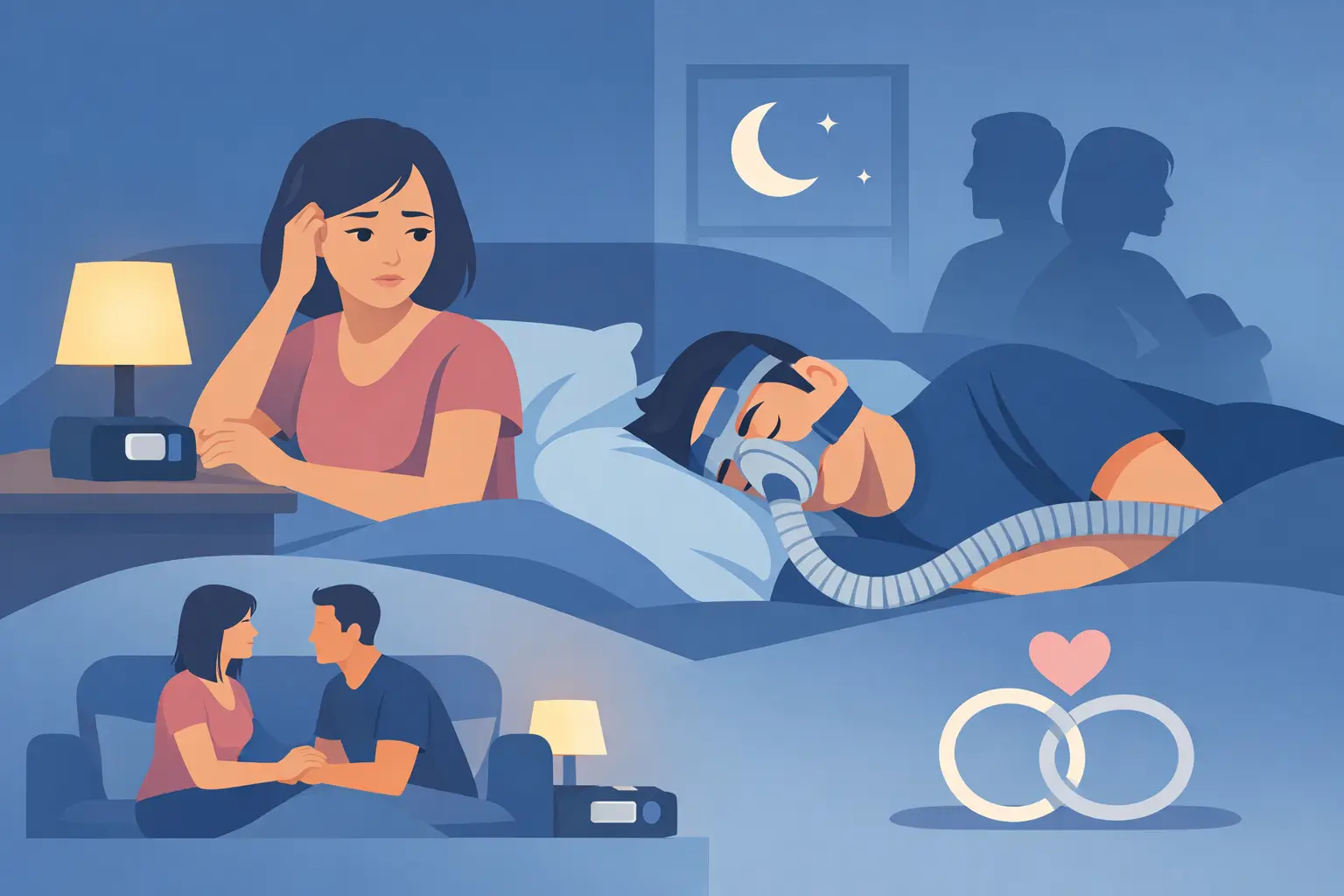
If you have found yourself thinking, “CPAP is affecting my marriage,” you are not alone. A machine that protects your health can still feel disruptive when your partner is losing sleep, intimacy feels less spontaneous, or you no longer recognize yourself behind a mask. These are real relationship concerns, not superficial complaints.
The good news is that CPAP challenges do not have to become a permanent source of distance. Small equipment adjustments, honest conversations, and the right treatment review can help couples protect both sleep and connection.
When a Partner Hates the CPAP Machine
When a partner says they hate the CPAP machine, they may be reacting to more than the machine itself. They may miss falling asleep face-to-face, feel bothered by air leaks or tubing, or worry about waking you when they move. You may hear criticism even when they are simply tired and frustrated.
Try to discuss the issue during the day, not at 2 a.m. Start with the shared goal: both of you deserve restorative sleep, and untreated obstructive sleep apnea can affect energy, mood, cardiovascular health, and quality of life. Then get specific about what is difficult. Is it the sound, the airflow, the mask appearance, or the feeling that bedtime has become medical?
CPAP noise keeping a partner awake is often worth troubleshooting with a sleep physician or durable medical equipment provider. A new mask cushion, properly fitted headgear, a heated tube, or a machine setting adjustment may reduce leaks and noise. Do not change prescribed pressure settings on your own, but do report problems. A machine that suddenly becomes loud may need maintenance or replacement.
CPAP Bedroom Intimacy Is About More Than the Mask
CPAP and feeling unattractive can take a quiet toll. Some people feel self-conscious putting on a mask in front of their spouse. Others begin to avoid closeness because they assume their partner is bothered, even when that has never been said aloud.
The mask is for sleeping, not for the entire evening. Make room for affection before either partner gets into bed. A few minutes of conversation, a hug, or time together without phones can help bedtime feel less clinical. For sexual intimacy, many couples find it helpful to separate intimacy from the moment the lights go out. There is no rule that connection must happen on a fixed schedule or only in a perfectly quiet bedroom.
It also helps to say the reassuring part out loud. A CPAP mask is not a sign that someone is less attractive. It is a treatment for a medical condition, and using it can be an act of care for your future together.
Sleeping Separately Because of CPAP
Sleeping separately because of CPAP may be a temporary practical choice, especially while you address severe noise, leaks, or different work schedules. It is not automatically a sign that a relationship is failing. But if separate bedrooms are creating loneliness or resentment, treat that as information worth acting on.
Rather than silently accepting the arrangement, set a time to revisit it. Continue shared routines that matter to you, such as winding down together, having coffee in the morning, or spending part of the evening in the same room. At the same time, work with your care team to identify whether the CPAP setup can be improved or whether another medically appropriate treatment could be considered.
Alternatives to CPAP for Couples: Is Oral Appliance Therapy an Option?
For some adults with snoring or obstructive sleep apnea, oral appliance therapy may be a comfortable alternative to CPAP. A custom oral appliance is worn in the mouth during sleep and gently supports the lower jaw in a position that helps keep the airway open. It is small, quiet, and does not require a bedside machine, hose, or mask.
Does oral appliance therapy help relationships? For the right patient, it can. A quieter, less intrusive treatment may reduce bedtime disruption and help a couple feel more at ease. Many patients also appreciate its portability for travel. However, it is not the best answer for everyone. The severity and type of sleep apnea, jaw health, bite, dental condition, and prior treatment response all matter.
CPAP remains a highly effective treatment, particularly for many people with moderate to severe obstructive sleep apnea. Do not stop using CPAP because it is inconvenient or because a partner is frustrated without speaking with your sleep physician. In some situations, an oral appliance can be used when CPAP is not tolerated; in others, it may be part of a coordinated treatment plan.
An oral appliance should be custom-made and monitored by a qualified dental sleep medicine provider. Store-bought snoring devices may fit poorly, shift teeth, strain the jaw, or fail to adequately treat sleep apnea. At Seattle Oral Care, an AADSM-certified prosthodontist can evaluate whether a custom appliance may fit your sleep needs and your oral health.
A treatment plan should support the whole person, including the person beside you. When both partners feel heard, the conversation can shift from “your machine is ruining our bedroom” to “how do we help both of us sleep better?”