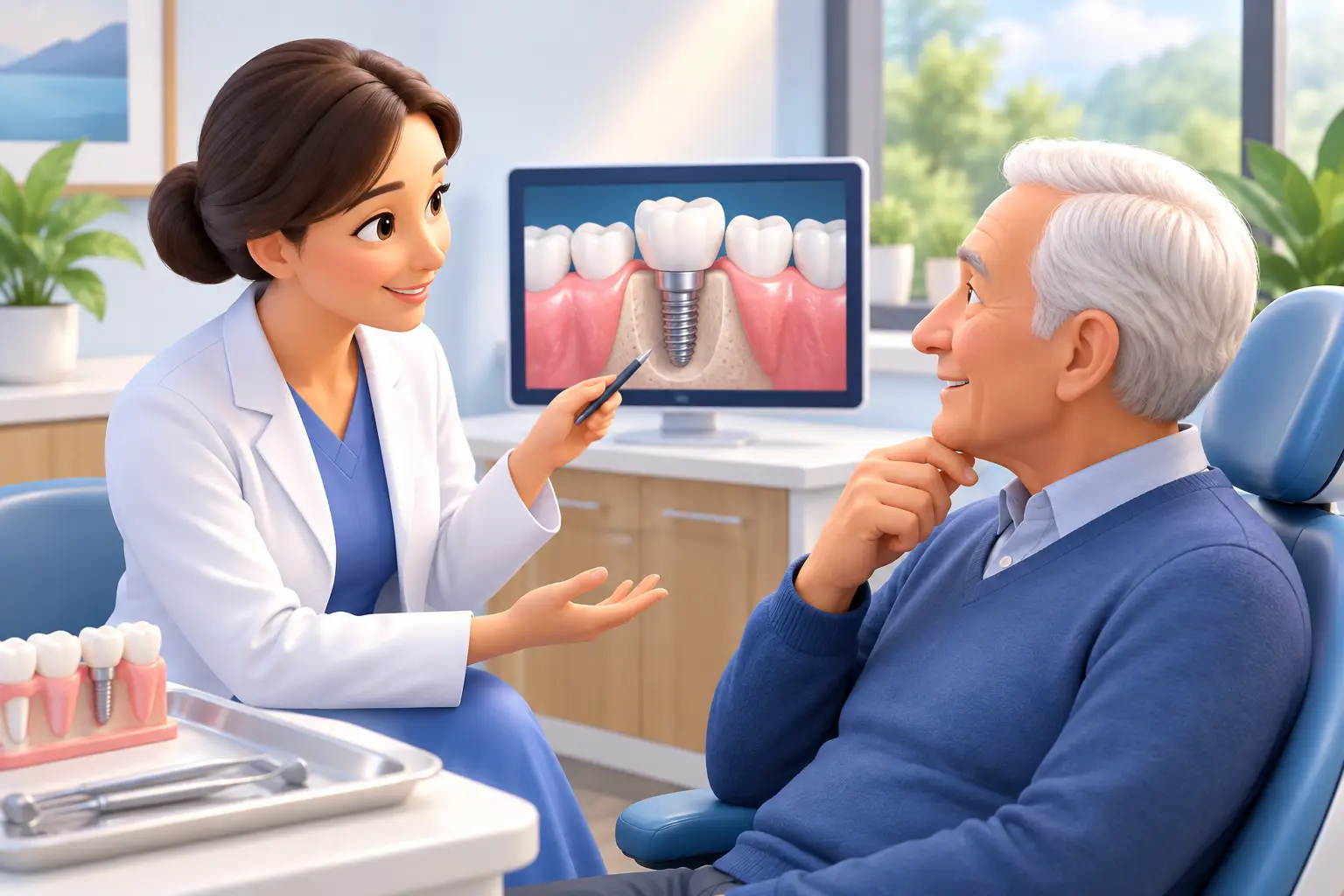
Losing teeth does not automatically mean you have missed your chance for a secure, natural-looking smile. Dental implants for severe bone loss may still be possible, even if you have worn dentures for years or were previously told there was not enough jawbone for implants. The right answer depends on where bone has been lost, how much remains, your overall health, and which treatment approach best fits your goals.
Bone loss can make implant planning more involved, but it is not a reason to assume that removable dentures are your only option. With detailed imaging and coordinated care, many patients have more choices than they expect.
Why missing teeth and dentures can lead to jawbone loss
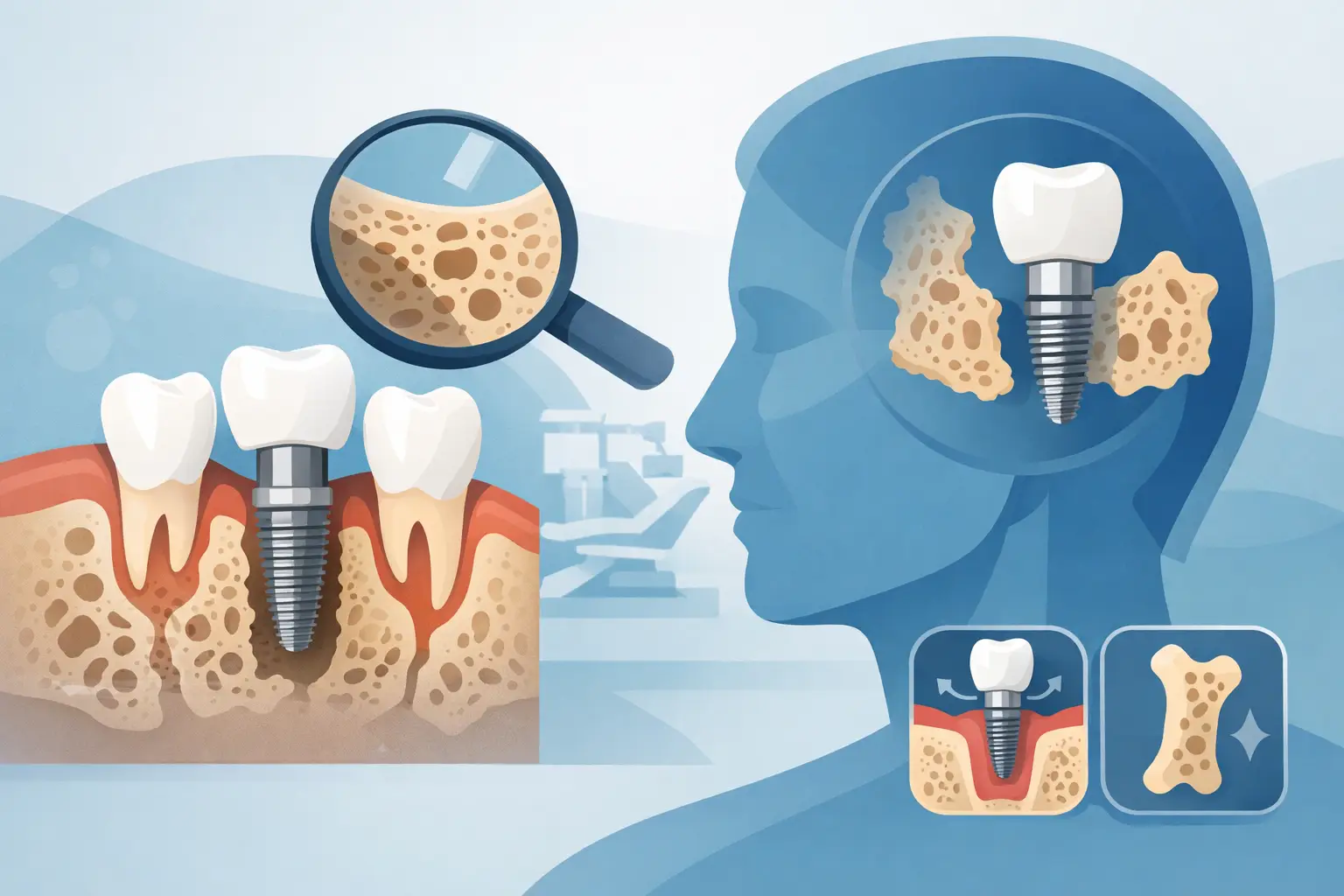
Your jawbone needs the stimulation created by tooth roots when you chew. Once a tooth is removed, the bone beneath it gradually begins to shrink. This process is most noticeable in the first year after tooth loss, but it continues over time.
Bone loss from long-term denture wear can add another concern. Traditional dentures rest on the gums and do not replace tooth roots, so they cannot stimulate the jawbone. As the ridge becomes narrower and lower, dentures may loosen, rub, or make eating feel less predictable. A denture that once fit well can eventually require repeated relines or adhesives.
Other factors can contribute as well, including gum disease, infection, trauma, smoking, certain medical conditions, and long periods without a tooth replacement. The location matters. Bone loss in the upper back jaw can be affected by the sinus cavity, while loss in the lower back jaw may be limited by the position of important nerves.
Can you get implants with bone loss?
Often, yes. The question is not simply whether you have bone loss. Nearly every patient who has been missing teeth for a while has some degree of bone change. The more useful question is whether there is enough healthy bone in the right location to support an implant safely, or whether the area can be rebuilt or approached differently.
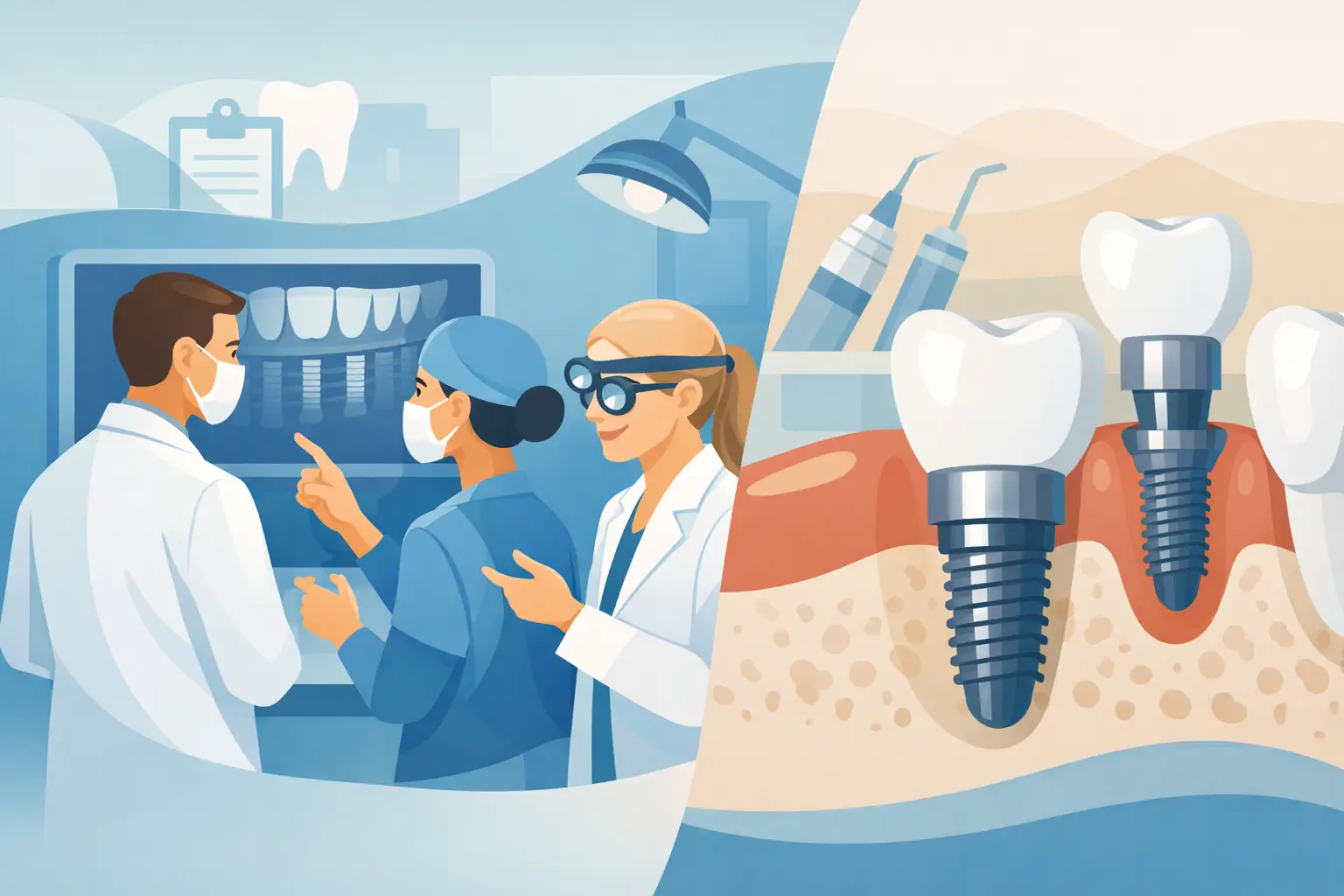
A comprehensive evaluation typically includes a 3D CBCT scan, an examination of your gums and bite, and a review of your medical and dental history. This allows the dental team to measure bone height, width, and density and identify the sinus and nerve pathways before recommending treatment.
Implant candidacy with low bone density is evaluated carefully, but low density does not always rule out treatment. The quality of bone, the ability to achieve initial implant stability, the design of the final restoration, and healing factors all play a role. Conditions such as osteoporosis may require closer coordination with your physician, especially if you take certain bone-strengthening medications. They do not automatically disqualify you from implants.
Jaw bone loss dental implant options
There is no single best solution for everyone. Your treatment may involve rebuilding bone first, using the available bone more strategically, or choosing an implant design that avoids severely resorbed areas.
Bone grafting for dental implants
Bone grafting for dental implants adds or preserves bone where the jaw has become too thin or too short. Graft material may come from your own body, a donor source, an animal-derived source processed for medical use, or a synthetic material. Over time, your body uses the graft as a framework for new bone formation.
A small graft may be placed at the time of a tooth extraction to preserve the socket. More extensive grafting may be needed when a tooth has been missing for years. Healing time varies widely. Some grafts are ready for implant placement within a few months, while larger reconstructions take longer.
The trade-off is time. Grafting can create a stronger foundation and allow for a more ideal implant position, but it may add procedures, healing phases, and cost. For many patients, that investment supports a more stable long-term result.
Ridge augmentation vs. bone graft
Patients sometimes hear both terms and assume they are separate treatments. In practical terms, ridge augmentation is a type of bone grafting procedure. It specifically rebuilds the shape, height, or width of the jaw ridge where teeth once sat.
A simple socket graft helps preserve bone after extraction. Ridge augmentation is generally more involved because it corrects bone that has already been lost. Your care team may use graft material, a protective membrane, and precise techniques to encourage the bone to rebuild in the desired area. The appropriate approach depends on the size and location of the defect.
Sinus lift procedures
In the upper back jaw, the sinus may expand downward after molars are lost, leaving limited bone for an implant. A sinus lift gently raises the sinus membrane and places graft material below it to create additional vertical bone. It is a common option when the remaining upper-jaw bone is not tall enough for conventional implants.
Short or angled implants
Not every case requires a large graft. In selected cases, a surgeon may use shorter implants or place implants at an angle to engage stronger available bone while avoiding critical anatomy. This is especially relevant in full-arch treatment planning. It is not a shortcut for every patient, but it can reduce the need for extensive grafting when conditions are favorable.
All-on-4 for patients with bone loss
All-on-4 is a full-arch approach that typically uses four strategically positioned implants to support a fixed bridge of teeth. The rear implants are commonly angled to maximize existing bone and avoid sinus or nerve areas. For some people with significant bone loss, this makes a fixed full-arch restoration possible without the same degree of grafting needed for multiple individual implants.
All-on-4 for patients with bone loss can be an efficient option, particularly for those struggling with failing teeth or unstable dentures. However, it is not automatically the right choice just because several teeth are missing. The number and position of implants, the quality of bone, bite forces, gum health, and the design of the final bridge must all be planned together.
A fixed bridge also requires ongoing home care and professional maintenance. It does not behave exactly like natural teeth, and access for cleaning beneath the bridge is essential to protect the implants over time.
Advanced options when not enough bone for implants remains
When conventional implants and standard grafting are not ideal, advanced options may be considered by experienced surgical teams.
Zygomatic implants for bone loss
Zygomatic implants are longer implants used in the upper jaw. Rather than relying only on the severely reduced upper-jaw bone, they anchor into the cheekbone, or zygomatic bone, which is typically much denser. They are generally reserved for complex full-arch cases with substantial upper-jaw bone loss.
Zygomatic implants for bone loss can avoid major upper-jaw grafting for carefully selected patients, but they are technically demanding and not appropriate for every situation. Thorough 3D planning and experienced surgical care are essential because of the anatomy involved.
Subperiosteal implants for bone loss
Subperiosteal implants are custom frameworks designed to rest on top of the jawbone but beneath the gum tissue, rather than being placed into the bone like conventional implants. Modern digital imaging and custom manufacturing have renewed interest in this option for some patients with extreme bone loss who are not candidates for grafting or conventional implant placement.
Subperiosteal implants may offer a path forward in highly specific cases, but the evidence base, design considerations, and long-term maintenance needs differ from conventional implants. A careful discussion of benefits, limitations, and alternatives is particularly important.
Implants after years of missing teeth: what to expect
If you have been missing teeth for a long time, start with an evaluation rather than assuming the treatment will be too complicated. Some patients need a staged plan: first address gum infection or failing teeth, then build bone if needed, place implants, and complete the final crowns, bridge, or denture after healing. Others may qualify for a more streamlined approach.
The best plan is not always the fastest plan. A predictable result depends on healthy gums, stable bone, a well-designed bite, and restorations you can clean and maintain comfortably. At Seattle Oral Care, a prosthodontist, oral surgeon, periodontist, and general dentist can coordinate complex implant planning in one setting, helping ensure that surgical and restorative decisions support the same long-term goal.
If you have been told you do not have enough bone for implants, bring any prior records or imaging to your consultation . A second look with current 3D diagnostics may clarify whether grafting, angled implants, a full-arch solution, or an advanced alternative could help you move from an unstable denture or missing teeth toward a smile that feels secure again.