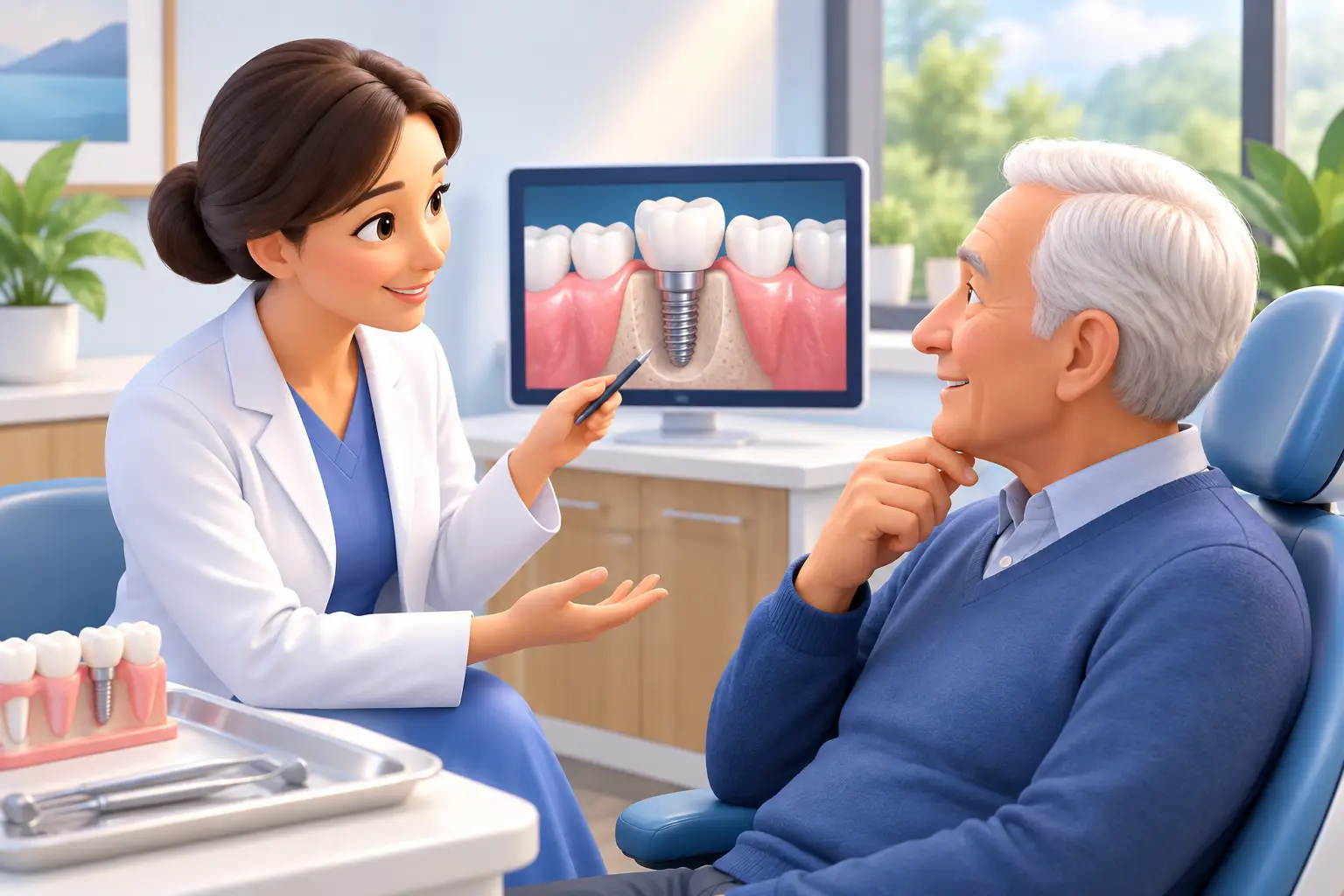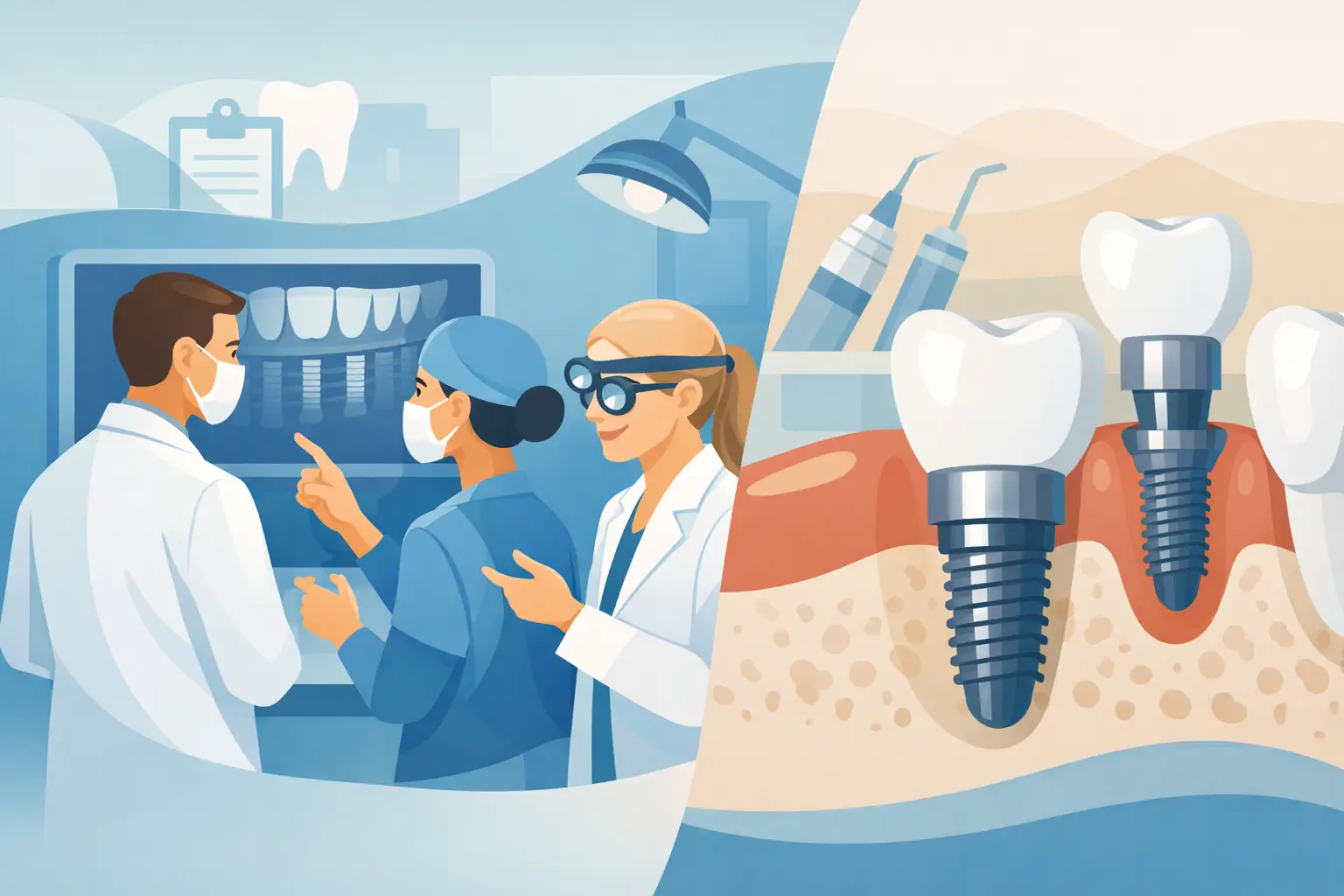
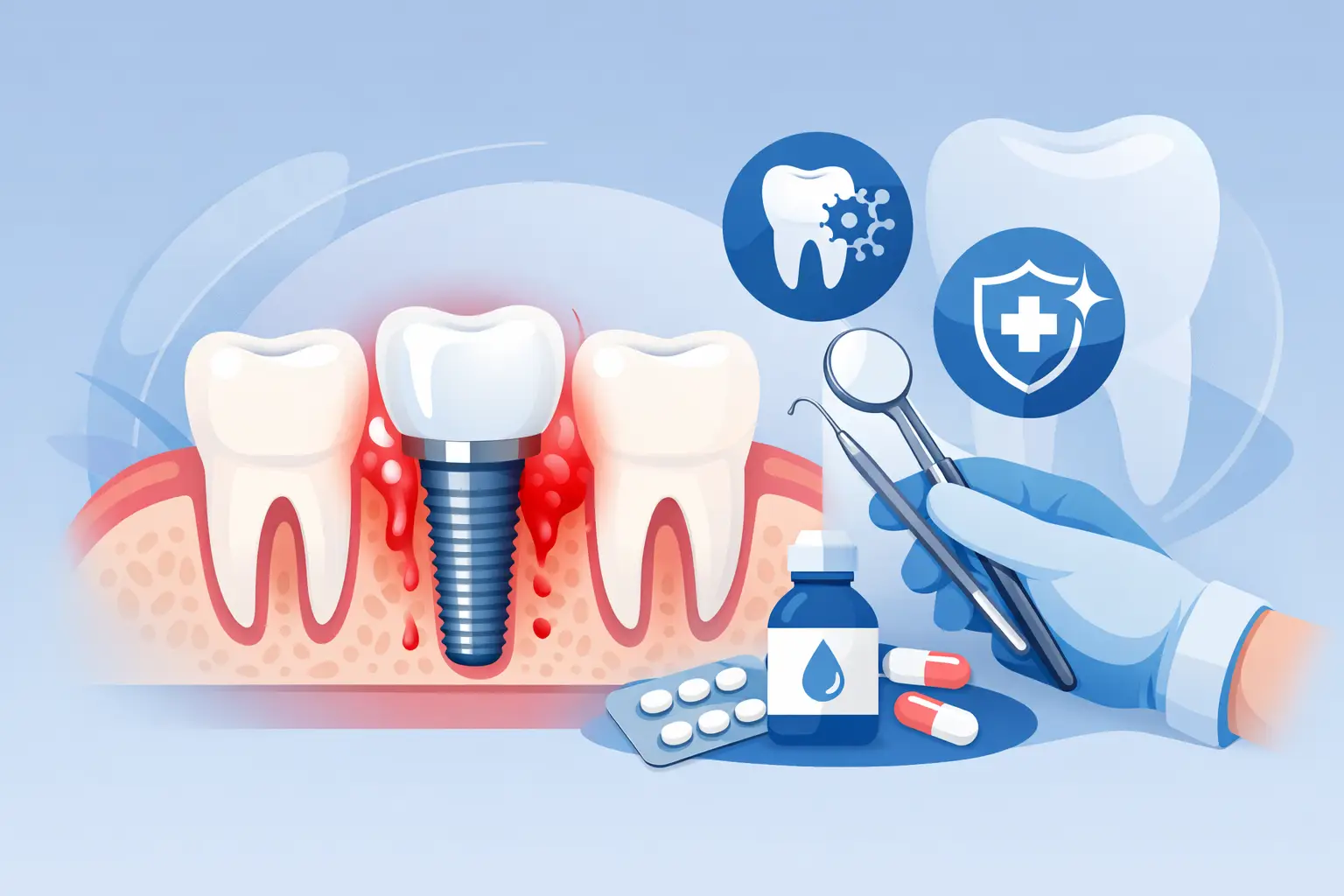
A dental implant should feel stable, comfortable, and much like a natural tooth once healing is complete. New tenderness, bleeding, a bad taste, or swelling around an implant can be unsettling, but an infected dental implant is not always a lost implant. Prompt evaluation can often stop the problem before it causes significant damage to the surrounding bone.
Dental implants have a high long-term success rate, yet they still need daily care and regular professional maintenance. The tissues around an implant can become inflamed for several reasons, and the right treatment depends on what is happening below the gumline. The most helpful next step is not to wait and see if persistent symptoms disappear. It is to have the area examined.
Dental implant infection symptoms to watch for
Some discomfort is expected shortly after implant surgery, especially during the first few days. Swelling should generally peak and then gradually improve. Pain that becomes worse after initial improvement, or swelling that returns weeks, months, or years later, deserves attention.
Dental implant infection symptoms can include red or puffy gum tissue, bleeding when brushing or flossing, tenderness, pus or drainage, a foul taste or odor, and gum recession that exposes more of the implant or crown. Some people notice that their bite suddenly feels different. Others first see swelling near the implant or feel pain when chewing.
Implant site swelling and pain may also come from a problem that is not an infection. Food trapped beneath a crown, a loose restoration, clenching or grinding, an irritated neighboring tooth, or a poorly fitting nightguard can all create discomfort. That is why a clinical examination and X-rays are more reliable than trying to identify the cause at home.
An implant that feels loose needs prompt care. The crown attached to an implant can sometimes loosen while the implant itself remains secure, which is usually a more straightforward repair. However, movement in the implant body may indicate a loss of integration with the bone and should be assessed without delay.
Peri-implantitis vs. infection: what is the difference?
Patients often use the word “infection” for any sore or swollen implant area. Clinically, the condition may fall into a few categories. Peri-implant mucositis is inflammation limited to the soft gum tissue around an implant. It may cause redness, bleeding, and tenderness, but there is not yet evidence of bone loss. With timely professional cleaning and improved home care, this stage can often be reversed.
Peri-implantitis is more serious. It involves inflammation around the implant along with progressive loss of the supporting bone. Bacteria are commonly part of the process, which is why peri-implantitis vs infection is not always a simple either-or distinction. Peri-implantitis is a specific implant-related disease process that may involve bacterial infection and can threaten the implant if untreated.
A localized abscess or acute infection can also develop around an implant. This may cause more sudden swelling, pressure, drainage, and pain. In rare cases, infection can spread beyond the implant area. The specific diagnosis matters because treatment for mild gum inflammation is very different from treatment for bone loss, a loose implant, or an infection arising from a nearby tooth.
Why can an implant become inflamed or infected?
The most common contributor is bacterial plaque that collects along the gumline and beneath the implant restoration. Unlike a natural tooth, an implant cannot develop a cavity, but the gum and bone supporting it remain vulnerable to inflammation.
Cleaning can be difficult around bridges, implant-supported dentures, and some crown shapes. Smoking or vaping, uncontrolled diabetes, a history of gum disease, and inconsistent recall visits can raise the risk. Grinding or biting forces that overload an implant can contribute as well, particularly when bone support is already reduced.
Sometimes the issue is related to the restoration rather than hygiene alone. Excess cement, a crown that does not allow adequate cleaning access, or a loose component can create a place for bacteria to accumulate. This is one reason implant maintenance is not just a standard cleaning appointment. Your dental team should evaluate the gum tissue, bite, restoration, and supporting bone over time.
How to treat an infected implant
How to treat an infected implant depends on its stage, the amount of bone support present, the implant’s stability, and the source of the problem. A dentist may begin by measuring around the implant, checking for bleeding or drainage, evaluating the bite, and taking X-rays or 3D images when needed.
For early soft-tissue inflammation, treatment may involve a careful professional cleaning around the implant and personalized guidance on brushing and cleaning between teeth. Your dentist may recommend a specialized brush, flossing aid, water flosser, or an antimicrobial rinse for a limited period. The goal is to remove plaque effectively without scratching the implant surface or irritating the gums.
When peri-implantitis or an active infection is present, care can be more involved. The restoration may need to be removed so the area can be thoroughly cleaned and inspected. Depending on the findings, treatment may include decontamination of the implant surface, treatment of infected tissue, and adjustments to the crown or bite. Antibiotics are sometimes appropriate, particularly for an acute bacterial infection, but they do not remove hardened deposits or rebuild lost bone on their own.
For more advanced bone loss, surgical treatment may be considered to gain access to the affected area and, in select cases, rebuild supporting bone. Results depend on the implant’s position, surface, remaining bone, overall health, and ability to keep the area clean afterward. Coordinated care from a general dentist, periodontist, oral surgeon, and prosthodontist can be especially valuable when the situation is complex.
Can an infected implant be saved?
Can an infected implant be saved? Often, yes, particularly when inflammation is found early and the implant remains stable with enough healthy bone support. Saving the implant is generally the goal whenever it is predictable and safe to do so.
However, there are situations where removal is the healthier long-term choice. Severe bone loss, persistent infection that does not respond to treatment, implant fracture, or true implant mobility can make saving it unlikely. Removing a failed implant is not a personal failure and does not necessarily mean you cannot have another implant in the future. After healing, bone grafting or a revised implant plan may be possible.
A careful evaluation should address more than whether the implant can remain in place today. It should also consider whether it can be restored to a condition that is comfortable, cleanable, stable, and likely to last.
When to see a dentist about implant infection
Call a dentist promptly if swelling, bleeding, tenderness, drainage, or a bad taste continues for more than a day or two, especially if the implant was previously comfortable. Schedule an evaluation soon if you notice gum recession, a changed bite, or a crown that feels loose.
Seek urgent dental care for facial swelling, fever, pus, worsening pain, difficulty swallowing, difficulty breathing, or trouble opening your mouth. These symptoms can signal a spreading infection and should not be managed with home remedies alone.
Until you are seen, keep the area gently clean and follow any postoperative instructions you were given. Do not place aspirin against the gums, attempt to tighten an implant crown yourself, or rely on leftover antibiotics. These measures can irritate tissue, delay proper treatment, or mask a problem that still needs attention.
At Seattle Oral Care, patients with implant concerns are assessed with the same focus used to plan them: careful diagnostics, clear explanations, and treatment tailored to the condition of the implant and the person behind the smile. If something around your implant does not feel right, an early visit can provide reassurance, protect healthy bone, and give you the best chance for a comfortable, lasting result.