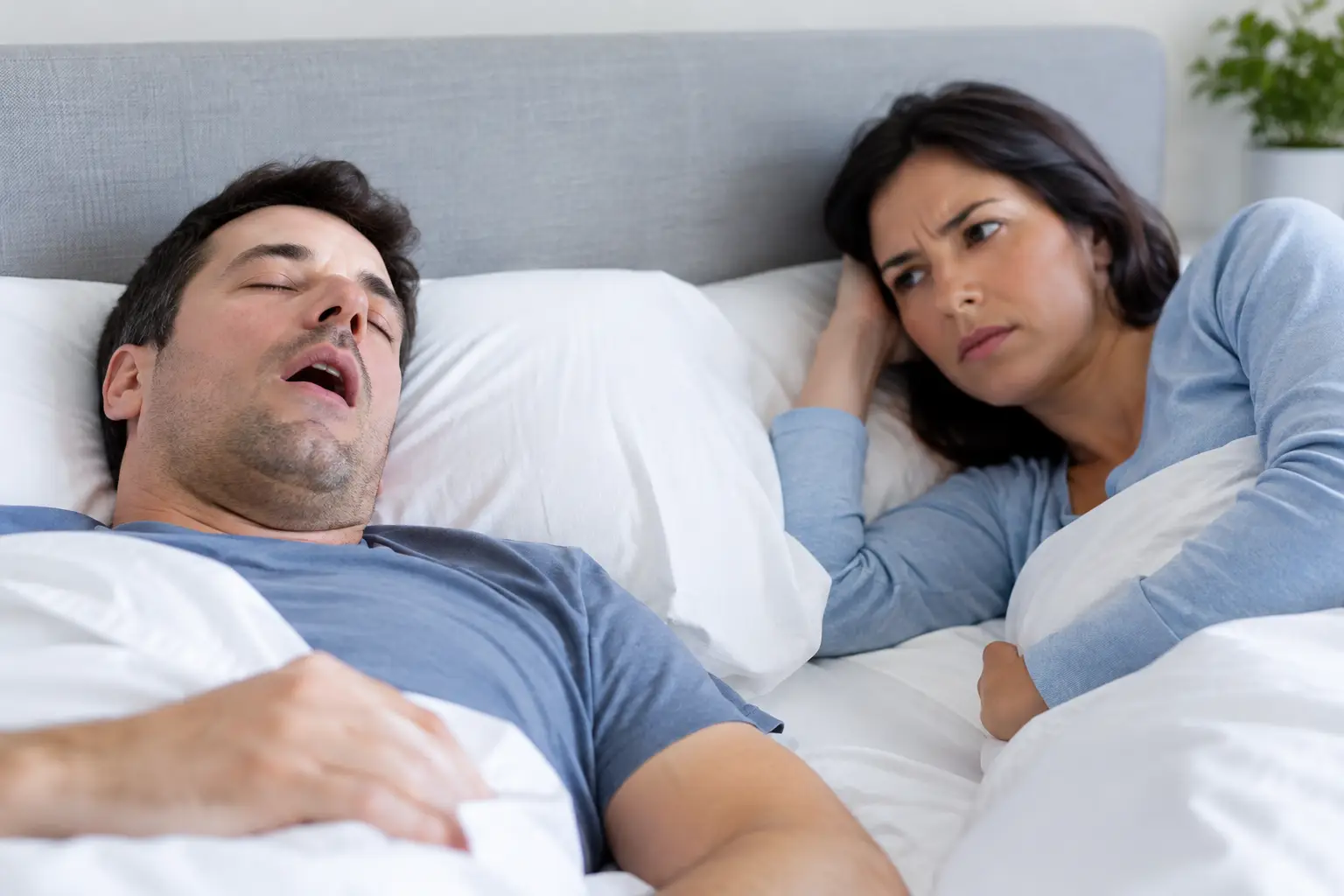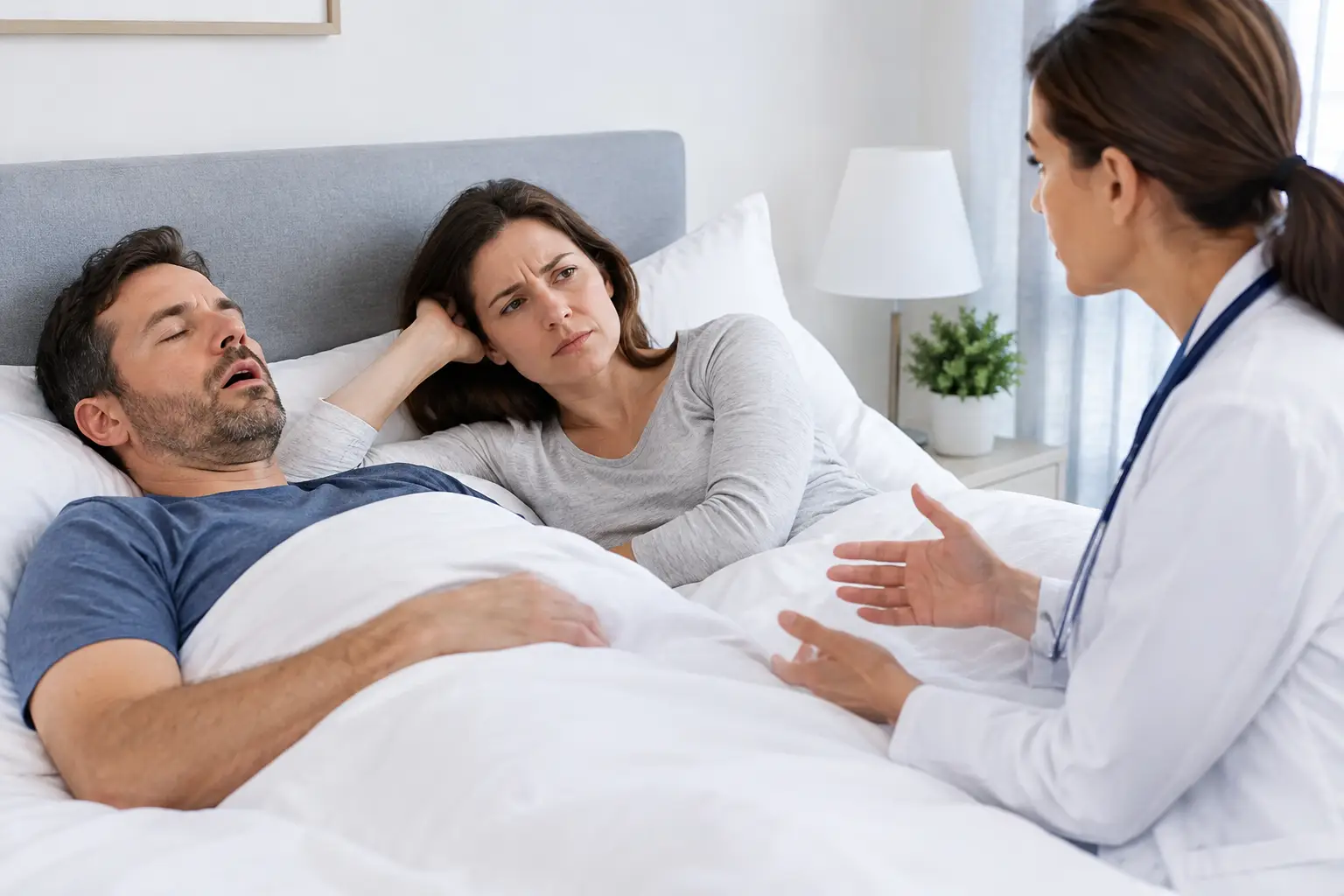
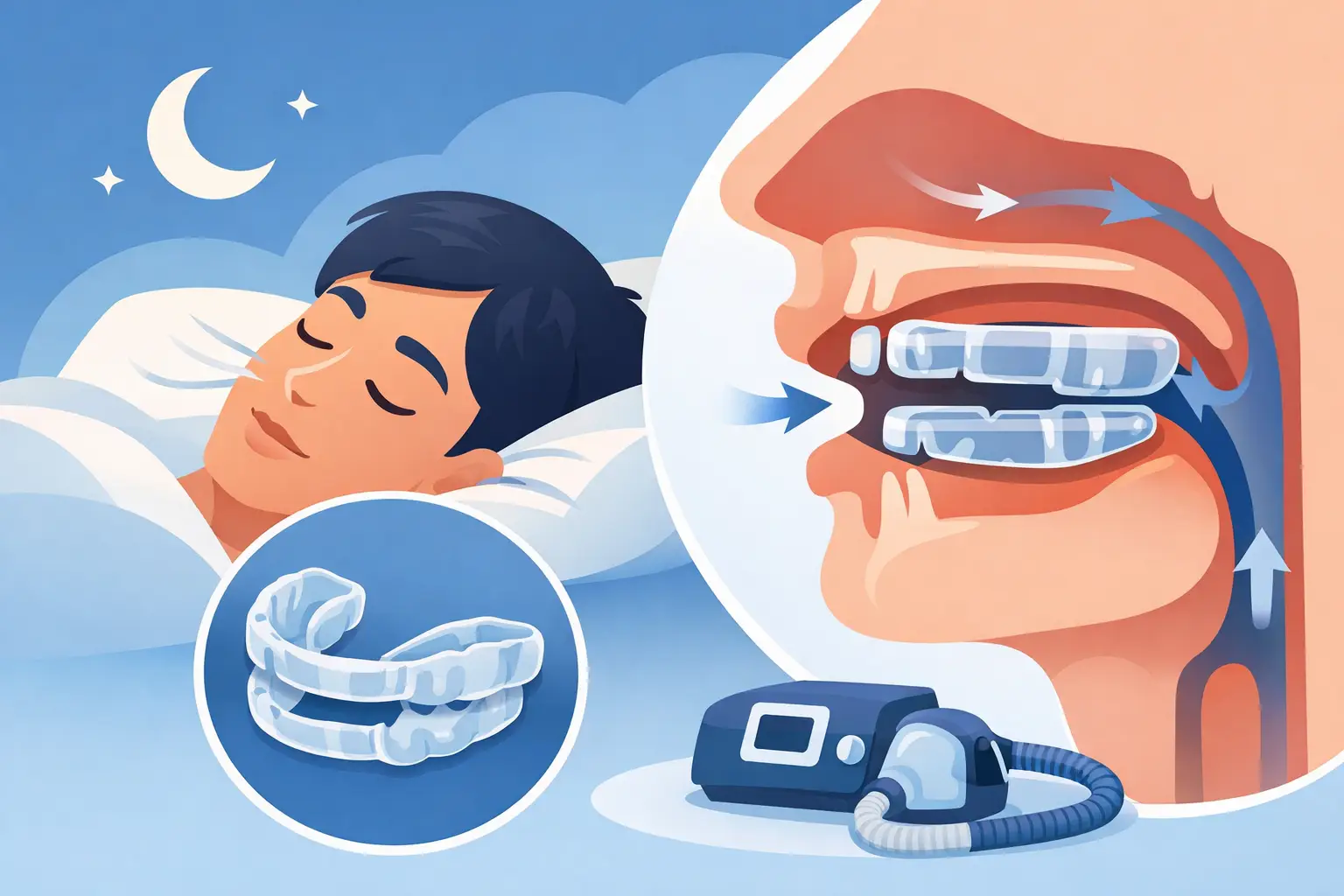
Snoring can be more than an inconvenience. When it comes with pauses in breathing, gasping, daytime fatigue, or morning headaches, it may point to obstructive sleep apnea. An oral splint for sleep apnea is a comfortable, custom-made option that can help many patients breathe more freely at night, particularly when CPAP has been difficult to tolerate.
How does an oral splint work for sleep apnea?
Most sleep appliances are mandibular advancement devices, sometimes called mandibular splint therapy. The appliance fits over the upper and lower teeth and gently holds the lower jaw slightly forward during sleep. This forward position helps keep the tongue and soft tissues from narrowing the airway at the back of the throat.
The goal is not simply quieter sleep. By supporting a more open airway, a properly fitted appliance may reduce snoring, breathing interruptions, and the oxygen drops associated with obstructive sleep apnea.
Treatment begins with a sleep evaluation and diagnosis. A dentist trained in dental sleep medicine works alongside your physician or sleep specialist to select, fit, and adjust the appliance. Small adjustments matter. Your jaw position should be advanced enough to improve breathing without creating unnecessary jaw discomfort.
A dental splint for snoring is not the same as a mouthguard
The terms can sound similar, but an oral splint vs mouthguard comparison reveals an important difference. A sports mouthguard is designed to cushion teeth during impact. A night guard protects teeth from grinding. Neither is designed or adjusted to keep the airway open.
A dental splint for snoring and sleep apnea is a prescription appliance made from detailed impressions or digital scans of your teeth. It is designed to fit securely, maintain a specific jaw position, and allow clinical adjustments over time. Store-bought anti-snoring devices may feel tempting because they cost less upfront, but they can fit poorly, move teeth, irritate gums, or aggravate jaw joints. They also do not replace a proper sleep apnea diagnosis.
Splint therapy vs CPAP: which treatment is better?
CPAP delivers pressurized air through a mask and remains the most consistently effective treatment for severe obstructive sleep apnea. For many people, it is the right choice, especially when apnea is severe or accompanied by significant health concerns.
Still, a treatment only works when it is used. Some patients struggle with mask discomfort, air leaks, dry mouth, noise, or the feeling of pressure. For adults with mild to moderate obstructive sleep apnea, a custom oral appliance can be an effective alternative when CPAP is not tolerated or preferred. It may also be used alongside CPAP in selected cases to improve comfort or reduce pressure needs.
The best option depends on your sleep study results, airway anatomy, medical history, weight, symptoms, and ability to use treatment consistently. A follow-up sleep test after your appliance is adjusted helps confirm that it is doing its job.
Who is a candidate for oral splint therapy?
You may be a good candidate for oral splint therapy if you have primary snoring or mild to moderate obstructive sleep apnea, especially if CPAP has not worked well for you. Patients with severe sleep apnea may still be candidates when CPAP is intolerable, but treatment should be carefully coordinated with their sleep physician.
Healthy teeth and gums are helpful because the appliance relies on stable dental support. Before beginning therapy, your dentist will also evaluate jaw joint health, tooth mobility, bite changes, missing teeth, and restorative work such as crowns, bridges, or implants. Patients with extensive dental needs may need restorative treatment or a modified appliance design first.
At Seattle Oral Care, sleep appliance planning can be coordinated with restorative care , which is particularly valuable for patients managing missing teeth, implants, or complex bite concerns.
Custom oral splint cost and side effects to consider
Custom oral splint cost varies with the appliance type, diagnostic records, adjustment visits, insurance benefits, and required follow-up testing. Dental sleep appliances are a medical treatment, not a one-size-fits-all retail product. Ask for a written estimate that explains what is included, how insurance is handled, and what maintenance may be needed.
Oral splint therapy side effects are usually manageable and often improve with adjustments. Early effects can include temporary tooth or jaw soreness, increased saliva, dry mouth, or a sense that your bite is different upon waking. Less commonly, long-term use can contribute to bite changes or tooth movement, which is why regular monitoring is essential.
A well-made appliance should feel secure, not painful. If you wake with persistent jaw pain, loose teeth, gum irritation, or a lasting bite change, contact your dental provider rather than trying to adjust the device yourself.
If snoring is disrupting your household or you are waking tired despite a full night in bed, start with a sleep evaluation. Once you know what is happening with your breathing, you can choose a treatment that supports both better sleep and lasting oral health.