A dental implant is not just a surgical procedure. It is the foundation for a crown, bridge, or denture that needs to feel comfortable, look natural, and hold up to daily chewing. If you are comparing a prosthodontist vs oral surgeon for implants , the best answer is rarely about which specialist is universally “better.” It is about which clinician, or coordinated team, is right for your oral health needs and long-term restoration.
The difference between a prosthodontist and oral surgeon
An oral and maxillofacial surgeon is a dental specialist with advanced training in surgery of the mouth, jaws, and facial structures. Oral surgeons are highly qualified to extract teeth, place implants, manage impacted teeth, perform bone grafting , and address surgical complications. Their expertise can be particularly valuable when implant treatment involves limited bone, sinus elevation, infection, or more medically complex circumstances.
A prosthodontist is a dental specialist focused on restoring and replacing teeth. Prosthodontist implant expertise includes planning the final crown, bridge, or implant-supported denture so it supports a comfortable bite, healthy jaw function, and natural appearance. Prosthodontists also receive advanced training in complex restorative care, including full-mouth rehabilitation and the design of restorations for patients replacing multiple teeth.
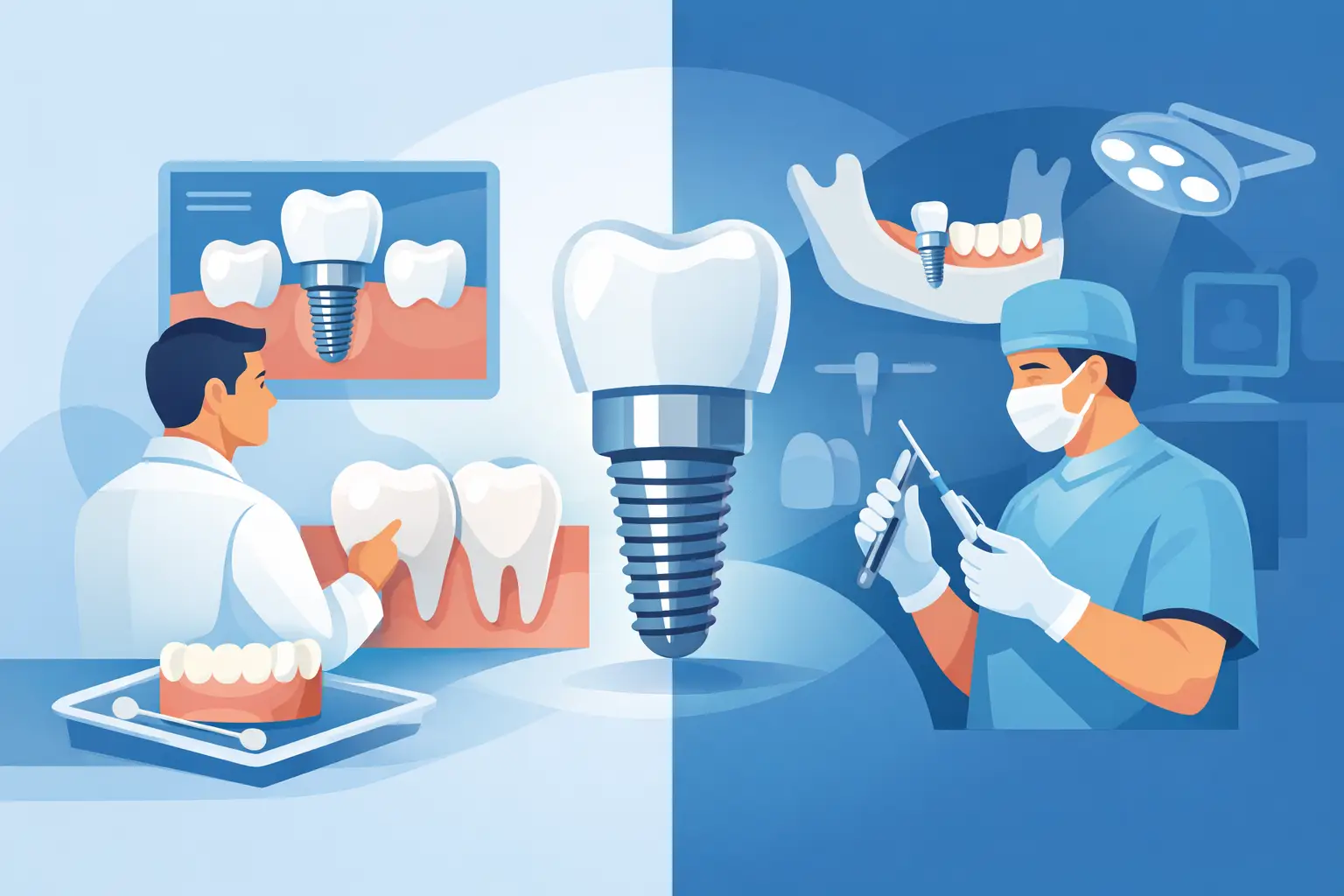
The key distinction is often perspective. An oral surgeon focuses on the surgical foundation. A prosthodontist focuses on how the finished teeth will function and look. Both perspectives matter.
Implant placement vs restoration specialist: Why planning comes first
Dental implant treatment has two connected phases: placement of the implant post in the jawbone and restoration of that implant with the visible tooth or teeth. The implant must be placed in a position that supports the final restoration, not simply in the area where a tooth is missing.
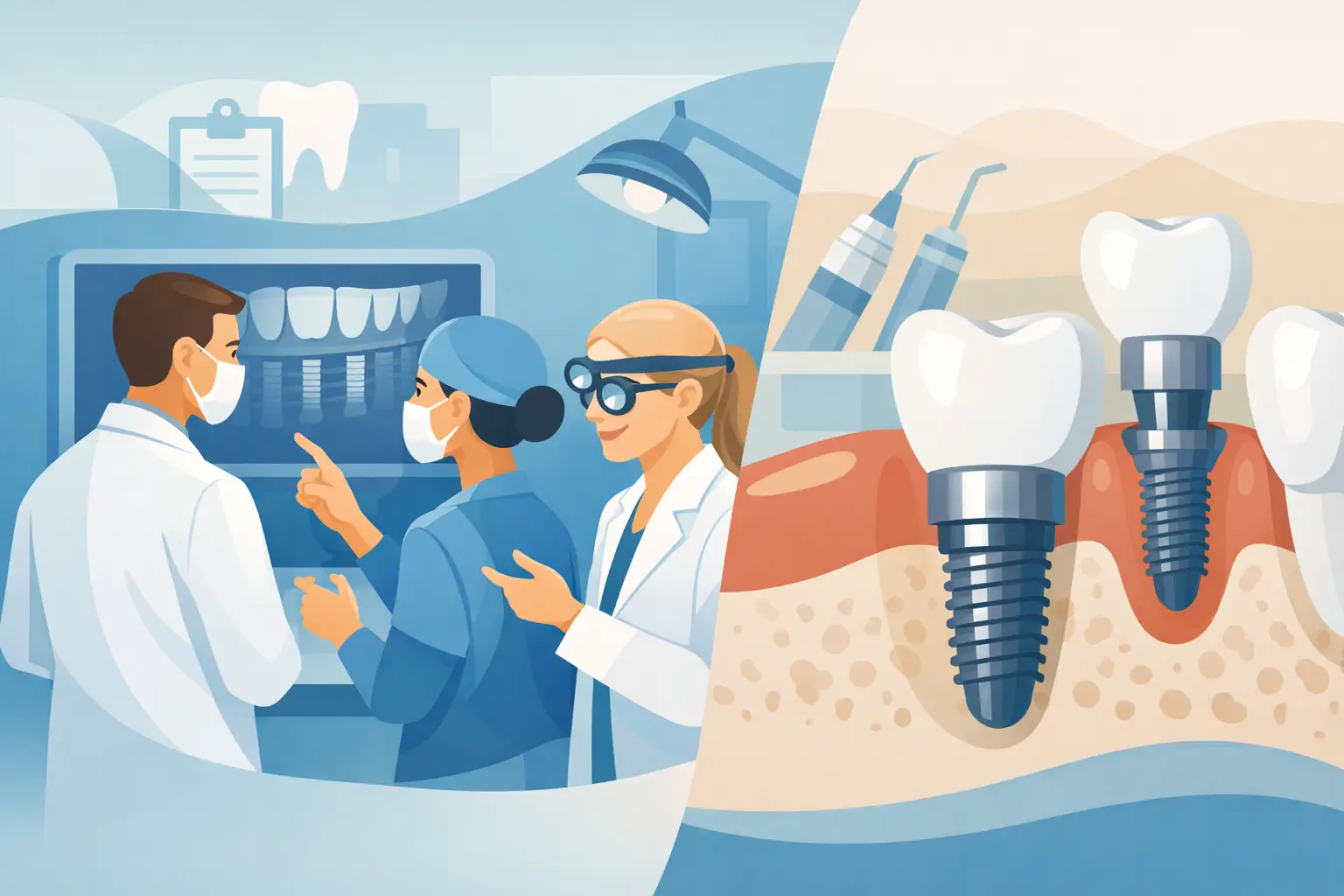
For example, an implant that is slightly angled or positioned too close to another tooth may be difficult to restore with a crown that is easy to clean and comfortable to bite on. This is why restorative planning should happen before surgery whenever possible. Digital imaging, bite records, and a clear plan for the final teeth help the treatment team determine the ideal implant position.
In coordinated care, the prosthodontist may plan the restoration and communicate the surgical requirements to the oral surgeon or periodontist. In other cases, one clinician has the training and experience to manage both phases. What matters is that the surgical and restorative plans are aligned from the beginning.
Do I need an oral surgeon for implants?
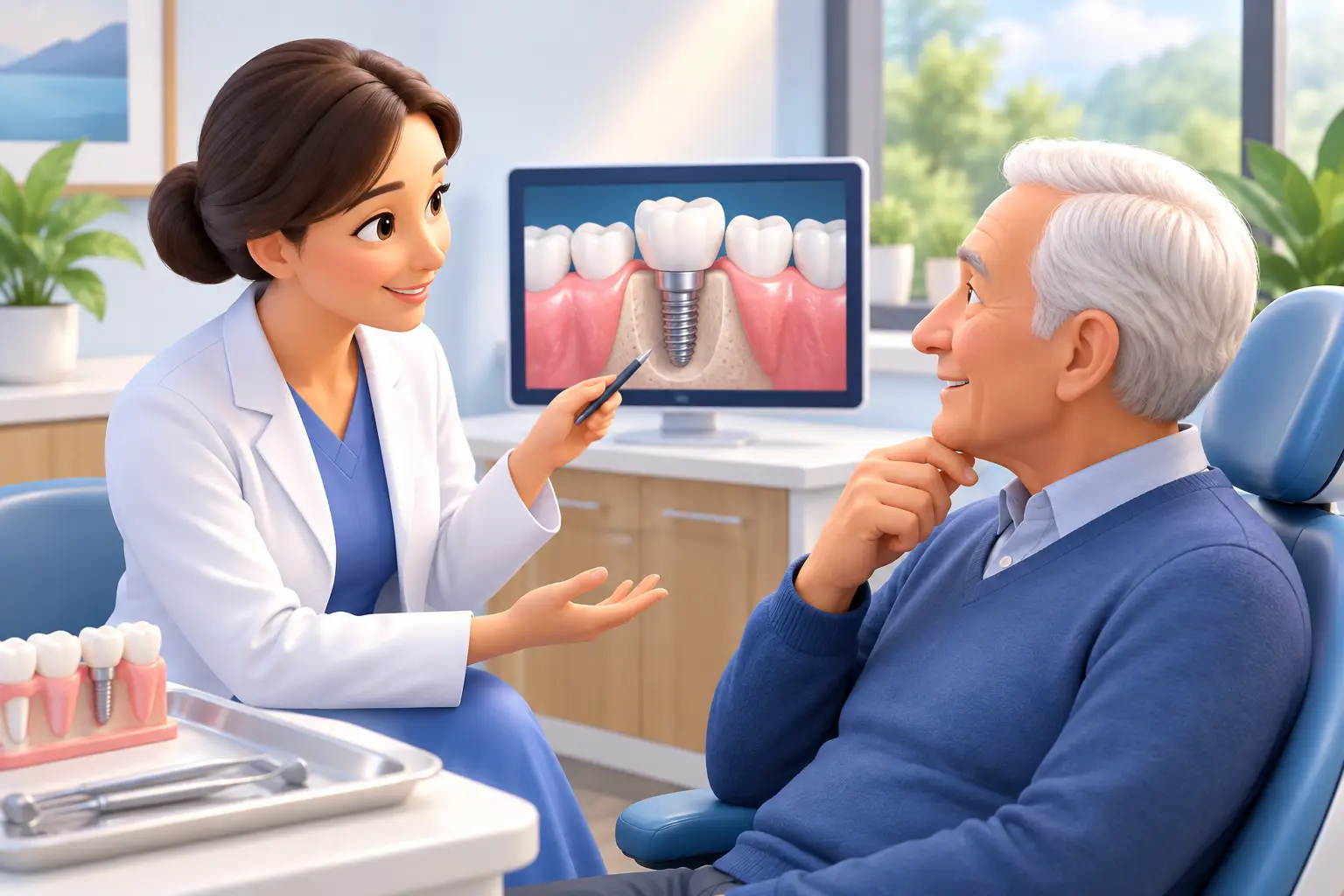
Not every patient needs an oral surgeon for dental implants. Straightforward cases with healthy gums, adequate bone, and no significant medical or anatomical concerns may be handled by a qualified dentist or prosthodontist with implant training and experience.
An oral surgeon may be the best fit when treatment involves several surgical challenges, such as:
- Significant bone loss or the need for bone grafting
- A sinus lift in the upper back jaw
- Difficult extractions, impacted teeth, or active infection
- Multiple implants placed during a larger surgical procedure
- Medical conditions or medication considerations that require added surgical expertise
This does not mean a complex case cannot be prosthodontically led. It means the right plan may include more than one specialist. For patients who feel nervous about treatment, having a team that communicates closely can also reduce uncertainty. You should not have to coordinate separate opinions or wonder whether one step supports the next.
Who restores dental implants?
The clinician who restores dental implants creates the visible portion of your smile: an implant crown, bridge, or denture. Prosthodontists commonly provide this phase because their specialty centers on restoring missing teeth and managing the appearance, fit, bite, and long-term function of dental prosthetics. General dentists with appropriate training also restore implants.
Restoration is more detailed than simply attaching a crown. The clinician evaluates the gumline, selects the shade and shape of the tooth, adjusts how your teeth meet, and designs a restoration you can clean effectively. For a full-arch bridge or implant-supported denture, those details become even more important because the restoration affects speech, facial support, and everyday comfort.
Prosthodontist vs oral surgeon: Which is better?
Neither specialty is automatically better for every implant patient. A skilled oral surgeon may be ideal for a surgically demanding case. A prosthodontist may be especially valuable when the final result requires careful bite reconstruction, several replacement teeth, or a highly esthetic front-tooth restoration.
A better question is: Who is responsible for the complete plan, and how will the surgical and restorative phases be coordinated? Ask about the clinician’s experience with cases like yours, the imaging used for planning, whether they work with other specialists when needed, and who will provide your long-term implant maintenance.
At Seattle Oral Care, implant treatment can be planned with input from prosthodontic, surgical, periodontal, and general dental professionals. That collaborative approach helps ensure each decision supports the same goal: stable implants and teeth that feel like they belong in your smile.
Your consultation should leave you with a clear understanding of who will place the implant, who will restore it, what healing involves, and why that plan fits your needs. The right answer is the one that protects both the foundation beneath your gums and the smile you will rely on every day.