If you are an adult with a loose lower denture comparing snap-in options, the first question is usually practical: how much do snap-in dentures cost? The answer depends on your mouth, your existing denture, and the level of stability you want. A thoughtful consultation should make the numbers clearer, not leave you guessing.
Typical Snap-In Dentures Cost
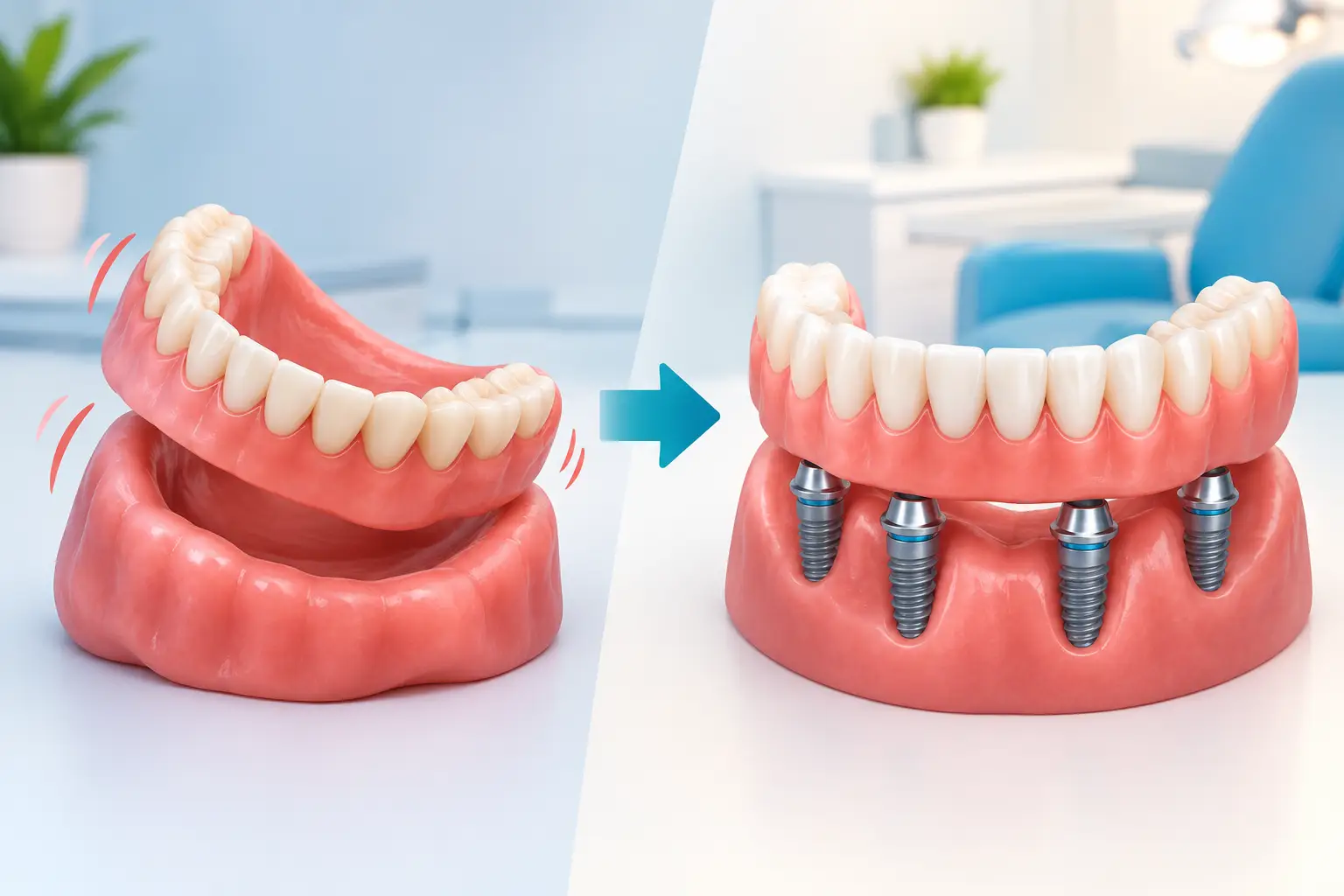
A snap-in denture, also called an implant-retained denture or overdenture, attaches to dental implants rather than resting only on the gums. For a lower arch, treatment often starts with two implants. Four implants may be recommended when more retention, balance, or long-term support is needed.
As a broad planning range, a two-implant lower overdenture may cost roughly $6,000 to $15,000 per arch. A new denture supported by four implants can range from about $12,000 to $25,000 or more. These ranges are not a quote, and they can vary significantly based on the materials used, necessary preparatory care, and whether a current denture can be modified safely.
It also helps to separate snap-in dentures from a fixed full-arch bridge. A snap-in denture is removable for cleaning, while a fixed bridge stays in place and is removed only by a dental professional. Fixed treatment generally carries a higher initial cost, but may be the right choice for some patients.
What Factors Affect the Cost of Implant-Retained Dentures?
Implants are only one part of implant denture pricing. The final fee reflects the clinical work required to create a stable, comfortable result that you can maintain.
The number of implants matters. Two lower implants can dramatically reduce the movement that makes a traditional lower denture frustrating. Four implants may provide stronger support and may be recommended for certain bite forces, bone conditions, or denture designs.
Bone and gum health also affect treatment. Some patients need tooth extractions, bone grafting, gum therapy, or time for healing before implants can be placed. These steps can add to the cost, but they are often essential to giving implants a reliable foundation.
Your denture itself is another variable. In some cases, a well-fitting existing denture can be converted into an overdenture. In others, it is better to create a new denture designed around the implant positions and your bite. A new custom denture can improve appearance, speech, comfort, and chewing support, particularly when the older denture is worn or unstable.
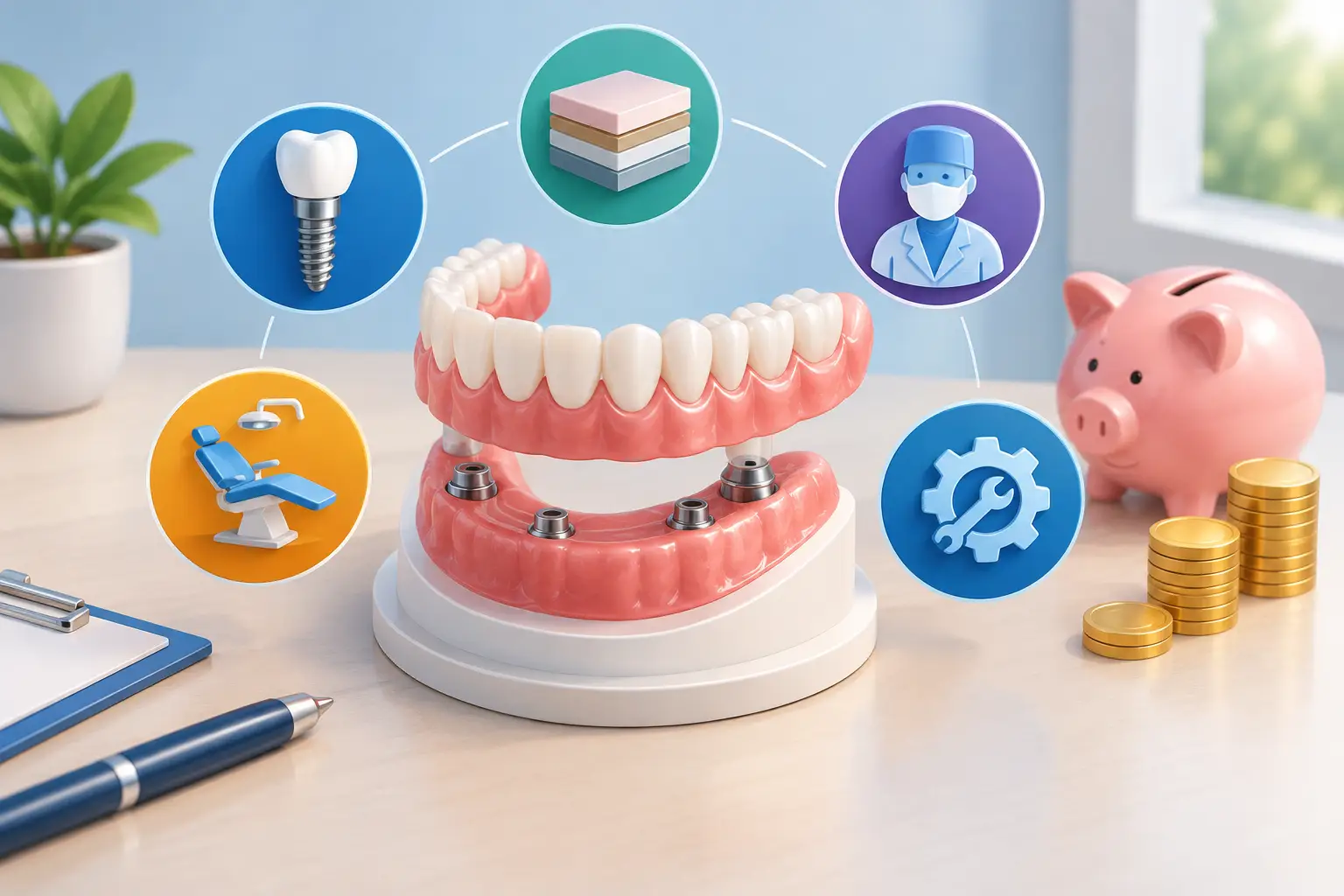
Finally, ask what the treatment estimate includes. Surgical planning, imaging, implant placement, attachment components, the denture, follow-up visits, and maintenance may be listed separately or bundled differently from one office to another. Comparing totals without comparing what is included can lead to an inaccurate impression of cost.
Why the Lower Denture Often Feels So Loose
Lower dentures have less surface area for suction than upper dentures. The tongue, moving muscles, and gradual bone loss after tooth loss can all make a lower denture shift while eating or speaking. Denture adhesive may offer temporary help, but it does not stop the underlying bone changes.
For many people, two implants create a meaningful change in daily confidence. The denture still comes out at night for cleaning, yet it has secure points of attachment that reduce lifting and sliding. That can make meals, conversations, and social situations feel much less stressful.
How to Compare Snap-In Options Fairly
When you are reviewing overdenture cost estimates, focus on the outcome as well as the price. Ask whether the plan includes a new custom denture or conversion of your current one, how many implants are recommended and why, and what maintenance the attachments will need over time. Small retention inserts commonly wear and need periodic replacement. This is normal and should be part of your long-term budget.
Also ask who will coordinate your care. Implant dentistry brings together surgical planning, restorative design, bite evaluation, and ongoing maintenance. At Seattle Oral Care, a prosthodontist, oral surgeon, periodontist, and general dentist can coordinate these details in one practice when a patient’s needs call for it.
Insurance coverage varies widely. Some plans may contribute toward dentures or extractions while excluding implants, and others may provide no implant coverage. Financing options can make care more manageable, but the treatment decision should still be based on your health, comfort, and goals rather than a promotional price alone.
A loose lower denture is not something you simply have to tolerate. A personal evaluation can show whether a two-implant overdenture, a four-implant option, or another solution offers the right balance of stability, longevity, and cost for you.